Kurdish Artist Opens His Life's Work to Visitors at Sina Gallery
Kurdish sculptor Osman Nîkmenîş shares his journey from discarded pear wood to a permanent Sina gallery preserving art, nature and memories of Kurdish history.
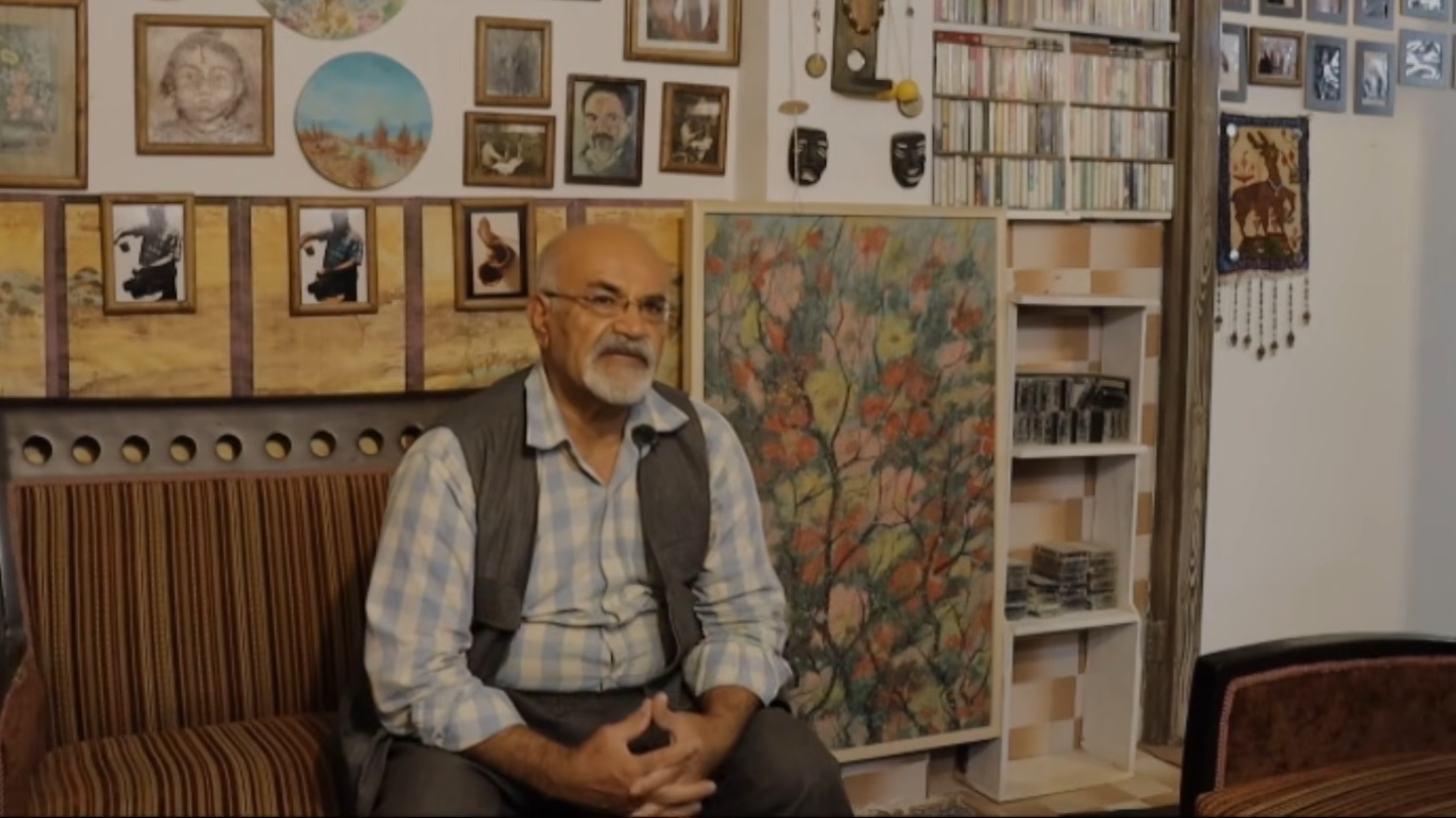
ERBIL (Kurdistan24) - A piece of pear wood that a carpenter was about to throw into a fire changed the direction of Osman Nîkmenîş's artistic life. Armed with an ordinary knife, the Kurdish artist began carving the discarded timber, discovering a material that would become central to his work.
Nîkmenîş, from Sina in Eastern Kurdistan, has practiced sculpture since 1985. Today he works mainly with wood, creating pieces inspired by memories of war, scenes from nature and everyday objects. Yet he has never abandoned painting, an art he says he has practiced since childhood.
"One day, I went to a carpenter and saw him about to throw a piece of wood in the fire. It was pear wood," Nîkmenîş recalled.
"I said, 'Please don't, give it to me!' For the first time, with just a knife, I started carving wood in 3D."
He was already familiar with other sculpting materials. Before concentrating on wood, he had worked extensively with clay and plaster and made a series of large concrete sculptures.
The encounter at the carpenter's workshop nevertheless opened a new direction.
What began as an experiment with a discarded piece of wood became a lasting commitment to carving, even as Nîkmenîş continued exploring other materials and techniques.
His first wooden bas-relief, "The Shelter," drew on a time when fighting forced people to seek refuge. It portrayed an elderly woman gently stroking a child's head. The child smiled, while the woman's face showed profound grief.
The contrast between affection and sorrow became the emotional center of the piece. Nîkmenîş said the carving turned out well and now belongs to a collector.
Art Shaped by History and Nature
Rather than working continuously within one subject, Nîkmenîş organizes his artistic life around distinct projects. He describes his output as a succession of series, each reflecting a different interest. This approach helps explain the variety of work preserved in his gallery.
At one point, he devoted himself to carving spoons, producing an exhibition of 1,000 pieces. At another, he turned to the tragedies of Halabja and the Anfal campaign, exploring painful chapters of Kurdish history through sculpture.
Other projects drew inspiration from the natural world, including wild goats, fish and various animals. The shifts in subject matter reflect an artist interested in ordinary objects, historical memory and living forms.
Painting remains another part of his work. "Some ask if Osman is a sculptor or painter," he said, explaining that he had drawn and painted for as long as he could remember, long before taking up sculpture.
When he becomes tired of carving or has time between projects, he returns to painting.
A Gallery Open to Everyone
Nîkmenîş has gathered his work at Nîkmenîş Gallery, a permanent exhibition space opposite Refah Store in Sina. Admission is free, and the artist believes the space can also be regarded as a museum.
Alongside sculpture and painting, the gallery preserves objects and pieces reflecting different periods of his life, from early childhood onward.
"Part of it has museum pieces from my own life, from my early childhood until our old age, so they aren't lost," he said.
Visitors can encounter periods devoted to drawing, calligraphic painting, realism and abstraction, alongside sculptures in different materials. The collection documents the changing subjects and techniques of an artist who has worked across several forms for decades.
For Nîkmenîş, the gallery keeps those experiences in public view: a child smiling inside a wartime shelter, the outline of an animal emerging from timber, and a piece of pear wood rescued from the fire.