Afghan Farmer Keeps Centuries-Old Grape Preservation Tradition Alive
In Afghanistan's Kalakan district, farmers preserve grapes through winter in clay-and-straw kanginas, keeping a family tradition alive despite market pressures.
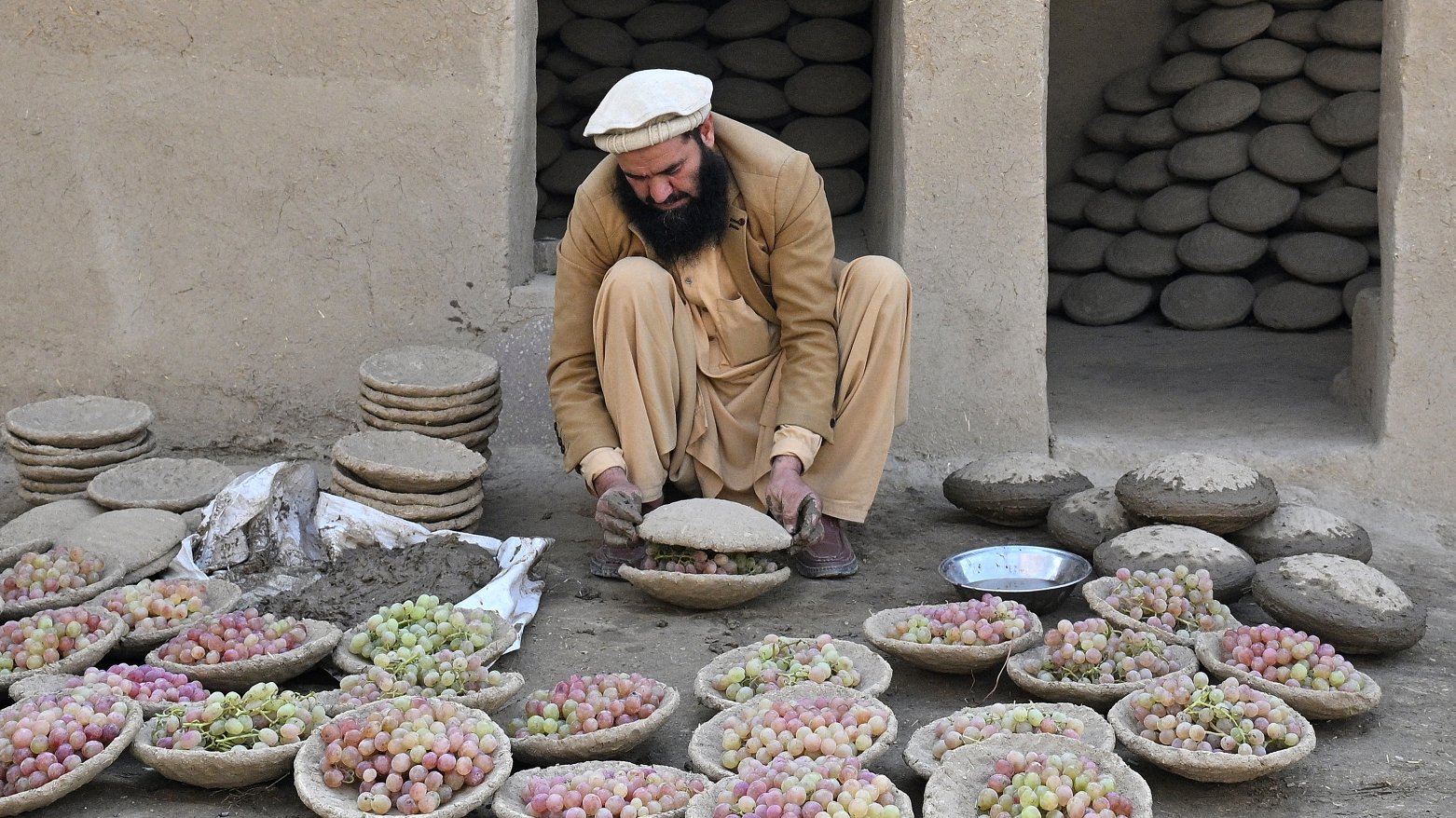
ERBIL (Kurdistan24) - When snow settles over villages near Kabul, Muhammad Saber Shojaei can still bring fresh grapes to the family table. The fruit has spent months tucked away inside handmade containers of clay and straw, sealed after the harvest and opened when winter arrives.
The 47-year-old farmer from Kalakan district is continuing a tradition he learned from his father. Known as "kangina", the method involves placing grapes between two shallow clay-and-straw discs, joining them with mud and storing the sealed container in a dark room.
Shojaei produces around 700 kanginas each year, selling them by the roadside. For him, the work is bound up with childhood memories of sitting around a sandali, a traditional home heating often via using a stove, with his family and sharing grapes saved for the colder months.
"I remember the old days," he told Agence France-Presse (AFP), recalling those winter gatherings.
The appeal is simple: a fruit associated with the harvest can be enjoyed long after fresh grapes have disappeared from nearby fields. Families can open a kangina during winter, while customers in vineyard communities can buy them from roadside sellers or local markets.
Gulagha Frotan, a 61-year-old community leader in Kalakan, said many people wait for snowy or rainy days before opening the containers. The grapes, he explained, are not washed before eating because people believe doing so would diminish their natural quality. Instead, they gently shake off or blow away the dust.
The technique is labor-intensive, and its survival depends on people continuing to learn and practice it. No precise date has been established for its origin, although it is regarded as centuries old.
Today, kangina is also a small-scale response to a difficult agricultural market. Grapes are plentiful during the harvest, when trucks and bags carry them toward buyers. But Afghanistan has limited cold-storage facilities, and the closure of the trade route to Pakistan amid cross-border conflict has made selling the crop harder.
Farhad Ezati, a 21-year-old grape trader, told AFP that prices had fallen by 70 percent this year. With more fruit remaining in domestic markets, he said, some farmers were struggling even to recover their expenses.
He nevertheless praised the taste and quality of Afghan grapes, a crop whose abundance becomes a problem when growers cannot move it to market.
Kangina cannot solve that wider problem. The containers are fragile and take considerable effort to make, limiting how far the practice can substitute for modern storage and reliable export routes. Yet they allow some fruit to be kept for a season when it would otherwise be unavailable.
According to the United Nations Food and Agriculture Organization (FAO), the tradition is currently practiced in the Kabul area and neighboring Parwan province. Ezatullah Noori, the agency's emergency and resilience team leader in Afghanistan, said the area's cool climate and nearby customers give growers opportunities to sell preserved grapes locally.
Noori called for scientific study of the technique and cooperation among farmers to help them market their kanginas more effectively. He also expressed concern that knowledge handed down for generations could eventually disappear.
For Shojaei, each container preserves something beyond the grapes: a familiar winter ritual, learned from his father and now kept alive through his own work.