Lawik: The Free-Rhythm Kurdish Song Tradition That Defies Musical Notation
Kurdish musician Hussen Piro explores lawik's free rhythm, musical richness and role in preserving Kurdish language, history and cultural identity.
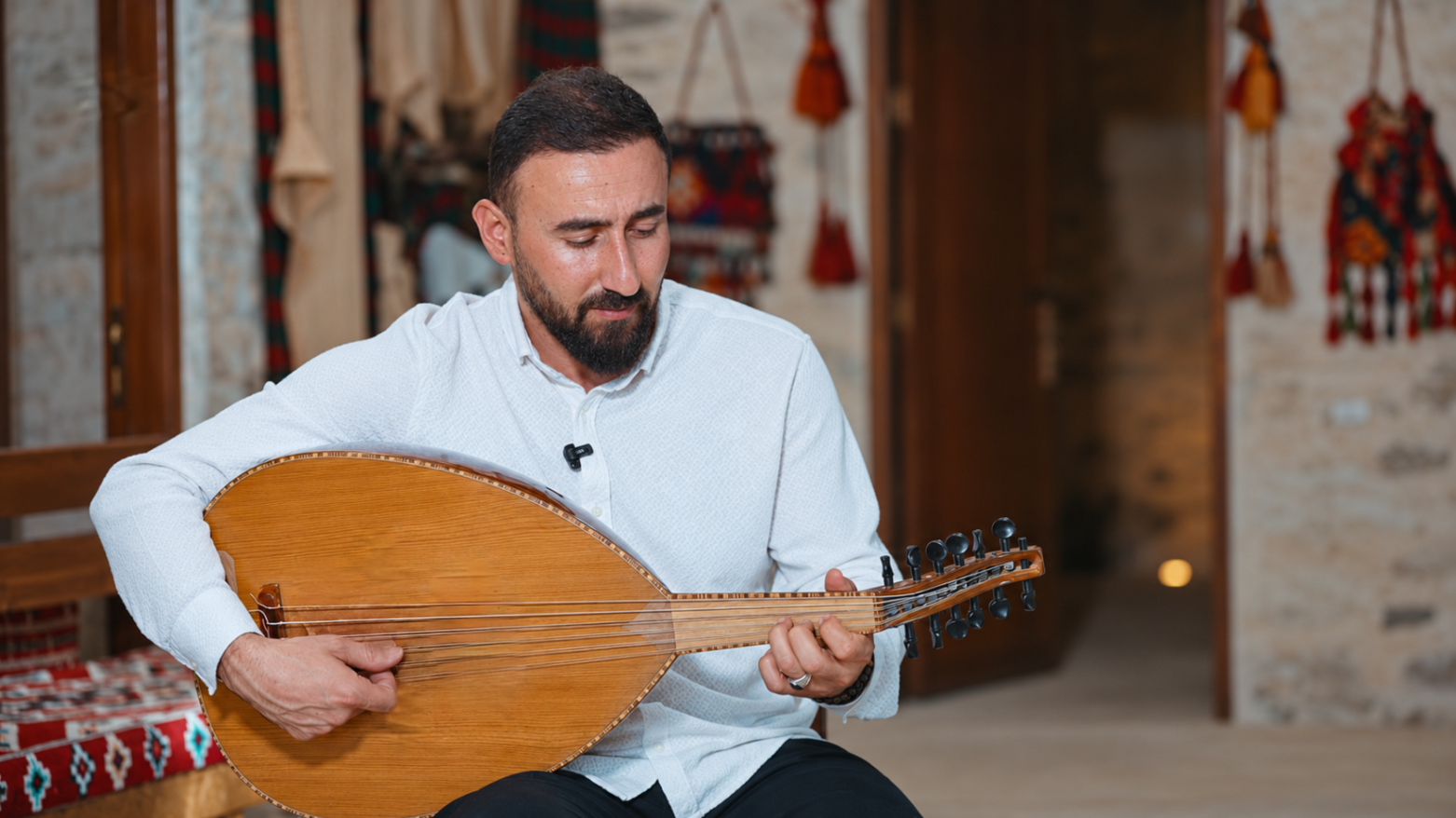
ERBIL (Kurdistan24) - Two Kurdish singers can perform the same lawik, drawing on the same melody and words, yet produce distinctly different interpretations. For musician Hussen Piro, that freedom is what makes lawik one of the richest expressions of Kurdish musical heritage, a traditional singing style through which generations have conveyed love, sorrow, war and memories of their homeland.
"Lawik is an authentic Kurdish song form, a beautiful melody, free, with a free rhythm," Piro told Kurdistan24, explaining the musical qualities that distinguish it from more rigidly structured forms of singing.
Rooted in Kurdish oral traditions, lawik has long provided a means of expressing experiences that extend beyond individual emotions. Its songs have carried stories of romance and conflict, while helping preserve elements of Kurdish language, history and geography.
The tradition's origins are traced in Kurdistan24's feature to ancient times, when singing offered Kurds a way to communicate both happiness and suffering. Its distinctive character, however, lies not only in the subjects it addresses but also in how singers interpret and perform its melodies.
'Free' Singing
Piro explained that the question of whether lawik can be accurately transcribed into musical notation remains a matter of discussion.
Some sources maintain that its melodies can be written down, while others argue that notation cannot fully capture the variations introduced by individual singers.
"If two dengbej [singers] sing a lawik, they will not sing it the same way," Piro said.
Dengbej, traditional Kurdish vocal performers, may approach the same song with different melodic expressions and rhythmic variations. For Piro, this flexibility is fundamental to the character of lawik.
Its free rhythm allows singers to shape a melody according to their own interpretation rather than reproduce every phrase identically.
That does not mean lawik lacks musical structure. Piro explained that the tradition draws on established maqams, or melodic frameworks, including Bayat, Hijaz and Saba.
He placed particular emphasis on Bayat, which he described as exceptionally rich in lawik performances.
To demonstrate these musical characteristics, Piro moved between different notes and melodic sequences, using examples such as "Re, Mi, Fa" and repeating vocal phrases including "Dine le."
He explained how melodic patterns could extend through additional tones, illustrating the range of possibilities available to singers.
He also referred to musical structures involving different numbers of tones, demonstrating how a relatively simple sequence could develop into a longer vocal expression.
Through these examples, Piro illustrated why understanding lawik requires listening to the movement of the human voice as much as examining its musical notation.
Songs of Love, War and Kurdish Geography
Beyond its distinctive musical qualities, lawik has historically accommodated a wide range of themes.
Piro said romantic expression has been one of its prominent uses, with singers employing the style to communicate love and personal emotions.
But lawik has also accompanied accounts of war, giving voice to experiences associated with conflict and the Kurdish struggle.
"Even our geography has been preserved through lawik," he said.
This connection between music and place forms an important part of its cultural significance.
Through references to locations, historical experiences and human relationships, the songs have helped carry elements of Kurdish identity across generations.
Piro emphasized that the tradition has served both Kurdish history and the Kurdish language, providing a form of expression through which cultural knowledge could be transmitted.
"Lawik was sung in many ways and served Kurdish history and the Kurdish language greatly," he explained.
Its value, in his account, therefore extends beyond musical entertainment. Lawik is also a form of cultural memory, preserving experiences and expressions through the voices of those who perform it.
Zakho's Distinctive Place in Lawik
Although lawik belongs to Kurdish musical culture more broadly, Piro singled out Zakho as an area with a particularly rich tradition.
"This lawik style is very rich in Zakho," he said, acknowledging that other Kurdish areas also possess their own musical richness.
His remarks highlighted the regional distinctions within Kurdish traditional singing, where communities may share a musical form while developing their own approaches to performance.
For Piro, Zakho's distinctive contribution does not diminish the wider cultural ownership of lawik.
Rather, the differences between performers and locations are part of the musical diversity he values.
He emphasized that Kurds everywhere can take pride in the tradition, regardless of where it is performed.
Preserving Kurdish Vocal Heritage
The continuing importance of traditional singing is also reflected in cultural initiatives elsewhere in Kurdistan.
On Nov. 20, a two-day dengbej and govend festival opened at the Coexistence House in Sinuni, in Sinjar, bringing together traditional singers and Kurdish dance groups from several areas.
Festival organizer Renas Hassan Babakr told Kurdistan24 that the program included performances and a scientific seminar exploring the history of traditional singing, its survival and the influence of geography on regional styles.
The gathering aims to encourage cultural exchange among artists and introduce younger generations to Kurdish musical and dance traditions.
Although the festival encompasses a broader range of artistic practices than lawik alone, its emphasis on preserving traditional vocal expression reflects the cultural importance described by Piro.
For the musician, lawik's richness rests partly in the freedom that allows each singer to give a familiar melody a distinctive character.
A song can pass between generations without every performance sounding identical. Its words and melodies remain recognizable, while individual voices continue to shape its expression.
"We take great pride in Kurdish lawik," Piro said, stressing that the tradition belongs to Kurds wherever they sing it.