How a Broken Reed May Have Inspired the First Wind Instruments
Musician Sefin Ebdulrezaq traces the idea of wind instruments to a whistling reed and explains how a design change expanded the clarinet's range of notes.
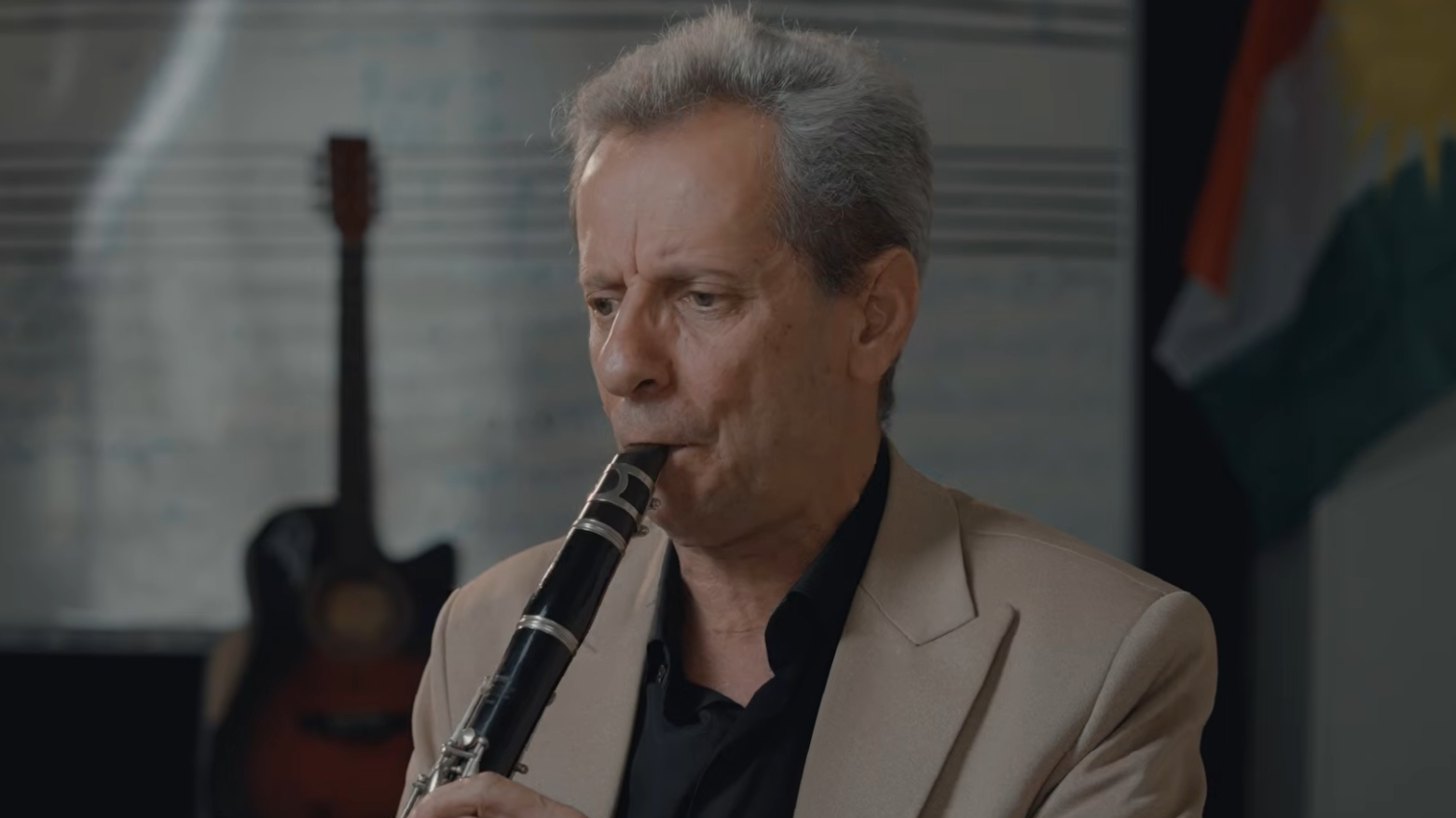
ERBIL (Kurdistan24) - The story of a wind instrument, as musician Sefin Ebdulrezaq tells it, begins not with a trained performer or a written score, but with a sound that someone did not recognize: wind passing through a broken reed.
In Ebdulrezaq's account of how people might first have discovered music in the natural world, strong winds move through trees and reeds, causing one damaged reed to whistle. The unexpected sound draws attention.
Curiosity, tempered by fear, leads people closer to investigate where it came from.
"The first time early humans heard the sound of something unfamiliar," he says, it came from reeds broken by the wind. As air passed through them, a sound emerged.
His account is an illustration of the relationship between observation and musical invention, rather than a documented reconstruction of the first instrument.
What matters to him is the moment when a sound produced by nature becomes something people realize they can make themselves.
After identifying the reed as the source, Ebdulrezaq explains, people take it and try blowing into it. The wind is no longer necessary. Breath produces a tone, and repeated attempts reveal that the same simple object can be made to sound again.
That change, from hearing to experimenting, is central to his explanation.
The reed does not become musically useful simply because it whistles in the wind. It becomes an instrument when a person recognizes the cause of the sound and deliberately repeats it.
Ebdulrezaq then turns from this imagined beginning to a more specific point about the development of the clarinet: the addition of a note through a change in the instrument's physical design.
"The first note added to the clarinet was C-sharp," he says.
He describes a wooden piece placed beside a tone hole, which could be pressed to produce the additional note. Before that modification, he says, the fifth finger had not been used in the same way.
His explanation links the instrument's musical possibilities to the movement of the player's hands.
A small mechanical addition, in his telling, changes what a performer can reach and play, making a further pitch available through finger pressure.
Although his account gives no date or maker for this alteration, it draws attention to an aspect of musical development that can be easy to overlook.
Instruments are not only sources of sound. Their construction determines how musicians interact with them, and adjustments to that construction can change the notes available to a player.
Across both parts of Ebdulrezaq's account, the same idea recurs: people listen, notice how a sound is made and find a way to control it.
His description travels from wind entering a broken reed to a finger pressing a piece of wood, connecting curiosity about sound with the practical work of making an instrument more capable.
For Ebdulrezaq, the journey from the whistle of a reed to a new clarinet note is a story about listening closely enough to turn an accidental sound into one that can be played on purpose.