Eastern Kurdistan's Saffron Industry Eyes Growth and Regional Exports
Farmers in Riwanser, Kirmaşan province in Eastern Kurdistan, are expanding saffron cultivation as water shortages threaten traditional crops, with experts eyeing exports to Kurdistan.
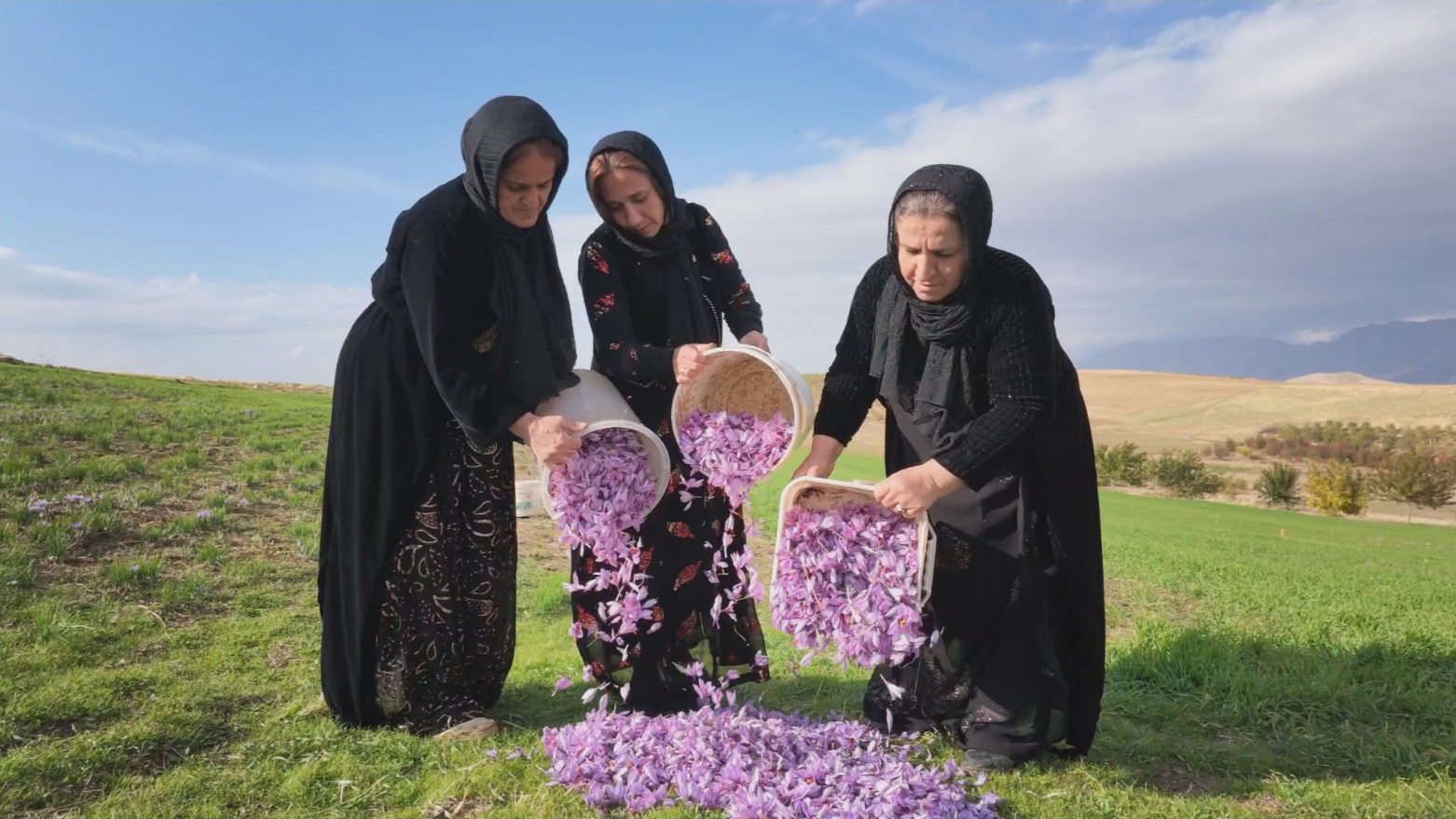
ERBIL (Kurdistan24) - In Riwanser, a city in Kirmaşan (Kermanshah) province in Eastern Kurdistan, autumn is becoming an increasingly important season for a crop that farmers hope will help them earn more while using less water: saffron.
Across the Riwanser Plain and its surrounding villages, more agricultural land is being devoted to the flowers each year.
As the plants bloom, growers begin the annual harvest, looking to a crop they consider less demanding and more profitable than some of the alternatives they previously cultivated.
The shift comes as water shortages place growing pressure on traditional agriculture.
Farmers and agricultural specialists say saffron's relatively modest water requirements make it an attractive option in an area where irrigation costs and access to water can influence what is grown.
'Seasons'
One local saffron producer explained that flowering begins when temperatures reach around 15 degrees Celsius, with harvesting starting as the flowers gradually emerge.
"Saffron, during the period of flowering, when the temperature reaches 15 °C, automatically, its growth starts," the farmer said.
The harvest takes place once a year, but growers expect the crop to become more productive after it has been established.
According to the farmer, approximately one hectare can yield four to five kilograms of saffron in its second and third years.
"It is a good crop needing little water, harvested once a year," the producer said. "It needs little water, which is great for farmers."
For producers considering whether to expand their fields, those characteristics matter.
The decision is not simply about growing a different product, but about finding a way to keep agricultural activity economically viable as water becomes a more pressing concern.
Climate and Soil
Agricultural expert Engineer Sabah Mohammadi sees potential in both Riwanser's growing conditions and its location.
He says the climate and soil in Kirmaşan help produce high-quality saffron, and argues that tests have found it to be superior to the better-known saffron associated with Mashhad.
That comparison is Mohammadi's assessment, but it reflects the confidence behind plans to increase cultivation next year.
He also believes saffron offers better income per hectare than several irrigated crops, including corn, wheat, potatoes and onions. Expanding production, he said, could create employment as well as improve returns for farmers.
The prospect of selling beyond the local market adds another incentive.
With Kirmaşan bordering the Kurdistan Region, Mohammadi said nearby border crossings could provide a route for future exports.
He said producers could "certainly put saffron exports on our agenda," citing the province's proximity to the Kurdistan Region and saffron's commercial value.
For now, exports remain an ambition rather than an announced trade arrangement.
In Riwanser, the more immediate development is visible in the growing number of fields planted with saffron, as farmers seek an income that requires less water and opens the possibility of new markets.
Kurdistan24's journalist Samal Ahmadi contributed to this report.