Inside Pirmam Tunnel: How Technology and Emergency Teams Keep Drivers Safe
Pirmam Tunnel in Kurdistan uses emergency teams, SOS phones, 58 jet fans and firefighting systems to protect motorists traveling along the Erbil-Kore road.
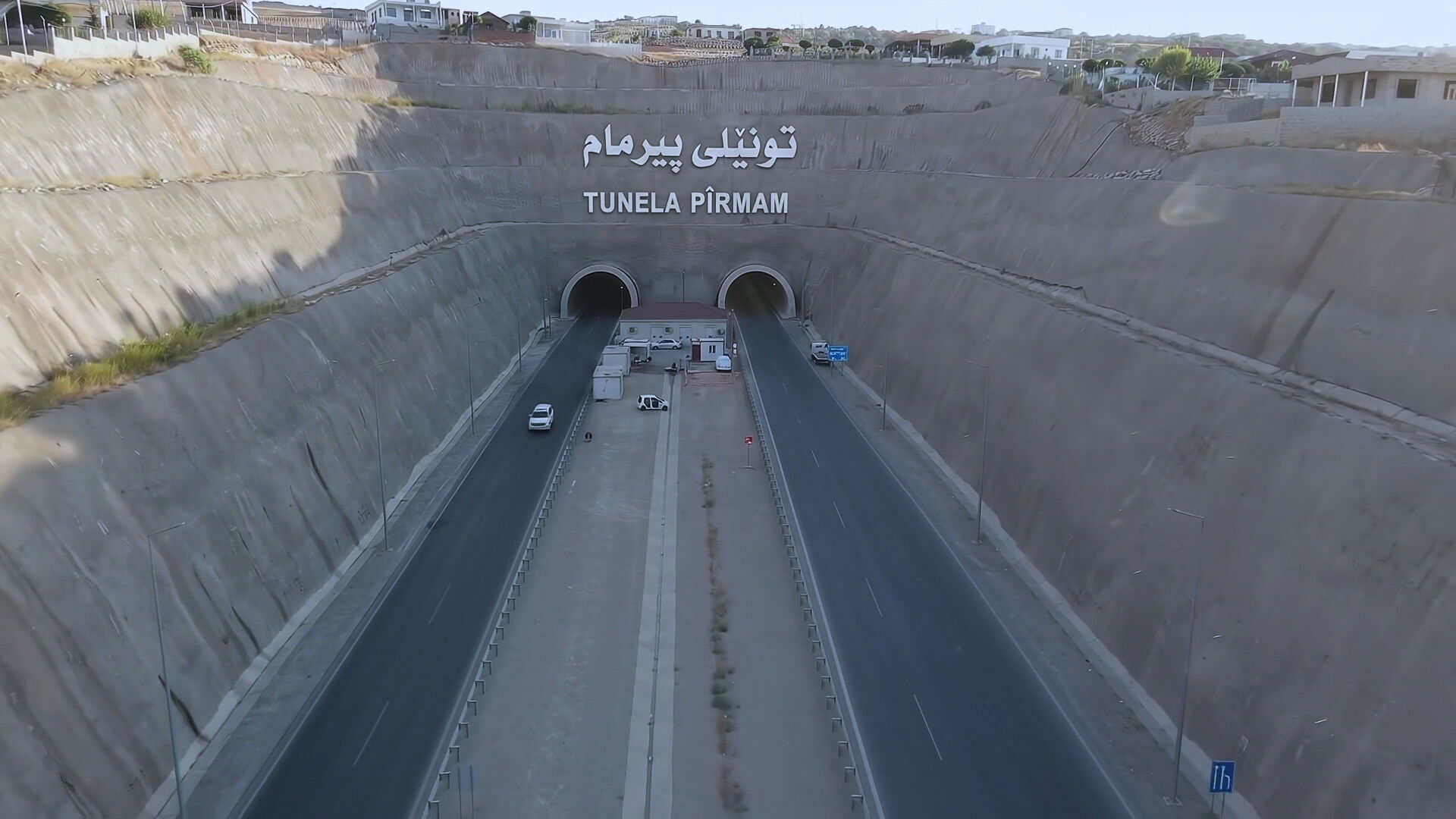
ERBIL (Kurdistan24) - A car breaks down inside Pirmam Tunnel on the Erbil-Kore lane. The driver calls for help, and tunnel staff respond with an immediate instruction: if he has a warning reflector, place it behind the vehicle while assistance is dispatched.
The call is relayed to traffic personnel, with the stranded vehicle located in the second parking area. A safety vehicle is deployed to alert approaching motorists, while a response team moves to clear the car from the tunnel.
The sequence, described by Pirmam Tunnel's engineering staff, offers a look at the safety arrangements behind a route used by drivers traveling between Erbil and Kore.
Beyond the road itself, its operation depends on emergency crews, ventilation equipment, firefighting facilities and direct communication with motorists.
'Team is ready'
"We consist of three teams. We work in shifts," said Serdar Aziz, the tunnel's general supervisor engineer. "If anything happens in the tunnel, like a fire or a car breaks down, our team is ready."
Sherzad Zahir, the tunnel's mechanical engineer, explained why the response to a stationary vehicle must be swift. A disabled car cannot remain in the tunnel for long, he said, because it creates a hazard for other motorists and for the personnel trying to help.
"After he called us, our teams rushed to his aid as quickly as possible," Zahir said. The accompanying safety vehicle was used to warn drivers approaching from farther back as staff worked near the stranded car.
The incident illustrates an operational side of the Kurdistan Regional Government's road infrastructure: maintaining a usable route requires not only construction but also personnel prepared to manage problems while traffic continues.
Fire Equipment and Escape Routes
Drivers encountering a fire can access emergency equipment installed inside the tunnel. Zahir demonstrated a compartment containing a six-kilogram fire extinguisher and a water-hose system, both intended for use in an emergency.
Opening the emergency doors also alerts the control system remotely, he explained, allowing staff to respond while people at the scene use the available equipment until help arrives.
Green directional signs point toward emergency exits. At one location, Zahir highlighted signs showing an exit 365 meters in one direction and another 120 meters away in the opposite direction, helping drivers identify a route out if evacuation becomes necessary.
Air quality is monitored as well. The tunnel has 58 jet fans designed to clear the air when carbon monoxide from vehicle exhaust reaches elevated levels, according to Zahir.
'S.O.S'
Another part of the system is a network of SOS telephones. Drivers facing a breakdown or accident can use the phones without dialing a number, connecting directly with tunnel personnel.
"We answer right away and come to their aid," Zahir said.
Together, the staffed shifts, emergency communications, warning vehicles, escape signs and ventilation systems show how safety provisions support the Kurdistan Region's road network beyond the moment a tunnel opens to traffic.