
Ahmad M. Alkuchikmulla
Political Economy Analyst
Syria and the Kurds - False Choice Between Unity and Inclusion
Author Ahmad Alkuchikmulla argues that Syria's violence against Kurds stems from political failure, not ethnic division. He warns the interim government that coercing Kurds will backfire, and that only an inclusive political deal based on decentralisation can ensure a stable Syria.
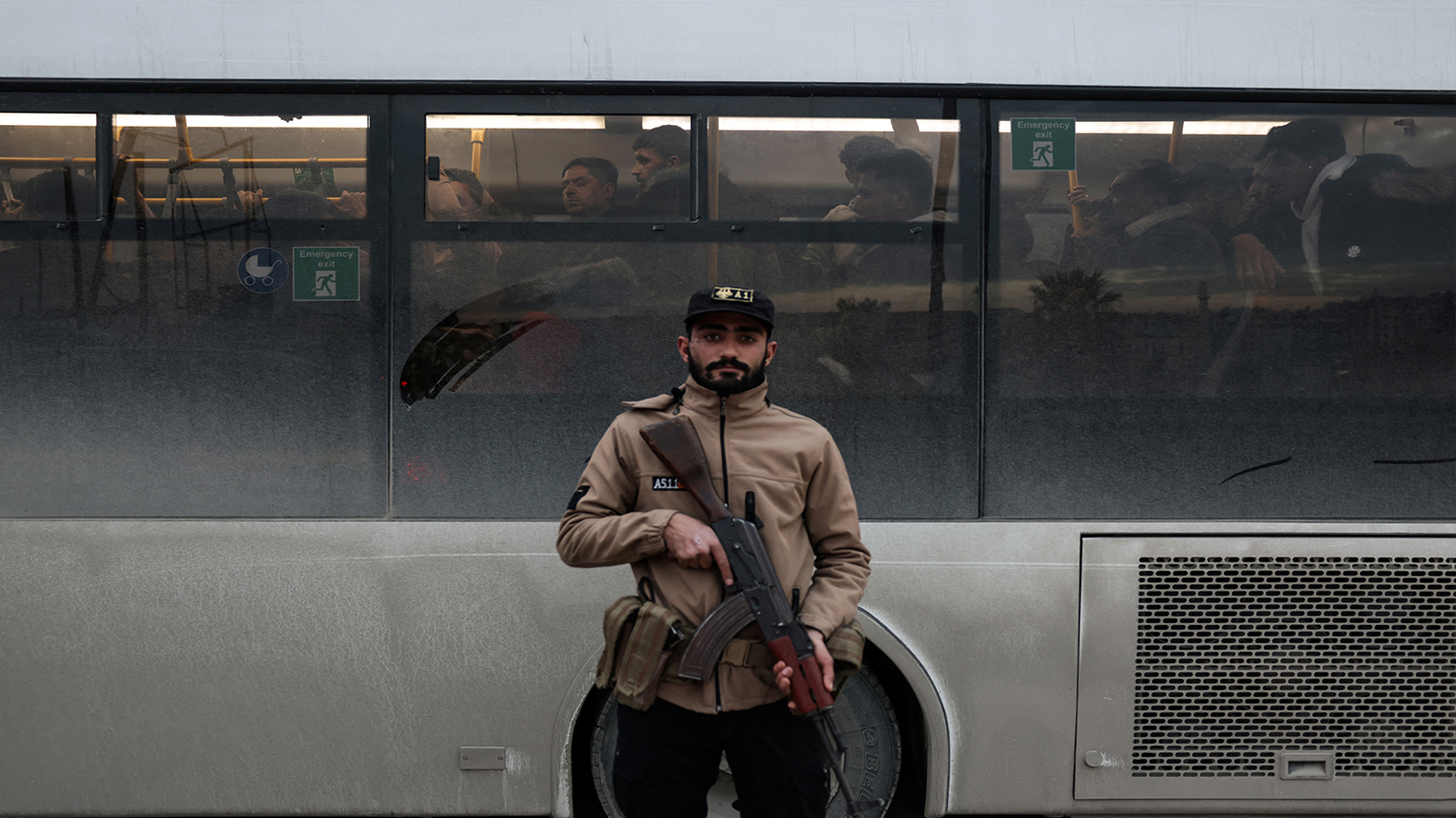
What is unfolding in Syria today is not simply a security crisis. It is a political test of whether the country has learned anything from its own collapse. The renewed fighting in Aleppo’s Kurdish-majority neighbourhoods, the mass displacement of civilians, and the circulation of videos showing armed men humiliating detained Kurds are not isolated incidents. They reflect a deeper continuity: the persistence of a centralised, exclusionary mindset that treats pluralism as a threat to be subdued rather than a reality to be governed. This is not, and has never been, a conflict between Kurds and Arabs. For generations, Kurdish and Arab communities have lived together across northern Syria, sharing cities, markets, and social life. The current violence is not the product of communal incompatibility but of political failure, where identity is instrumentalised to compensate for the absence of an inclusive state project.
It must also be recognised that Syria’s interim government assumed power in the aftermath of the Assad regime’s collapse with significant domestic support and under extraordinary conditions. The transition has generated a rare moment of cautious optimism, both within Syria and across a region exhausted by prolonged conflict. Efforts to restore basic governance, reassert state authority, and stabilise a fractured country represent a genuine political opening that should not be dismissed. This moment carries the possibility of rebuilding Syria on new foundations.
But that promise depends on whether the interim leadership chooses inclusion over consolidation and agreement over coercion. If Syria’s interim authorities believe that coercion can resolve the Kurdish question, history suggests otherwise. The Kurdish presence in northern Syria is not a temporary anomaly nor the product of a single armed group. This distinction matters because the Kurdish question cannot be reduced to either the Syrian interim government or the Syrian Democratic Forces (SDF); it is a societal and constitutional issue that predates the war and will outlast any single military formation. Kurds did not appear with the war, and they will not disappear with a ceasefire. Any political project that begins by denying this reality is likely to prove unstable.
The fear voiced in Damascus and among some regional actors is familiar: that decentralisation will lead to fragmentation, and that Kurdish autonomy will inevitably become Kurdish independence. This fear misunderstands both causality and precedent. Independence movements do not emerge because decentralisation exists; they emerge when central states refuse inclusion, repress identity, and exhaust political channels. Force rarely prevents separation; more often, it accelerates it.
Syria’s tragedy did not begin with decentralisation. It began with decades of hyper-centralised rule that excluded political participation, suppressed diversity, and relied on coercion to maintain unity. The result was not sovereignty, but state collapse. Iraq offers a parallel lesson. Its problems stem not from federalism itself, but from sustained external interference, militia dominance, and the hollowing out of institutions. Blaming decentralisation for outcomes produced by violence and proxy politics avoids confronting the real sources of fragility. Against this backdrop, Kurdish demands in Syria should be understood not as a secessionist project, but as a claim to constitutional recognition, political inclusion, and protection from majoritarian rule. Federalism or meaningful decentralisation is not a concession. It is the minimum framework capable of holding a deeply plural society together. Without it, Syria risks reproducing the very conditions that led to war.
Attempts to resolve political disagreement through military pressure, ethnic rhetoric, or dehumanisation are especially dangerous. Language matters. When fighters refer to civilians as animals or deny their belonging to the land, they are not asserting state authority; they are eroding it. Such discourse does not project strength. It signals a failure of political imagination.
Regional geopolitics further complicates the picture. Syria does not exist in isolation. The Kurdish question spans borders, shaped by developments in Iraq, Türkiye, and Iran. If Damascus believes that repression will reassure neighbouring states or prevent transnational Kurdish coordination, it misreads the moment. The more Kurds are excluded from negotiated political frameworks, the more their future will be shaped by regional and international dynamics beyond Syria’s control. The choice facing Syria is therefore not between unity and division. It is between negotiated coexistence and enforced instability. A state rebuilt on exclusion will not survive. A state rebuilt on agreement might.
There is an old saying among Kurds that they have passed through every deadly door but have never bowed to threats. That is not a declaration of defiance for its own sake. It is a reminder that endurance grows when politics fails. Syria still has a narrow opportunity to choose politics over force. Whether it takes that path will determine not only the fate of its Kurds, but the viability of the Syrian state itself.
Ahmad Alkuchikmulla
SOAS University of London Global Development MSc candidate
University of Bath, 1st Class BSc Politics with Economics Graduate.
London, United Kingdom
The views expressed in this article are those of the author and do not necessarily reflect the views of Kurdistan24.