
Dilek Doski
Writer
The Limits of Iran’s Confrontational Strategy
If Gulf sovereignty continues to be violated, collective retaliation becomes more likely
By Dilek Doski
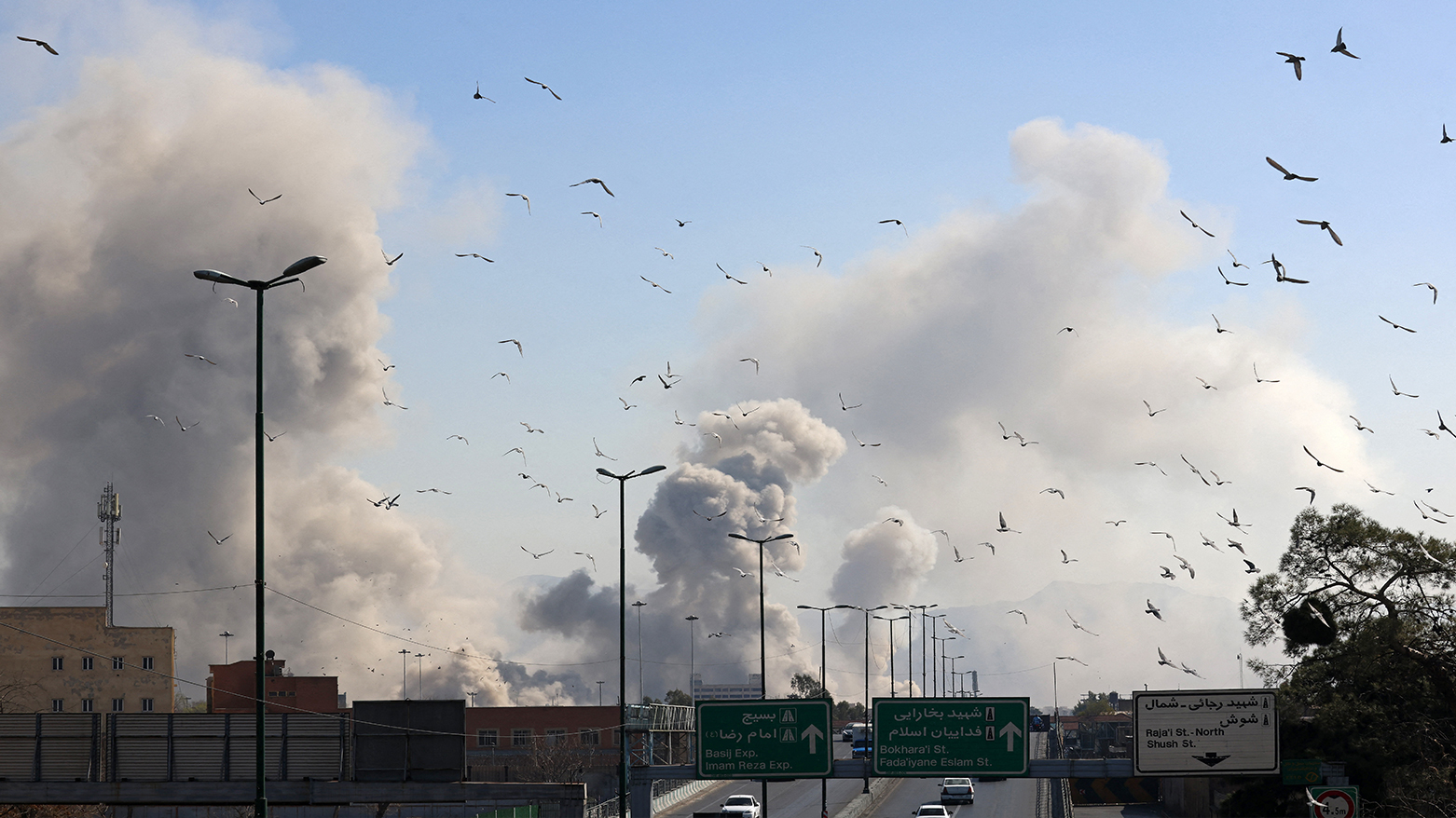
Over the past week, the Middle East entered a dangerous new phase. After decades of stalled nuclear diplomacy, escalating proxy confrontations, and mounting domestic unrest inside Iran, the collapse of U.S.–Iran negotiations in Oman culminated not in compromise but in open confrontation. Coordinated attacks struck U.S. military installations and diplomatic facilities across the Gulf, including in Bahrain, Kuwait, the United Arab Emirates, Qatar, Saudi Arabia, and Iraq.
From Nuclear Deadlock to Military Confrontation
Iran’s long denial of acquiring nuclear weapons and weak dialogue amid U.S. negotiations led to the Israel-Iran 12-day war from June 13, 2025, to June 24, 2025. The war led to the executive order of President Trump to eliminate all of Iran's nuclear sites of Isfahan, Fordow, and Natanz.
While Israel and the United States celebrated a short-lived victory of their military power over Iran and its proxies, the Iranian regime faced widespread protests beginning in December 2025, leading to the present conflict. While there is no official documentation on the number of people killed by the regime in these protests, the estimated number of casualties is over 30,000 civilians.
Since President Donald Trump suggested in a released video that Iran will be targeted this time, and suggested: “When we (the United States) are over to take over your government.” The Islamic Republic responded to this confrontation and has reiterated on February 28, 2026, that all forms of aggression will be used to counter the U.S. influence in the region, and all partners and allies of the U.S. will be targeted.
Iran’s minister of foreign affairs, Abbas Araghchi, has stated that the war imposed by the United States and the Zionist regime is not only directed against the Iranian nation but against all countries of the region.
Tehran’s decision to escalate directly against U.S. positions and its regional partners marks a profound strategic gamble, one that risks accelerating the very instability the regime seeks to deter. Rather than strengthening Iran’s deterrence posture, this move may expose the regime’s vulnerabilities at home and abroad. Yet such high-risk behavior carries high costs.
A Regional Security Shockwave
Iran’s attacks on U.S. assets and allied territory expand the conflict beyond bilateral confrontation. Gulf states have long sought to balance deterrence with de-escalation, wary of becoming battlefields in a U.S.–Iran war.
With this security shockwave, the Saudi Foreign Ministry said the Kingdom “condemns and denounces in the strongest terms the blatant Iranian aggression and the flagrant violation of the sovereignty” of the United Arab Emirates, Bahrain, Qatar, Kuwait, and Jordan.
. This risks drawing regional states into deeper alignment with Washington, thereby hardening rather than weakening the anti-Iran security architecture.
Furthermore, the strategic implications extend beyond military calculations. Energy markets remain acutely sensitive to instability in the Gulf. Naval warnings have suggested the avoidance of oil logistics in the Strait of Hormuz, playing a deadlock on its economic leverage in the region and globally, which is the regime's main source of economic grip.
Any sustained disruption, particularly near critical maritime points, would reverberate globally, raising oil prices and straining already fragile economic conditions worldwide.
The Regime’s Survival Calculus
At the center of this confrontation stood Supreme Leader Ali Khamenei, who has now been reported killed in joint U.S.–Israeli airstrikes on Iran. His death has intensified speculation about the future of Iranian leadership, underscoring uncertainty about Iran’s internal cohesion. Whether the current escalation reflects a unified elite strategy or internal fragmentation remains unclear.
Authoritarian systems often externalize conflict during moments of domestic weakness. But history suggests that external wars can accelerate internal fractures, especially when economic strain, generational discontent, and elite rivalries converge.
The U.S. Department of the Treasury has placed sanctions on 30 individuals, entities, and vessels enabling illicit Iranian petroleum sales and Iran’s ballistic missile and advanced conventional weapons (ACW) production. The Iranian rial dropped to its lowest record at 1,500,000 rials to the U.S. dollar in January 2026. With internal fragility and unrest from its population, the regime does not have much left to hold onto.
Iran’s fragile leadership may believe that demonstrating resolve will restore deterrence credibility. Yet by widening the battlefield and inviting sustained retaliation, it risks strategic overreach.
What Comes Next
On March 2, 2026, President Trump announced that he would continue the war on Iran and safeguard the United States strategic assets in the region.
The United States now faces a pivotal choice: pursue punitive escalation aimed at destabilizing the regime, or pair firm military deterrence with carefully calibrated diplomatic engagement to prevent a full-scale regional war. Gulf states, for their part, must strengthen collective security frameworks while avoiding actions that foreclose future avenues for dialogue.
Iran’s current trajectory is not inevitable, but it is perilous. Escalation without strategic restraint narrows options for all parties. If Tehran continues down this path, it may not achieve the deterrence it seeks. Instead, it may accelerate isolation, intensify domestic pressure, and reshape the regional geopolitical order in ways that weaken its long-term durability, leading to the Islamic Republic's potential downfall.