Kawa Abban
Author
Mustafa Barzani: The Commander Who Defined the Kurdish Struggle for Freedom
Kawa Abban honors Mullah Mustafa Barzani as the father of the Kurdish liberation movement, highlighting his leadership in the September Revolution, the 1970 Autonomy Agreement, and his enduring legacy of independent struggle for Kurdish rights.
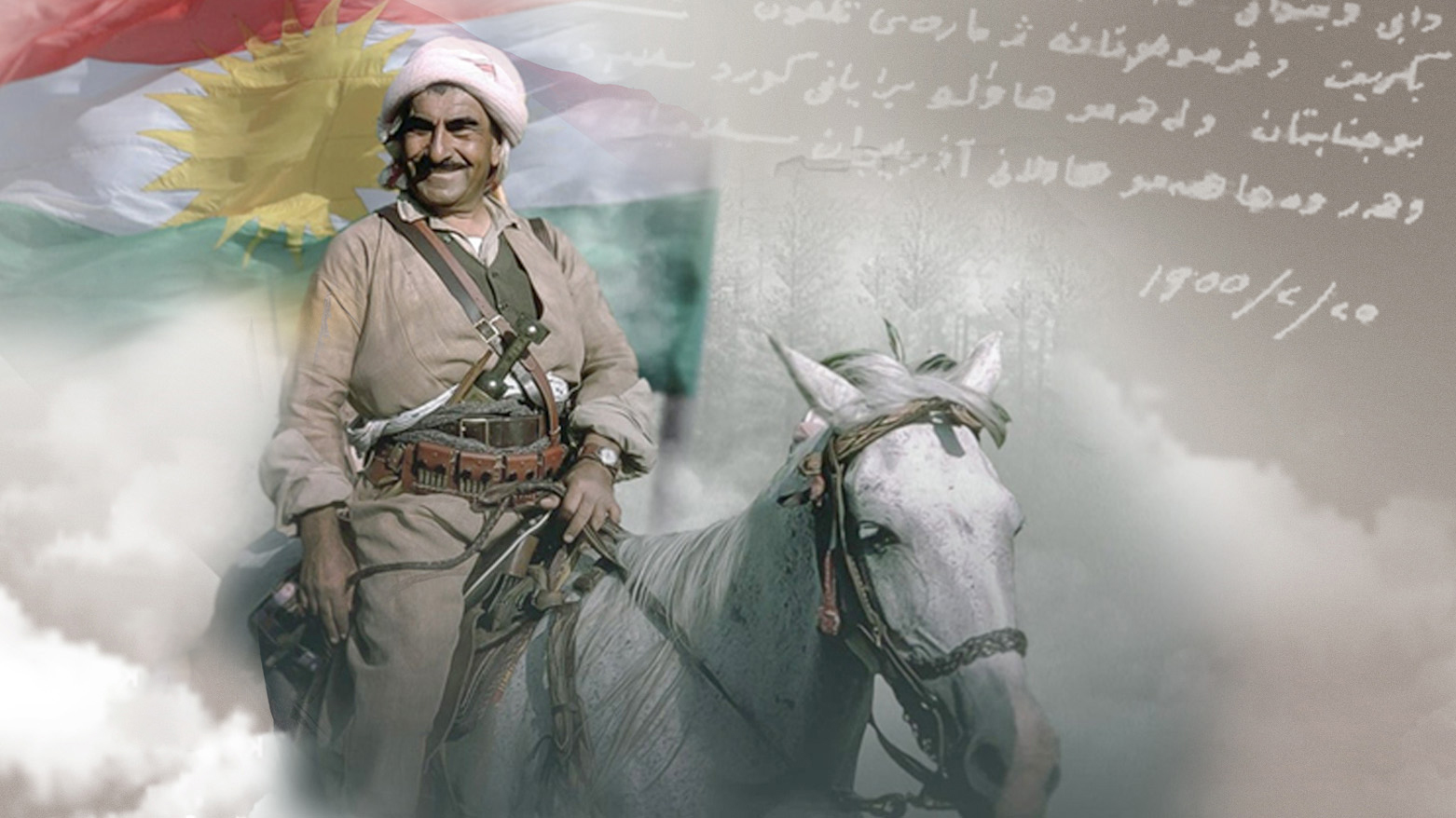
Today, March 14, marks the anniversary of the birth of Mullah Mustafa Barzani, the historic leader of the Kurdish liberation movement and the spiritual father of the Kurdish people.
In the history of nations, some turning points are forged by ideas, while others are shaped by men. In the twentieth-century history of the Kurds, the name Mullah Mustafa Barzani stands out as one of the most influential figures in the trajectory of national struggle—a leader who evolved from a local authority in the mountains of Barzan into a national symbol transcending geographic boundaries.
From Barzan to the Frontlines
Mullah Mustafa Barzani was born in 1903 in the Barzan region of Kurdistan, into a religious–tribal environment characterized by Sufi spirituality and significant social influence. He was raised within a family that had led early resistance movements against successive ruling authorities.
From his early years, he lived amid conflict and military persecution, circumstances that shaped his political awareness and instilled in him a profound commitment to defending identity and existence. In 1919, he participated in the uprising of Sheikh Mahmud Hafid and was entrusted with commanding a force of 300 fighters. He was later dispatched by Sheikh Ahmad Barzani to Sheikh Said Piran in Northern Kurdistan (Kurdistan of Turkey) to coordinate with the revolution that had been ignited there.
During the Kurdish uprisings of 1931–1932, he led a large force defending the strategic axes of Mergasor and Shirwan against British forces, earning a reputation as a highly capable and experienced military commander.
During the Second World War, Barzani launched an armed uprising in the Barzan region. The number of Peshmerga fighters under his command reached approximately 2,500, leading the government in Baghdad to lose effective control over the area.
After a year and a half, however, the Iraqi government mobilized a large force and renewed its assault on Barzan. Fierce battles erupted throughout August, September, and into early October 1945. Despite determined resistance by the Peshmerga, they eventually withdrew to the area of Kani Rash along the Turkish border.
On January 22, 1946, during the official declaration ceremony of the Republic of Kurdistan in Mahabad (Eastern Kurdistan, Kurdistan of Iran), Mullah Mustafa Barzani—standing to the right of Qazi Muhammad—was appointed Commander of the Republic’s Army and granted the rank of General. He contributed to establishing the nucleus of a regular Kurdish military force.
Exile and Political Formation
Following the end of the Second World War, the withdrawal of Soviet forces from Iran, and the collapse of the Republic of Mahabad, hostilities broke out between Iranian forces and the troops led by Barzani. After intense resistance, Kurdish forces reached the borders of the then-Soviet Union, where Barzani and his companions remained for twelve years. This period constituted a phase of reconstitution and strategic reflection, during which Barzani engaged with international experiences in organization, administration, and political and military training—while preserving his intellectual independence and maintaining Kurdish identity as a political priority.
Return and the September Revolution
After the fall of the Iraqi monarchy in 1958, Barzani returned to Iraq to a massive popular reception, inaugurating a new phase in the Kurdish cause. He initiated a political chapter centered on negotiations and the demand for autonomy within the Iraqi state. However, relations with the Iraqi government soon deteriorated due to disagreements and the government’s failure to fulfill its promises regarding the recognition of Kurdish national rights.
On September 11, 1961, the September Revolution was launched under Barzani’s leadership, marking the beginning of a prolonged war for Kurdish autonomy. The conflict endured for nearly a decade, during which Barzani remained the supreme political and military of the Kurdish national movement.
In 1968, following the second Ba’athist coup, negotiations resumed between Barzani and the Iraqi government, culminating in the 1970 Agreement. Its provisions included Kurdish participation in the governance of Iraq, recognition of the Kurdish language as an official language in educational institutions, and the implementation of autonomy in Kurdistan with Kurds administering their own regions.
On March 11, 1970, in the first formal recognition of its kind, the Autonomy Agreement was signed between the Kurds, led by Barzani, and the Iraqi government. It was considered the first official acknowledgment of Kurdish national rights in modern Iraqi history, affirming Kurdish participation in state governance, official status for the Kurdish language in educational institutions, and the application of self-rule in Kurdistan.
However, the Iraqi government later reneged on the agreement and subsequently reached an accord with Iran against the Kurdish movement, culminating in the Algiers Agreement of 1975.
Final Years and Enduring Legacy
After 1975, Mullah Mustafa Barzani fell ill and traveled to the United States for medical treatment. On March 1, 1979, he passed away, closing the chapter of a leader who left a profound imprint on the political history of the Kurds and Iraq as a whole. His body was later returned to Barzan, where his grave continues to receive thousands of visitors annually.
Barzani left behind a political legacy that transcends time. He was not merely a military commander but the founder of a national political school built upon core principles: the centrality of independent Kurdish decision-making, the integration of armed struggle with negotiated political action, and the preservation of identity within a complex regional equation during an era marked by major transformations.
Mullah Mustafa Barzani laid the cornerstone of the modern Kurdish national project. Between the rifle and the negotiating table, he authored defining chapters in the history of Kurdistan and modern Iraq.
His name remains present in Kurdish memory—not solely as a historical figure, but as the symbol of a formative era that shaped a political reality still evolving today.
Kawa Abban
Ambassador At Large at IIMSAM-United Nations