Kawa Abban
Author
The Republic of Mahabad (1946): A Defining Moment in Kurdish Statehood
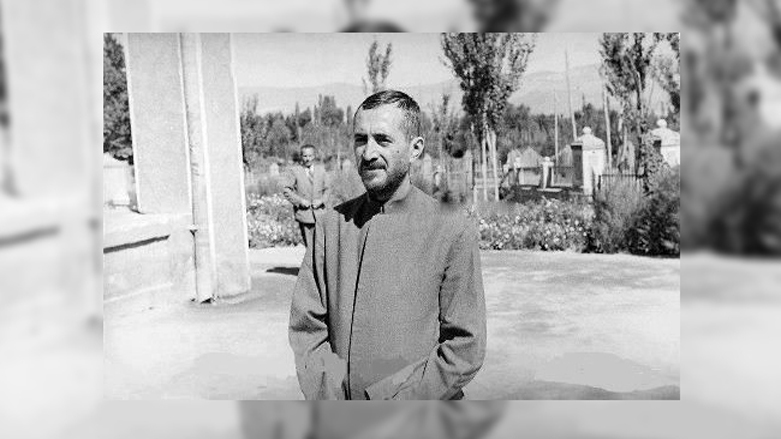
March 31, 2026 marks the 79th anniversary of the execution and martyrdom of the Kurdish leader Qazi Muhammad, the president of the first Kurdish republic, which is the Republic of Kurdistan, declared by the Kurds in 1946 in Iranian Kurdistan, with Mahabad as its capital.
Qazi Muhammad was born in Mahabad in 1900 into a well-off family, and he enjoyed a high level of culture and a sound understanding of the social and political reality of the region, in addition to his deep knowledge of Islamic Sharia, jurisprudence, and religion. He mastered several languages: Persian, Turkish, Arabic, French, English, and Russian, in addition to his mother tongue (Kurdish). Moreover, he possessed a charismatic personality that inspired love and sympathy from everyone who met him, along with his humility, courage, and deep belief in the rights of his people to live and the necessity of struggling to achieve these legitimate rights.
Qazi Muhammad began his political struggle in the early 1930s, when he joined the Association, which was established in 1927 with the assistance of Ihsan Nuri Pasha. This was followed in 1944 by the formation of a Kurdish organization called the “Kurdish Revival Society,” and subsequently, in early 1945, the establishment of the Kurdistan Democratic Party alongside a number of his comrades.
On January 22, 1946, amid complex and difficult circumstances, the establishment of the Mahabad Republic was announced, with Qazi Muhammad elected as president of the republic, in the presence of Kurdish delegations from various regions. Muhammad delivered his famous speech before a large crowd, and for the first time in Kurdish history, the Kurdish flag composed of red, yellow, and green was raised in Chwar Chra Square, the largest square in the Kurdish city of Mahabad. Alongside the formation of a government, the appointment of a prime minister, and the establishment of a parliament, the immortal Mulla Mustafa Barzani participated in these ceremonies and was granted the rank of general in early 1946 in recognition of his struggle and expertise in military affairs. The city of Mahabad became the capital of the nascent republic, which had its own army, then and now known as the “Peshmerga,” trained and equipped by the Soviet Union. The Kurdish language became an official language used in education and in official institutions. Schools were opened, journalism and theaters were established, women entered the sphere of the new Kurdish public life, and trade relations were established with neighboring countries.
The lifespan of the Kurdish republic was only 11 months from its establishment; it did not last long and fell victim to the political, economic, and military interests of international powers that agreed to put an end to it. As a result of British and American pressure, the Soviets withdrew from northern Iran, leaving the new republic to face its fate against the advancing Iranian army, which was supported by the West at the time. This army deployed all its strength to undermine the Kurdish republic and succeeded in retaking Mahabad and reasserting control over the region.
Under those circumstances, the immortal Barzani quickly arrived in Mahabad and met with Qazi Muhammad, asking him to agree to be rescued from his predicament, assuring him that he would personally transport him to the Iraqi border. However, he saw that what would follow would be a massacre against Kurdish civilians by the Iranian army, so he sought to avoid war at any cost. He was arrested on March 30, 1947, and a field military court was formed to try Qazi Muhammad and his two brothers. A number of charges were brought against Qazi Muhammad, on the basis of which the decision for his execution was issued. Qazi Muhammad appealed this unjust ruling, considering that it was a military court while he was a civilian, and also because the court did not grant him the right to choose lawyers to defend him. However, this was of no avail, and after a sham trial, the president of the republic, Qazi Muhammad, along with dozens of other Kurdish leaders and activists, was executed in Chwar Chra Square in Mahabad, by hanging until death.
The last words spoken by the martyr Qazi Muhammad were: “Long live the Kurdish nation, long live the liberation of Kurdistan.”
The martyr Qazi Muhammad passed away and handed the banner of Kurdistan to the immortal Mulla Mustafa Barzani, and the idea of freedom, rights, and independence remained alive in the memory of the Kurdish people, who continued and continue their struggle to attain their freedom and achieve their legitimate human aspirations to this day.
The views expressed in this article are those of the author and do not necessarily reflect the views of Kurdistan24.