
Yasa Masood Chalki
Writer
Hormuz Was a Negotiation. Bab al Mandab Is War.
Why the fall of Perim Island, not the closure of the Gulf, is the moment the Iran war escapes the reach of international law
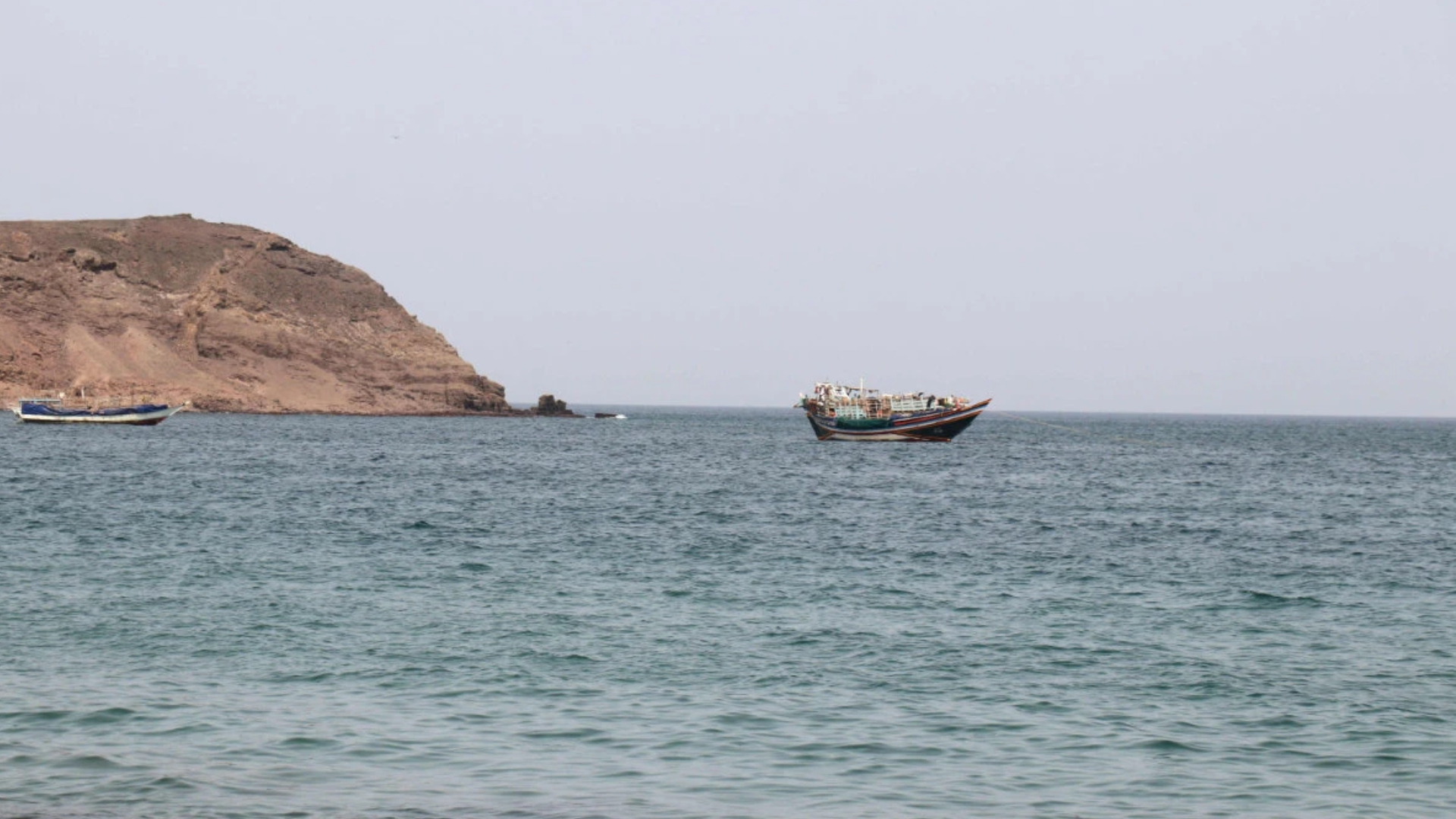
On September 11, Houthi fighters raised their flag over Perim Island, the volcanic rock that splits Bab al Mandab into its two shipping lanes, one day after they took the port of Mocha and with it the whole of Yemen’s Red Sea coast. For the first time since the war on Iran began on February 28, a chokepoint that carries roughly 12 percent of world trade sits in the hands of a movement that signs no treaties, sits in no assembly and answers to no capital.
That is the real turning point of this war, and it did not happen in the Gulf.
For six months the world watched the Strait of Hormuz as if it were the whole story. It was never the whole story. Iran declared the strait closed on March 4, Brent touched 126 dollars, Washington answered with a blockade of Iranian ports on April 13, and the two sides have since closed, reopened and reclosed the waterway. On June 27 a widened route hugging the Omani side was announced through the Joint Maritime Information Center. This is a state pricing its leverage.
A state can be dealt with. It has ports to blockade, an economy to sanction and a president who can sign a memorandum, as Pezeshkian did with Trump on June 17 before the truce collapsed. Thomas Juneau at Chatham House describes an Iran that is pragmatically risk averse, that has discovered the enormous leverage of closure and will not forget it, but that has also shown a steady reluctance to return to open war. Even when the Security Council failed, it failed in the ordinary way.
Six Gulf states tabled a resolution on April 7 demanding that Iran stop impeding transit, eleven members voted for it, and Russia and China vetoed it. The law was clear too. Under UNCLOS Articles 38 and 44 transit passage through an international strait cannot be suspended, and Iran, which never ratified the convention, remains bound by custom. The machinery jammed, but everyone knew whose door to knock on.
The problem is, Bab al Mandab has no door. The Houthis are, in the words of Michael Ratney at CSIS, a movement that regards itself as “an independent Islamic power,” not as Tehran’s instrument, and “any negotiated agreement to end the Iran war will almost certainly not be interpreted by the Houthis as binding on them.” There is no Houthi ambassador for UNCLOS to bind, no Houthi port for a blockade to squeeze, no Houthi treasury for the Council to sanction into compliance, even if the Council could agree on a text.
The truce that had held in Yemen since 2022 broke on July 13, when a Saudi strike on Sanaa airport blocked an Iranian flight carrying a Houthi delegation, and within weeks the movement declared a naval blockade on Saudi shipping. On August 12 three ballistic missiles hit the Egyptian owned Tihamah in a double tap strike, the second missile aimed at the rescuers. Six people died. Alam Saleh put it plainly to Al Jazeera: the Houthis need only “a hint of danger” to push insurers and shipping lines out of the strait. Lloyd’s List had weekly transits through Bab al Mandab down to 273 from 319 before the Saudi blockade, and that was before Mocha fell.
This is the difference between a hostage negotiation and a kidnapping with no ransom note. International law was written for states. The IMO, the Security Council, the customary rules on straits and blockades all assume an addressee. Aspides, the European Union’s naval mission, has escorted more than 670 merchant ships since 2024 and is, by its own commander’s admission, short of hulls.
“We need more ships,” Rear Admiral Vasileios Gryparis told Euronews in July. Its mandate is defensive. It cannot strike a launch site, cannot land on Perim, cannot clear the coast. A shield with no sword now faces an enemy with no address.
Which is why Europe is about to be pulled in, whether it likes it or not.
Europe spent the spring avoiding exactly this. Macron offered a fifteen nation coalition for Hormuz, but only in a defensive role, “under a UN framework and with Iran’s consent.” Merz would send German minehunters only after a peace agreement and only with a Security Council mandate. London pleaded NATO overstretch. The initiative died quietly. Every one of those conditions rested on the assumption that there was a state to consent, a peace to sign, a Council able to mandate.
None of that exists at Bab al Mandab. Kaja Kallas has already floated moving the ships pledged to the stalled Hormuz coalition into the Red Sea and widening Aspides to minesweeping. Caroline Rose of the Soufan Center describes the alternative: Asia to Europe by the Cape of Good Hope, weeks longer and far more expensive to insure.
A continent that would not fight for Hormuz will find it cannot afford not to fight for Bab al Mandab, and it will fight without the legal cover it once demanded.
The two states with the most to lose are already moving. Saudi Arabia, which in July said it could handle the Houthis alone, has since watched 73 civilians injured in Khamis Mushait, Abha and Jazan in one night, answered with 54 airstrikes, seen smoke rise from its East to West pipeline, and had its crown prince ask Trump twice in a single day for American strikes and be refused twice. Washington offered targeting data instead.
Pakistan has warned Tehran that its defence pact with Riyadh could be activated. Egypt, whose Suez revenue was only beginning to recover, has set up a crisis cell, reopened its own channel to the Houthis and is talking to Washington, Riyadh and Tehran at once, because Cairo treats Bab al Mandab as an extension of the canal itself.
Yemen’s government has asked Egypt and the Arab states to help retake the coast. It has never before faced a hostile force on the shore that feeds its canal.
This is where the Europeans have to join the war. Whoever holds Bab al Mandab holds the southern gate of the Suez Canal, and the canal is not an Egyptian waterway in any sense that matters to Europe. It is the corridor through which Asian manufacturing, Gulf energy and Indian Ocean trade reach the Mediterranean and from there Rotterdam, Marseille, Genoa and Piraeus.
Close the gate at Perim and the Red Sea becomes a dead end, Suez a canal to nowhere, and every cargo bound for Europe is pushed around the Cape of Good Hope, weeks longer and far more expensive to insure.