Chechnya’s Kadyrov vows to rescue 94 Russian children from Iraq’s prisons
Ramzan Kadyrov, head of Chechen Republic revealed that he plans to bring back about 100 Russian children whose parents have been jailed in Iraq over alleged links with the Islamic State (IS).
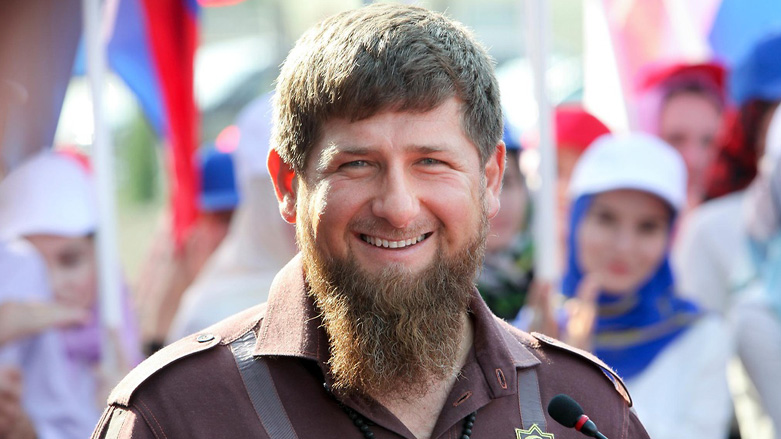
ERBIL (Kurdistan 24) – Ramzan Kadyrov, head of Chechen Republic, has announced plans to bring back about 100 Russian children whose parents have been jailed in Iraq over alleged links with the Islamic State (IS).
“After a short pause connected with solving some complicated legal problems we will bring 94 children home to Russia. These are children of women who had been sentenced to lengthy prison terms by Iraqi authorities," Kadyrov wrote in his Telegram messenger-blog, quoted by RT.
"They will be transported to Russia in two groups, the first group consists of 49 people and 25 of them will arrive to Russia already in June [of] this year.”
Kadyrov, a former Chechen independence leader and son of former Chechen President Akhmad Kadyrov, mentioned that these children are Russian as they had been born in Russia, and stated that necessary documents have been prepared to bring them back to Russia from Iraqi prisons.
In Iraq, children of female inmates often live in detention with them.
“The second stage will be the return of the children who were born from Russian citizens outside the country, there are 45 of them," Kadyrov continued. "This is a very complicated process, but we will do everything so that these children are raised in their home country, among their relatives.
He added that DNA tests would be administered to those thought to be family members of the children, establishing the children’s citizenship and facilitating the process.
Following the emergence of IS in Iraq and Syria in 2014, many foreign nationals joined the jihadist group, including hundreds of Chechens.
Over the past few years, Iraqi forces have arrested tens of thousands it says are members of the jihadi group.
“We are fighting for all of our small citizens. Their ethnicity, religion or actual place of birth make no difference. Their mothers have made a bad choice, they chose the false way and got sentenced to lengthy terms or life in prison. But children cannot answer for their parents’ actions,” the Chechen leader wrote.
On Wednesday, he posted a picture of a little girl on his official Twitter account, with the caption, "No Russian child should be left in Syria and Iraq. This task was set by the country's leadership, and we successfully solve it. We took this... girl out of a shelter in Baghdad. She found a new family."
Ни один российский ребёнок не должен быть оставлен в Сирии и Ираке. Такую задачу перед нами поставило руководство страны. Мы её успешно решаем. Девочку Табарик мы вывезли из приюта в Багдаде. Она обрела новую семью. pic.twitter.com/8XJEjqid8N
— Рамзан Кадыров (@RKadyrov) May 27, 2018
He mentioned that it is sad that Iraqi laws require small children to remain in jails along with their sentenced mothers, but he mentioned that there is a hope that Russia could reach a deal with the Iraqi government to hand over the prisoners to serve their sentences at home.
On Thursday, following a meeting with the Chechen government, Kadyrov's representative in the Middle East and North Africa, Ziyad Sabsabi, stated that a special flight, carrying 25 Russian children, is expected to depart from Baghdad to Russia in June without offering further details.
“94 children will be brought back to their homeland. The first group will consist of 49 children, 25 of them already have all documents required for the return. Those are children of women, sentenced to lengthy prison terms by the Iraqi authorities,” Sabsabi said, quoted by Russian TASS news agency.
“During the second stage, we will return children, born outside Russia, to their closest relatives. This task is going to be more difficult, because 45 children were born abroad: 38 - in Iraq, one in Syria, five in Turkey and one in Germany. We will ask their relatives, preferably paternal ones, to provide DNA samples allowing to prove the fact of a child’s citizenship, so that they could eventually return home,” the Chechen official added.
Out of 49 Russian women currently in Iraqi prisons, according to Kadyrov, 21 of them have been sentenced to life in prison, two sentenced to death, and 26 are still awaiting a court’s ruling.
The Chechen leader previously cooperated with the Kurdistan Regional Government (KRG) to facilitate the return of several Russian nationals, rescued by Kurdish Peshmerga forces near Mosul.
Editing by John J. Catherine