Iran and Türkiye Launch Strategic Rail Project to Rewire Eurasian Trade Network
The $1.6 billion line aims to revive a modern Silk Road, strengthen cross-border commerce, and reposition both nations as key transit hubs between China and Europe.
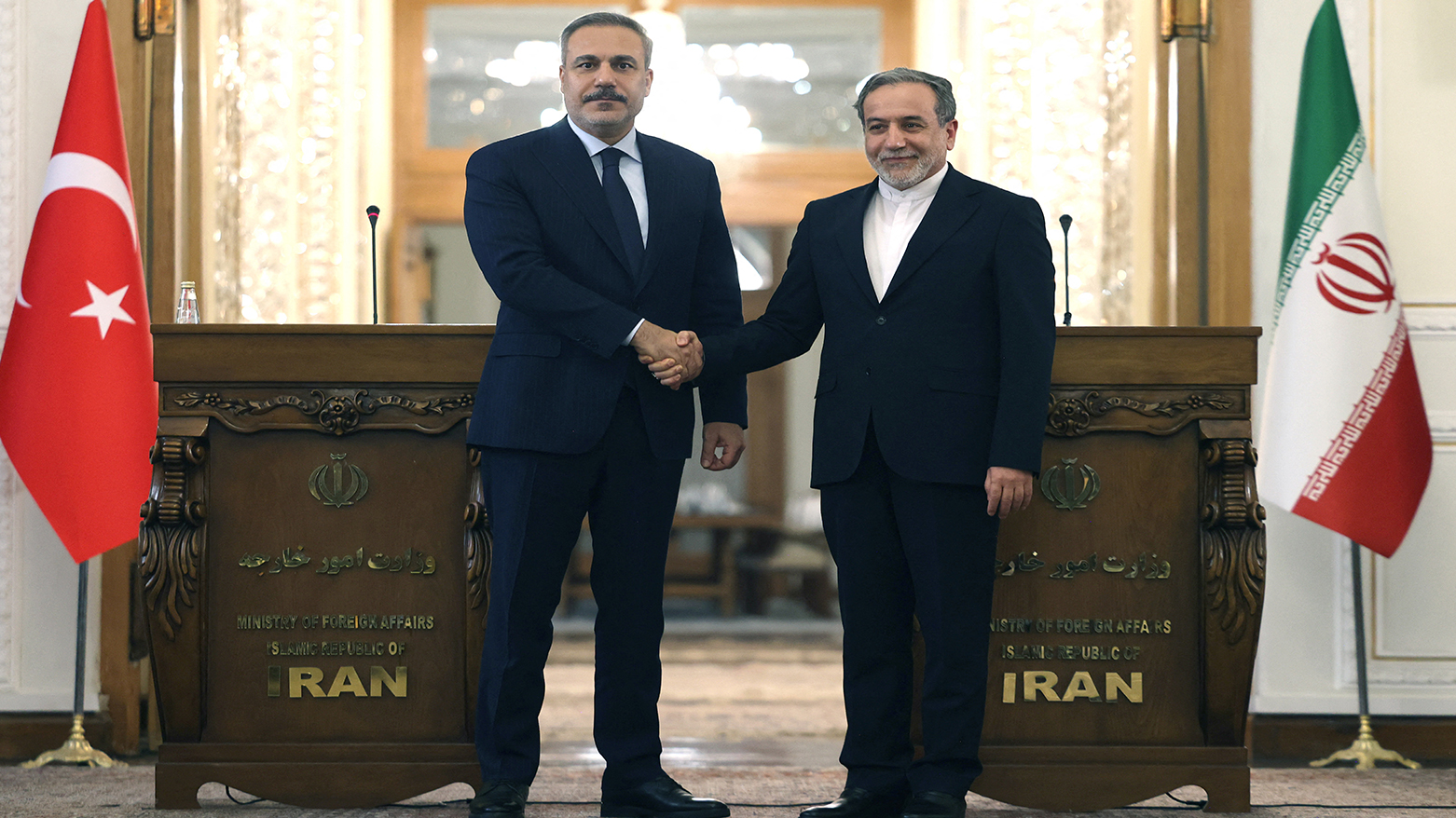
ERBIL (Kurdistan24) — Iran and Türkiye have agreed to begin constructing a new joint railway designed to serve as a strategic bridge between Asia and Europe, Iranian Foreign Minister Abbas Araghchi announced on Sunday, marking a significant step in the two neighbors’ deepening economic and geopolitical cooperation.
The project—known in Iran as the Marand–Cheshmeh Soraya railway transit line—will stretch roughly 200 kilometers (120 miles) toward Türkiye’s Aralik border region. Iranian officials estimate the construction cost at about $1.6 billion, with completion expected within three to four years.
Earlier this month, Iran’s Transport Minister Farzaneh Sadegh said the railway would effectively transform the southern flank of the historic Silk Road into an uninterrupted overland trade corridor, linking China to Europe entirely by rail.
The route, she added, would enable “fast and cheap transport of all types of cargo with minimal stops,” strengthening Iran’s role as a regional transit hub.
Speaking alongside Turkish Foreign Minister Hakan Fidan at a press briefing on Saturday, Araghchi said both sides had “emphasized the need to remove barriers to trade and investment” and expressed hope that construction would begin “as soon as possible.”
Ankara and Tehran have in recent years sought to insulate their growing bilateral trade from regional instability and global economic pressures.
A New Layer of Geopolitical Competition
The joint railway emerges at a moment of intensifying infrastructure competition across Eurasia. China’s Belt and Road Initiative (BRI)—launched in 2013 as a modern reincarnation of the ancient Silk Road—has reshaped trade patterns across Central Asia, the Middle East, and Eastern Europe through major investments in ports, railways, and industrial zones.
For Iran, the new rail link dovetails with its broader strategy to circumvent decades of international sanctions by boosting overland connectivity with neighbors and positioning itself as a vital transit route on the east-west trade axis.
The line also complements Tehran’s ambition to expand railway interoperability with Türkiye, a NATO member that itself aspires to become a central node in Eurasian logistics.
Ankara, meanwhile, views enhanced rail integration with Iran as a means of strengthening its role in the emerging Middle Corridor—a transport route linking China to Europe via Central Asia, the Caspian region, and Turkey.
As global supply chains diversify and Europe looks for alternatives to Russian and northern routes, Türkiye is seeking to anchor itself as a primary gateway to European markets.
The ancient Silk Road once connected East Asia to the Mediterranean through a web of caravan routes that carried goods, ideas, and technologies across continents. Today, the rapid expansion of transcontinental rail infrastructure—spearheaded by China and joined by regional powers such as Iran and Türkiye—signals a renewed competition for influence over trade flows shaping Eurasia’s economic future.