Junta Nationalizes Orano Assets as Niger Shifts Toward Russia and Iran
Niger's junta defies France by selling uranium internationally, effectively nationalizing Orano's mines and pivoting to Russian and Iranian partnerships.
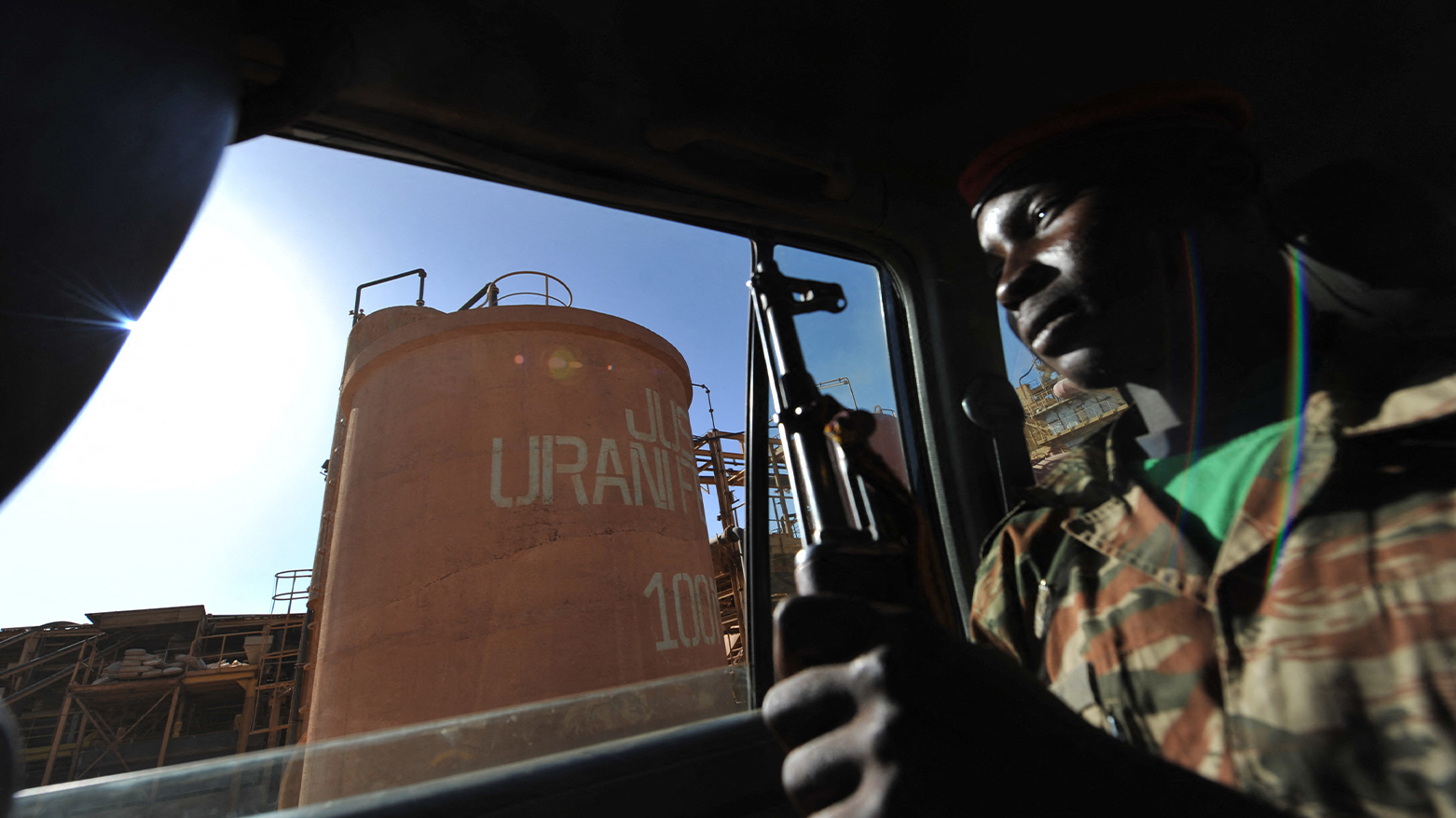
ERBIL (Kurdistan24) – In a decisive and historic maneuver that marks the final severance of economic ties between Niger and its former colonial ruler, the ruling military junta has officially announced that it will place uranium produced by the Somaïr mining subsidiary on the international market, bypassing the French nuclear giant Orano.
The announcement, broadcast on state television Sunday evening, confirms the total nationalization of the strategic resource and signals a profound geopolitical pivot in the Sahel, as the West African nation seeks to monetize its vast natural reserves independently of Paris while cultivating new alliances with powers such as Russia and Iran.
The declaration serves as the capstone to a tumultuous diplomatic and economic standoff that has escalated steadily since the military coup d’état in July 2023.
According to reports from Le Monde and Agence France-Presse (AFP), the military regime in Niamey has effectively stripped Orano of its operational control and is now asserting total sovereignty over the extraction and sale of the mineral.
General Abdourahamane Tiani, the head of the junta, was quoted by state broadcaster Télé Sahel asserting "Niger’s legitimate right to dispose of its natural resources."
In a statement that resonated with the regime's nationalist base, General Tiani declared the country’s intention "to sell them to whoever wishes to buy, within market rules, in total independence," explicitly rejecting the historical monopoly held by French interests.
The focal point of this conflict is the Société des mines de l’Aïr (Somaïr), a mining entity that was, until recently, a joint venture owned 63.4 percent by Orano and 36.6 percent by the State of Niger.
Le Monde reports that following the nationalization of the subsidiary by Niamey in June, Orano has completely lost operational control of the site. This move has deprived the French group of its operating permit and placed the management of one of the world's most significant uranium sources directly into the hands of the military government.
The announcement on Sunday is not merely administrative; it is a declaration of economic independence that fundamentally alters the global nuclear fuel supply chain.
The roots of this aggressive nationalization policy were laid bare earlier this year. As detailed in background reporting by the Associated Press (AP), the Nigerien government announced in June 2025 that it would nationalize the Somaïr venture, accusing Orano of "irresponsible, illegal, and unfair behavior."
The authorities in Niamey alleged that the French company, which is more than 90 percent owned by the French state, had been taking a disproportionate share of the uranium produced at the site.
In a stern statement released at the time, the junta cited the French state's "openly hostile" attitude toward Niger since the coup as a primary justification for the takeover, declaring the decision was made "in full sovereignty."
The consequences of this rupture are already manifesting on the ground in tangible and controversial ways.
Le Monde, citing information confirmed by LSI Africa and Wamaps, reported that a massive logistical operation is underway to move the valuable ore out of the country. A convoy transporting approximately 1,000 tonnes of uranium concentrate reportedly departed recently from Arlit, the northern mining city where the Somaïr site is located.
This convoy is charting a course through neighboring Burkina Faso—another junta-led nation that has severed ties with France—to reach the port of Lomé in Togo. This movement of resources suggests that Niamey has already secured buyers or is positioning its stock for immediate sale, defying legal warnings from its former partners.
Orano has not accepted the expropriation of its assets quietly. The French nuclear giant has initiated multiple international arbitration proceedings against the State of Niger in an attempt to protect its interests.
According to Le Monde, Orano announced at the end of September that a tribunal had ruled in its favor regarding the Somaïr mine. The company claims that the tribunal explicitly enjoined Niger not to sell the uranium produced by Somaïr.
The stakes are incredibly high; the site reportedly holds about 1,300 tonnes of uranium concentrate, representing a market value of approximately 250 million euros.
By proceeding with the sale on the international market, the junta is directly flouting this arbitration ruling, signaling that it no longer recognizes the jurisdiction of Western legal mechanisms over its sovereign territory.
The loss for France extends beyond the immediate financial hit to Orano; it represents the dismantling of a strategic energy relationship that has lasted for over 50 years.
Orano had acknowledged in December 2024 the loss of operational control over its three major mining subsidiaries in the country: the active Somaïr mine, the Cominak mine (which closed in 2021), and the immense Imouraren deposit.
The Imouraren site is particularly significant, as it is considered one of the largest uranium deposits in the world, with reserves estimated at 200,000 tonnes. By withdrawing Orano’s operating permit for Imouraren and nationalizing Somaïr, Niamey has effectively erased French influence from its mining sector.
This vacuum is rapidly being filled by France’s geopolitical rivals.
The AFP report highlights that since the junta seized power, Niger has turned decisively toward Russia for security assistance in its fight against a jihadist insurgency, turning its back on the former colonial power it accuses of supporting separatist groups.
This realignment is now extending to the energy sector. Russian Energy Minister Sergei Tsivilev explicitly stated in July that Moscow was willing and eager to mine uranium in Niger. With Russia commanding the world's largest arsenal of atomic weapons and seeking to expand its influence in Africa, the potential for a new partnership between Niamey and Moscow over these strategic assets is a source of deep concern for Western capitals.
Furthermore, Le Monde notes that the military leaders in Niamey do not hide their desire to explore partnerships with other nations, including Iran, further complicating the non-proliferation landscape.
The implications for the European energy market are substantial.
According to data from the atomic organization Euratom cited by AFP, Niger accounted for approximately 25 percent of the natural uranium supplied to European nuclear power plants in 2022. On a global scale, the Euratom Supply Agency (ESA) figures from 2021 indicate that Niger supplies about 4.7 percent of the world's natural uranium production.
While the market has diversified, the loss of a reliable flow from Niger forces France and other European nations to scramble for alternative sources, potentially driving up prices and geopolitical competition for the mineral.
The situation has deteriorated into a tense standoff characterized by legal threats, diplomatic insults, and security incidents. As noted in the AP background report, Orano sued Nigerien authorities last month following the disappearance of its director and the raiding of its local offices, events that illustrate the hostile environment in which foreign companies are now operating.
The military authorities have tightened their grip not just on the mines, but on foreign companies and civil society at large, fulfilling their pledge to review mining concessions and cut ties with the West.
General Tiani’s declaration of "dignity" in placing Nigerien production on the global market frames the economic policy as a matter of national liberation.
For the junta, the sale of uranium is not just a revenue stream but a political tool to demonstrate that Niger can survive and potentially thrive without French oversight. However, conservation and industry experts warn that the sudden shift in management and the opaque nature of the new supply chains could lead to environmental risks and a lack of transparency in how the revenues are utilized for the benefit of the Nigerien population.
As the convoy of uranium makes its way to the Togolese coast, the era of French dominance in Niger’s mining sector appears to have irrevocably ended.
The "rupture" described by Le Monde is now complete, replaced by a new, uncertain reality where the resources of the Sahel become chips in a high-stakes game of global influence involving Russia, Iran, and a defiant military government in Niamey determined to rewrite the rules of engagement.