Lebanon and Israel Launch First Civilian Dialogue in Decades, Joined by U.S. Envoy
Fragile cross-border talks unfold amid sweeping UNIFIL reductions, and U.S. warnings that Hezbollah must disarm or face decisive military action.
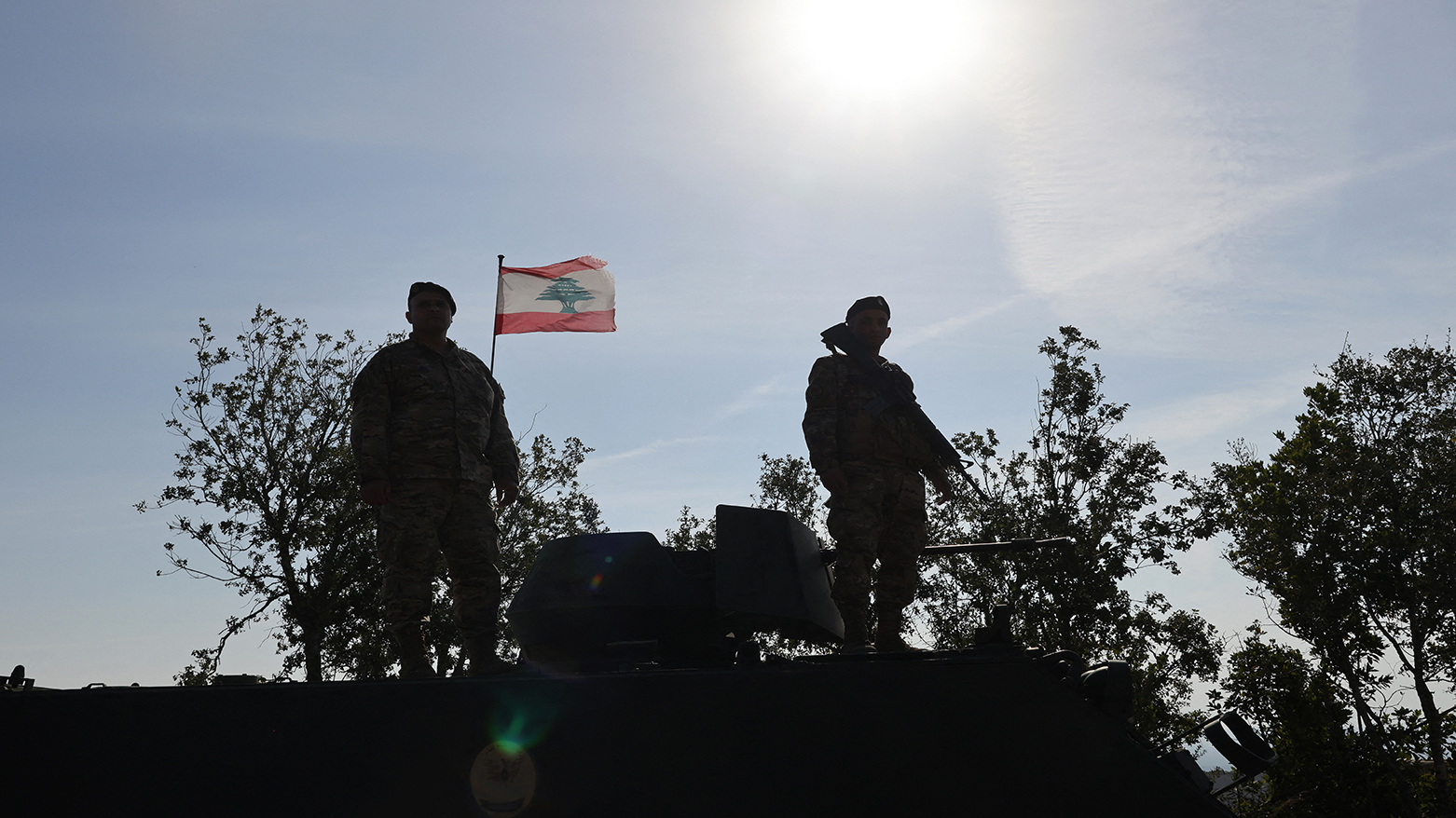
ERBIL (Kurdistan24) — Lebanese and Israeli civilian representatives held their first direct talks in decades on Wednesday, marking a rare moment of engagement between the two countries as the region enters one of its most volatile periods in years. The meeting, confirmed by a source close to the talks to AFP, took place at the UN peacekeeping headquarters in Naqura as part of a mechanism to oversee the ceasefire that took hold in November 2024.
The United States, pushing for deeper civilian involvement in the Lebanon–Israel dialogue, sent Special Envoy Morgan Ortagus to the meeting.
Her participation followed high-level consultations in Jerusalem with Foreign Minister Gideon Saar and Prime Minister Benjamin Netanyahu, underscoring Washington’s intensified pressure campaign on Beirut to disarm Hezbollah.
Until now, communication between the two sides — which have no diplomatic relations — had been restricted to military officers. Israel and Lebanon exchanged delegations with civilian representatives for the first time, with Netanyahu sending an envoy from the National Security Council and Lebanese President Joseph Aoun appointing former ambassador Simon Karam.
Netanyahu’s office framed the move as “an initial attempt” to build a foundation for future relations and economic cooperation. Lebanese officials, meanwhile, described the shift as part of a willingness to negotiate with their southern neighbor, even as political realities in Beirut complicate any substantive breakthrough.
The talks come as southern Lebanon edges closer to collapse under intensifying Israeli airstrikes and a dramatic reduction of the UN peacekeeping mission. On Monday, UNIFIL spokesperson Kandice Ardiel confirmed to Izvestia News that the force has begun a phased drawdown of roughly 25 percent.
Ardiel said the reduction was driven by UN budgetary constraints and would continue until early 2026. Yet the timing — amid a sharp escalation along the Blue Line — has raised alarms across the region. With fewer “blue helmets” on the ground, analysts warn that deterrence has eroded just as Israeli forces ramp up “preventive deterrence” strikes on Hezbollah-linked assets.
Israel maintains the campaign is necessary to prevent the Lebanese group from rebuilding its military infrastructure. UNIFIL, however, has reported no observable Hezbollah military activity within its area of operations — a claim sharply disputed by Israeli intelligence, which accuses the militia of restoring UAV stockpiles and fortifying positions north of the Litani River.
The diplomatic turbulence has been further shaped by stepped-up American mediation, with U.S. Envoy Tom Barrack assuming a far more assertive regional role. His recent visits to Baghdad and Beirut underscore Washington’s renewed determination to prevent a wider war and to enforce long-ignored international obligations on Hezbollah.
According to media reports, Barrack informed Iraqi Prime Minister Mohammed Shia al-Sudani that Israel is preparing a major military operation to dismantle Hezbollah’s arsenal if Lebanon does not act — a message widely seen as a final U.S.-driven effort to avert conflict through decisive and forceful diplomacy.
He also warned that any interference by Iran-aligned Iraqi militias would trigger direct Israeli strikes inside Iraq — a threat that places Baghdad in the crossfire of a potential multi-front conflict. Hezbollah, for its part, has already rejected any disarmament, signaling that the group will not comply with the U.S.-backed roadmap.
The Lebanese state, mired in economic collapse and political fragmentation, has been unable to meet the demands for disarmament. A government proposal to monopolize all weapons by the end of 2025 was dismissed by Hezbollah’s leadership as “erroneous,” with Deputy Secretary General Naim Qassem vowing the group would act “as if no decisions were taken.”
The arrival of Pope Leo XIV in Beirut this week highlighted the government’s mounting anxiety, as leaders fear Israel could exploit the UN’s retreat to launch a more expansive campaign.
Israeli officials have made no secret of their position. Defense Minister Israel Katz told the Knesset on Wednesday that “there will be no calm” until Israel’s security is ensured, citing the killing of senior Hezbollah commander Haytham Ali Tabatabai as proof of Israel’s readiness to continue targeted operations.
During the year-old ceasefire, the IDF says it conducted around 1,200 “targeted activities” and eliminated more than 370 fighters from Hezbollah, Hamas, and other Palestinian factions.
As civilian delegations attempt historic yet fragile talks, events on the ground paint a far starker picture: the security architecture meant to prevent another Lebanon war is collapsing, largely under the weight of Hezbollah’s continued militarization and defiance of international resolutions.
With the group expanding its arsenal and rebuilding infrastructure despite the ceasefire, Israel argues it is being pushed into a corner where force may become the only remaining means of ensuring its northern security.
Israeli officials increasingly insist that diplomacy cannot succeed so long as Hezbollah maintains a parallel army more powerful than the Lebanese state itself. For Jerusalem, the latest negotiations are welcome — but insufficient — unless accompanied by concrete steps that curb Hezbollah’s ability to threaten Israeli towns and cities with tens of thousands of rockets.
Whether Wednesday’s meeting represents a tentative opening for long-awaited dialogue, or merely the last calm before a far broader confrontation, may be decided in the coming days.
With U.S. pressure intensifying, Lebanese institutions faltering, and Israel signaling it will not tolerate Hezbollah’s entrenchment indefinitely, the region stands at a decisive crossroads — one where inaction could invite a war far costlier than any negotiation.