KRG Increases Livestock Projects from 65 to 106, Raising Herds to 128,000 Heads
Dairy Production Expands from 7,000 to 16,000 Monthly Heads as Region Moves Toward Self-Sufficiency.
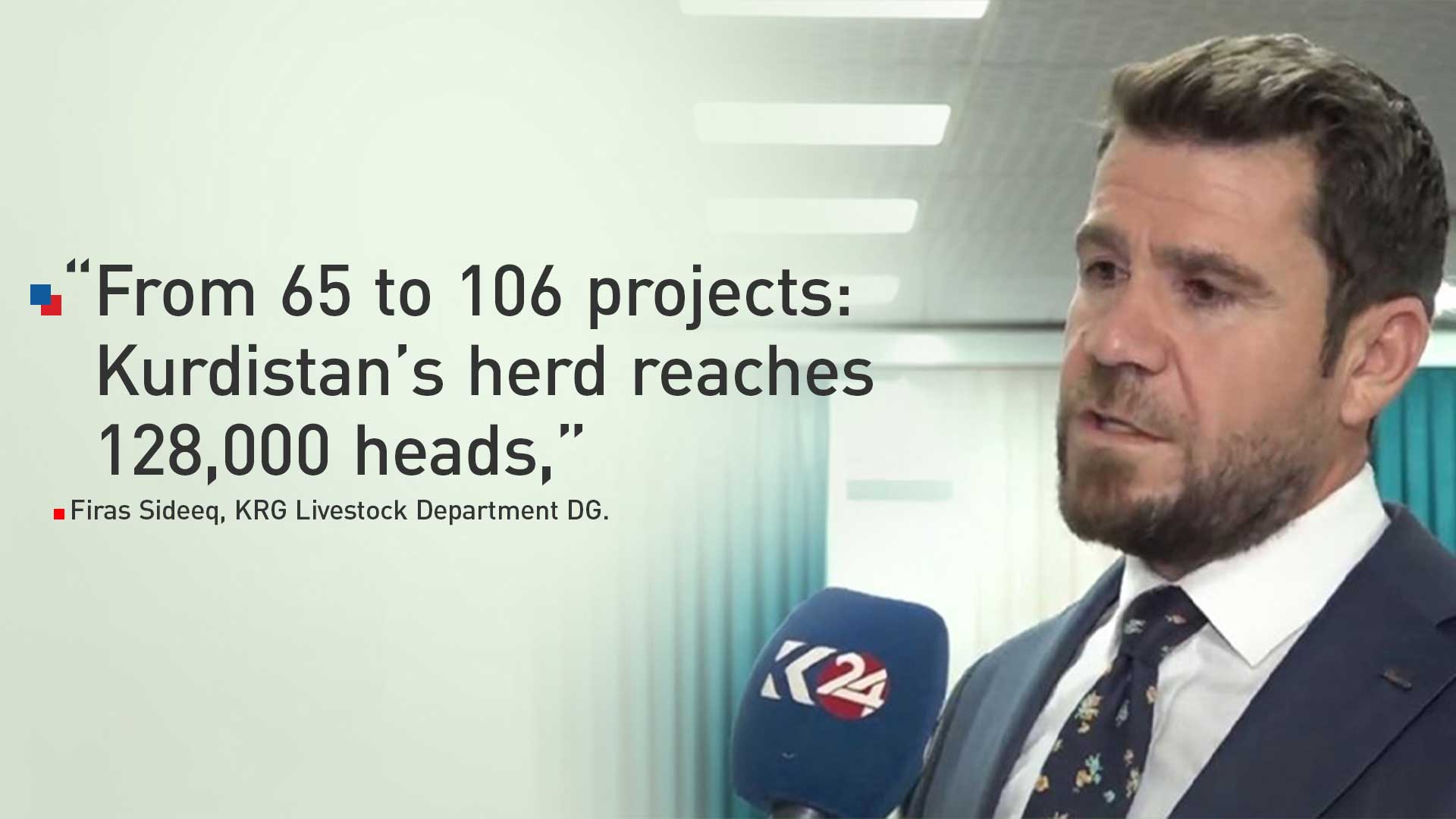
ERBIL (Kurdistan24) — The Kurdistan Regional Government (KRG) is accelerating its livestock and dairy initiatives, expanding livestock projects from 65 to 106 and increasing total herds from 21,000 to 128,000 heads. The move is part of a broader strategy under the KRG's ninth cabinet to boost domestic production, reduce imports, and strengthen food security in the region.
Firas Sideeq, General Director of the Livestock Department at the Ministry of Agriculture, on Wednesday told Kurdistan24 that the KRG’s annual meat requirement is 90,000 tons, of which 40,000 tons are produced locally, and 50,000 tons are supplied through live animal imports.
“The government has worked to reduce dependence on imports, making production easier for local farmers,” Sideeq said.
“During the ninth cabinet, the number of livestock projects has increased from 65 to 106, and the total herd in these projects has risen from 21,000 to 128,000 heads.”
The dairy sector has also seen notable growth. Firas stated: "The Region's annual requirement is 500,000 tons of milk, 300,000 tons of which are supplied domestically. Previously, packaged local dairy products were rare in the markets; however, specialized projects in this sector have now increased from 73 to 82."
"Furthermore, the number of dairy cows has risen from 7,000 to 16,000, and a variety of dairy products under local brands are now available in the markets," he added.
The KRG’s recent expansion of livestock and dairy projects aligns with a broader strategic plan under the ninth cabinet to reduce reliance on imports, increase domestic production, and strengthen the region’s resilience to external shocks.
Large-scale projects like the Megal slaughterhouse and industrial dairy initiatives such as Zoom, Rami Farm, and Sanin not only modernize agricultural infrastructure but also provide direct support to local farmers, ensuring sustainable livelihoods and reinforcing rural economies.
These initiatives also form part of a wider effort to diversify the Kurdistan Region’s economy away from oil dependency. By increasing local production of meat and dairy, the KRG aims to stabilize domestic markets, create jobs, and position the region as a net contributor to food security in Iraq and the wider region.
Subject-matter Experts note that such programs are essential to prepare for long-term challenges, including climate change, population growth, and global market volatility, making agriculture and livestock cornerstones of the Kurdistan Region's stability and prosperity.