Iraq Marks Sixth Anniversary of ‘Leaders of Victory’ as PM Sudani Reaffirms Sovereignty Drive
Officials renew calls to restrict weapons to the state and recall the 2020 Baghdad airport strike
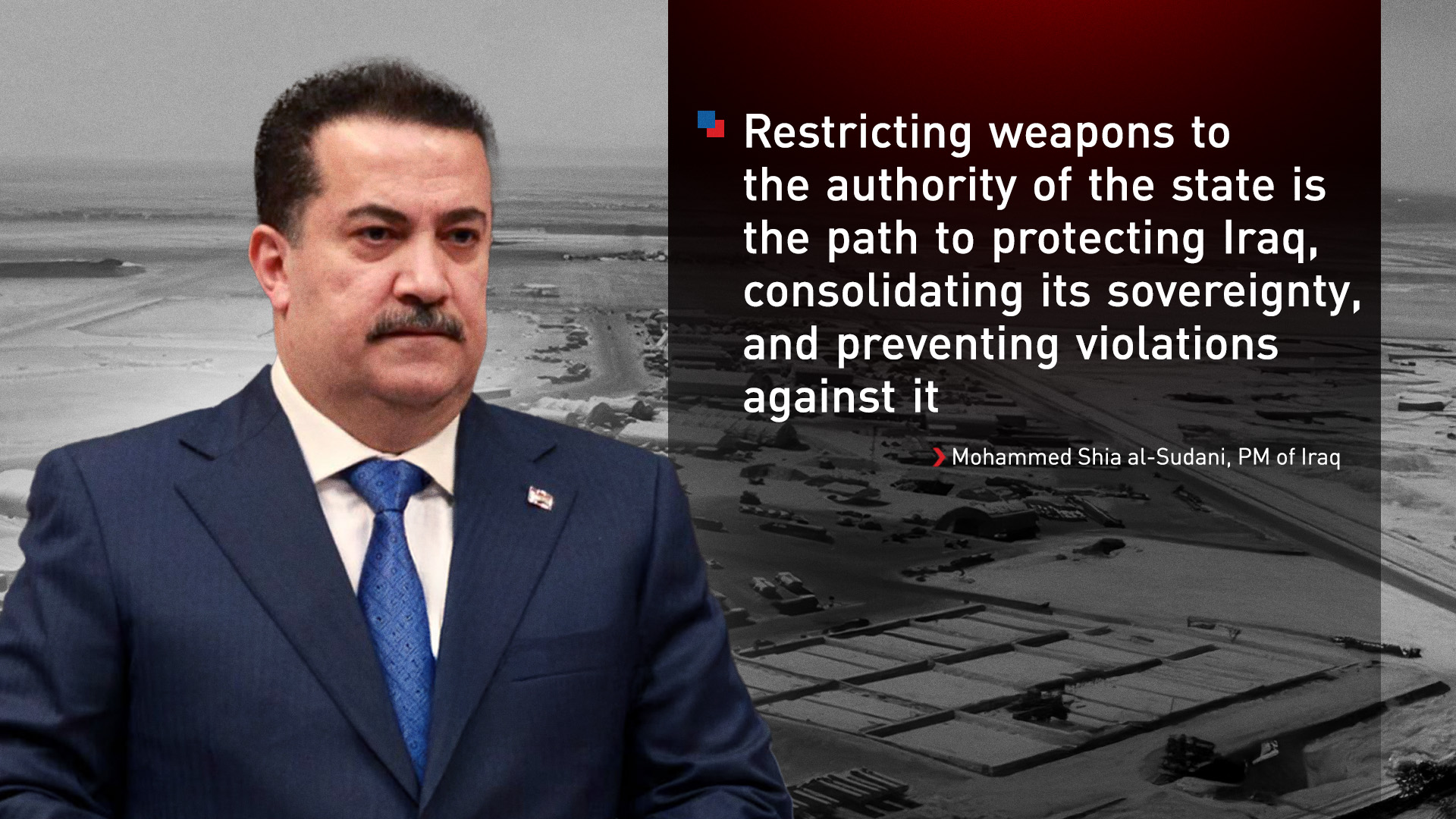
ERBIL (Kurdistan24) — Iraqi Prime Minister Mohammed Shia al-Sudani on Sunday marked the sixth anniversary of the killing of senior commanders Abu Mahdi al-Muhandis and Iranian General Qassem Soleimani, describing the 2020 Baghdad airport strike as a grave violation of Iraq’s sovereignty and international law.
Speaking at the central official ceremony commemorating what Iraqi authorities refer to as the “Leaders of Victory,” Sudani said the attack, which targeted the two figures near Baghdad International Airport, constituted an assault on a civilian and secure site protected under international conventions.
He noted that Iraq’s top Shiite religious authority had described the incident as a “brutal aggression.”
“Six years ago, in a clear violation of national sovereignty, a criminal attack targeted the leaders of victory, Abu Mahdi al-Muhandis, Major General Qassem Soleimani, and their companions,” Sudani said.
He added that their roles in combating terrorism, Iran's support, and other brotherly allies were among the key factors behind the defeat of the Islamic State group (ISIS).
Sudani praised al-Muhandis for what he described as a lifelong dedication to Iraq’s sovereignty, stressing that the former deputy head of the Popular Mobilization Forces (PMF) never distinguished between Iraqis in his words or actions.
He also said Soleimani’s contributions to the fight against terrorism in Iraq were undeniable, adding that he ultimately “ended his life as a martyr on Iraqi soil.”
The prime minister linked the anniversary to his government’s broader sovereignty agenda, saying Baghdad has worked “diligently” to protect Iraq from external threats and to honor the sacrifices of those killed by reinforcing state authority.
He said Iraq had moved to end the presence of the US-led international coalition in the country and would assume control of the Ain al-Asad air base in the coming days.
Sudani reiterated his government’s commitment to restricting weapons to the state, arguing that the policy strengthens sovereignty and protects Iraq from being used as a pretext for external attacks.
He stressed that disarmament efforts would be “purely Iraqi” and aligned with guidance from the religious establishment, which has repeatedly called for arms to be confined to official institutions.
In pointed remarks, Sudani also accused Israel of seeking to advance what he described as a destabilizing agenda in the region, adding that Iraq represents a cornerstone of regional stability.
He further said Baghdad had concluded the United Nations Assistance Mission for Iraq (UNAMI), describing the move as another step in consolidating national sovereignty.
Iraq’s Chief Justice Faiq Zaidan, speaking at the same event, said the anniversary was an occasion to honor a “historic epic” that preserved Iraq’s security. He described the slain commanders as symbols of unity who sacrificed their lives out of loyalty and duty.
“The national and moral obligation before us is to build the state,” Zaidan said, stressing that Iraq must be founded on the rule of law and the exclusive authority of the state over weapons.
He said there was no longer any need for arms outside state control and that restricting weapons to official institutions does not negate past sacrifices.
The anniversary commemorates the January 3, 2020, US drone strike near Baghdad International Airport that killed Soleimani, a senior commander in Iran’s Islamic Revolutionary Guard Corps, and al-Muhandis, a powerful figure within Iraq’s PMF.
The strike sharply escalated US-Iran tensions and prompted Iraq’s parliament to pass a non-binding resolution calling for the withdrawal of foreign forces.
Since taking office, Sudani has sought to balance relations with Washington and Tehran, but has faced persistent challenges in asserting greater Iraqi control over security, amid entrenched political and armed actors and ongoing regional pressures.
The commemoration comes as Iraq continues to navigate regional tensions and internal debates over the future role of armed groups and the scope of state authority.