Israel Opens Diplomatic Chapter With Somaliland in Landmark Visit
On his first visit, Israeli Foreign Minister pledges ambassador and embassy in Somaliland despite limited international recognition.
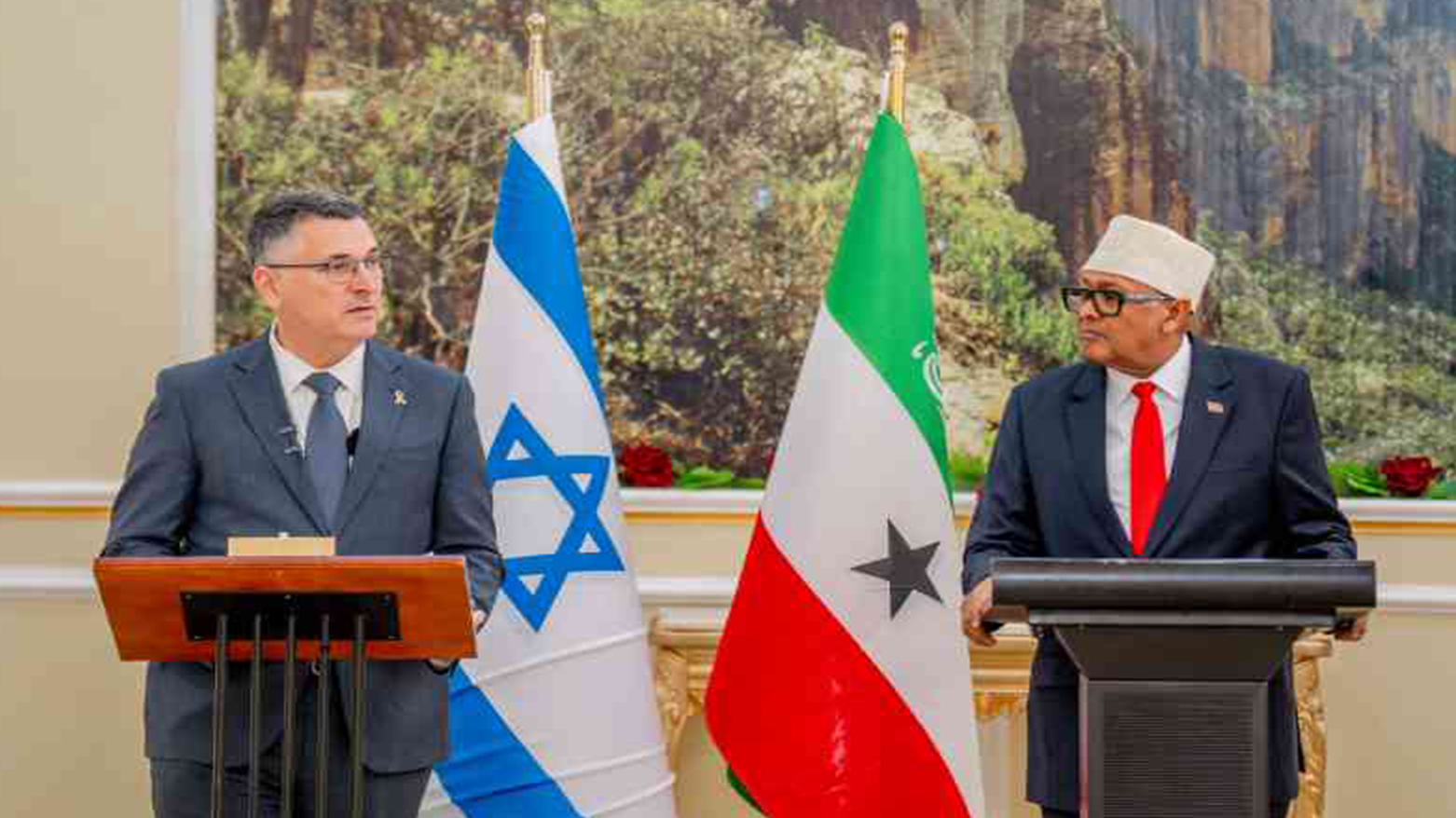
ERBIL (Kurdistan24) — Israeli Foreign Minister Gideon Saar visited Somaliland on Tuesday, pledging to deepen bilateral ties and open an Israeli embassy, days after Israel became the first country to formally recognize the breakaway republic’s independence from Somalia—a move that has drawn sharp regional and international criticism.
On his first official trip to Somaliland, Saar said Israel would soon appoint an ambassador and establish a permanent diplomatic presence in the territory, which most of the international community still considers part of Somalia.
“Nobody will determine for Israel who we recognize and who we maintain diplomatic relations with,” Saar said, according to a transcript shared with The Associated Press.
Somaliland President Abdirahman Mohamed Abdullahi welcomed the visit, describing it as “historic” and “an important milestone” in relations between the two sides.
Somaliland’s Information Ministry said Saar and his delegation were received by senior cabinet officials upon landing in Hargeisa, the capital.
In an interview with The Associated Press, Somaliland Foreign Minister Abdirahman Dahir Adan said his government was “very grateful” for Israel’s recognition, arguing that the two entities share similar security challenges and strategic interests, particularly in the Red Sea region.
“Israel is in a region where many of its neighbors are enemies. And Somaliland is in an area where many of their neighbors are hostile to them,” Adan said, adding that the two face “very, very similar” struggles.
He predicted that other countries would follow Israel in recognizing Somaliland in the near future. Somaliland occupies a strategic location along the Gulf of Aden, a vital global shipping lane opposite Yemen, and hosts a port that has attracted interest from regional powers.
Israel’s December 26 decision to recognize Somaliland was swiftly rejected by the African Union and a broad group of countries. Somalia’s federal government condemned Saar’s visit on Tuesday, calling it an “unauthorized incursion” and “an unacceptable interference in the internal affairs” of Somalia.
Somalia insists that Somaliland remains an integral part of its sovereign territory and warns that international recognition of the region undermines its territorial integrity.
More than 20 countries—mostly from the Middle East and Africa—along with the Organization of Islamic Cooperation have rejected Israel’s move. Egypt’s Foreign Minister Badr Abdelatty said Israeli recognition of Somaliland set a “dangerous precedent that threatens regional and international peace and security.”
Ethiopia, Kenya, and the United Arab Emirates—key regional actors—have not publicly joined the condemnations.
Video footage circulating on social media during Saar’s visit appeared to show fighter jets flying over Hargeisa, though it was not immediately clear which country the aircraft belonged to.
Somaliland declared independence from Somalia in 1991 amid the collapse of Somalia’s central government and a civil war that continues to destabilize the Horn of Africa. Despite maintaining its own government, security forces, and currency for more than three decades, Somaliland had never before received formal recognition from any country.
Israel’s decision to formalize ties with Somaliland represents a significant step in diplomatic engagement, underscoring Somaliland’s emerging role on the international stage and the strategic importance of the region’s maritime corridors.