U.K. Voices Concern Over Northern Aleppo Clashes as Fighting and Displacement Intensify
Britain voiced concern over northern Aleppo clashes, urging de-escalation and civilian protection as Syrian Army operations in Kurdish districts triggered fighting and displacement.
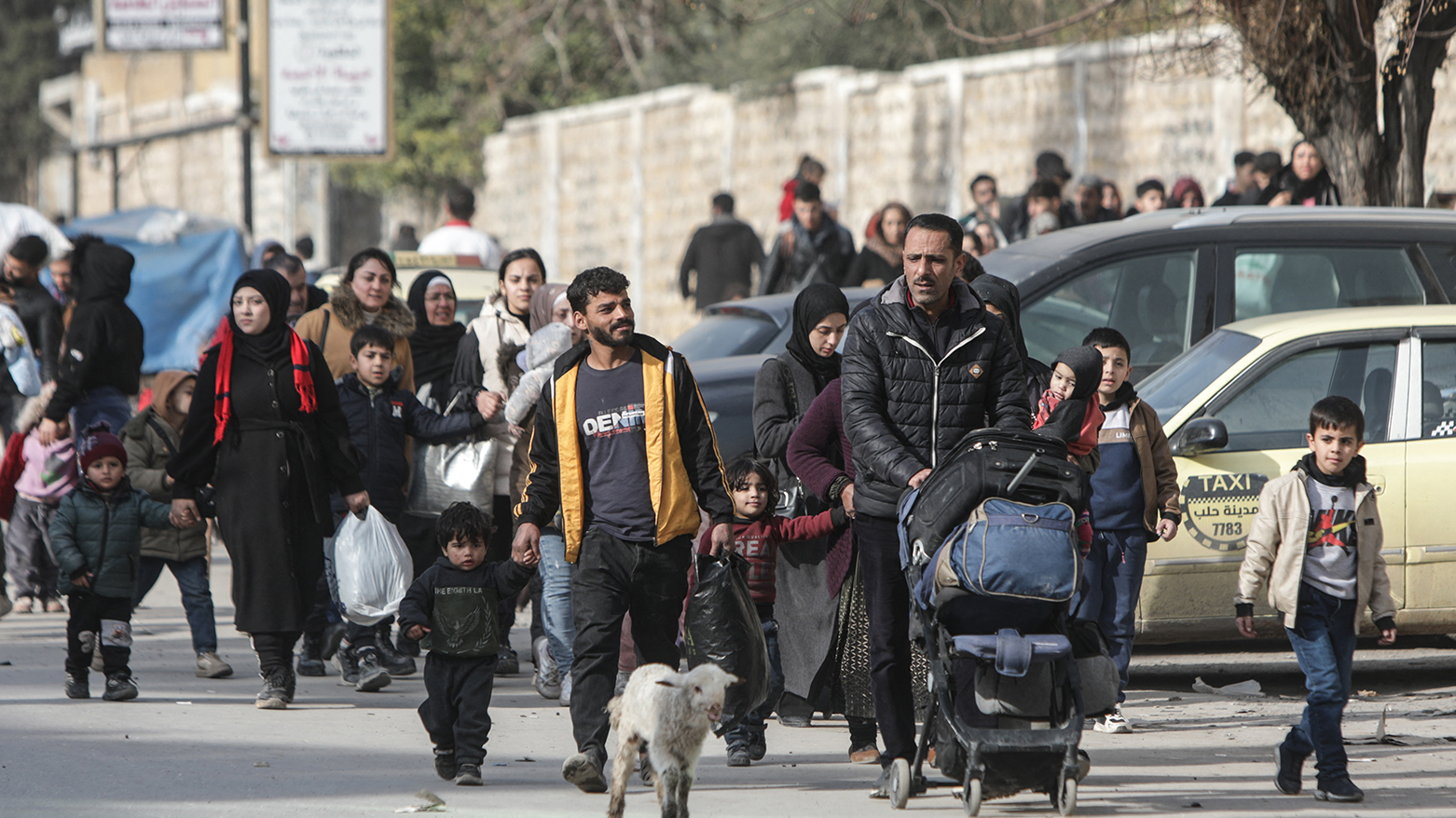
ERBIL (Kurdistan24) — The United Kingdom expressed deep concern on Wednesday over clashes in northern Aleppo that have resulted in civilian casualties and displacement, calling for immediate de-escalation, dialogue, and the protection of civilians, according to a statement posted on X by Ann Snow, the U.K. Special Representative for Syria.
In her post dated Jan. 7, 2026, Snow said she was “deeply concerned by clashes in northern Aleppo, civilian casualties and displacement at a time when stabilising Syria is so important.” She added that Great Britain was calling for “immediate de-escalation, dialogue and the protection of civilians,” and said British officials were continuing to monitor the situation closely.
Deeply concerned by clashes in northern Aleppo, civilian casualties and displacement at a time when stabilising Syria is so important.
— Ann Snow (@UKSyriaRep) January 7, 2026
🇬🇧 calls for immediate de-escalation, dialogue and the protection of civilians.
We continue to monitor the situation closely.
The statement came amid rapidly escalating fighting in Aleppo’s Kurdish neighborhoods of Sheikh Maqsood and Ashrafiyeh, which Syrian authorities on Wednesday declared closed military zones. The decision followed the launch of military operations in and around the densely populated districts, intensifying clashes and accelerating civilian displacement, according to earlier reporting by Kurdistan24.
In a statement issued by the Operations Body of the Syrian Army, authorities announced that all routes into and out of Sheikh Maqsood and Ashrafiyeh would be sealed as of 3:00 p.m. on Wednesday. The army said only two humanitarian corridors—Awariz Crossing and Zuhoor Street—would remain temporarily open to allow civilians to leave the area.
The Syrian Army said the neighborhoods now constituted a military zone and warned residents to distance themselves from positions held by the Syrian Democratic Forces, stating that all SDF sites inside Sheikh Maqsood and Ashrafiyeh would be considered legitimate military targets. The warning underscored the severity of the military posture adopted by Syrian authorities and heightened concerns for civilians who remained in the area.
Local Kurdish authorities disputed the government’s account of events. The General Council of the Sheikh Maqsood and Ashrafiyeh neighborhoods accused Syrian government forces of initiating indiscriminate shelling of civilian areas using heavy weapons. Speaking at a press conference, council representatives said the bombardment was aimed at intimidating residents and breaking the will of Kurdish civilians.
“The attack has begun with all kinds of heavy weapons,” the General Council said in a statement directed to public opinion and Kurdish communities across the region. Despite the escalation, the council said it would not abandon the defense of what it described as Kurdish land, rights, and survival. It called on residents to defend their homes alongside Asayish internal security forces and to repel attacks across all defensive positions.
The fighting has disrupted daily life across the two neighborhoods. Schools and public institutions in Sheikh Maqsood and Ashrafiyeh remained closed for a second consecutive day as clashes continued between Syrian government-affiliated forces and SDF security units.
According to unofficial figures cited by local sources, at least nine people were killed over the past 24 hours, with dozens more injured, including civilians, women, and children. The figures could not be independently verified. As hostilities intensified, displacement accelerated, with Kurdistan24 reporting that the Syrian Civil Defense evacuated 850 civilians from the two neighborhoods by 12:30 p.m. on Wednesday.
The evacuations were carried out through assembly points in the Awariz area and along Zuhoor Street, coinciding with growing civilian departures from nearby districts affected by reciprocal shelling between Syrian factions affiliated with the Interim Government and the SDF. Residents faced urgent decisions as the humanitarian corridors were set to remain open for only a limited period.
Syrian authorities framed their actions as a response to what they described as a major escalation by the SDF toward Aleppo neighborhoods, accusing the group of committing “numerous massacres against civilians.” The Operations Body reiterated its call for civilians to immediately distance themselves from SDF positions before the corridors closed at the stated deadline.
The escalation prompted reactions from Kurdish political and military figures. Sipan Hamo, a member of the General Command of the Syrian Democratic Forces, issued a message addressed to residents of Sheikh Maqsood and Ashrafiyeh, describing the day as one of “dignity” and portraying the neighborhoods as longstanding symbols of resistance. He said residents had endured more than 15 years of attacks, sieges, and assaults and praised their unity and determination to defend their homes alongside fighters.
Human rights organizations also weighed in. The Syrian Observatory for Human Rights issued a statement accusing Syrian authorities of committing “sectarian crimes and ethnic cleansing” against various components of Syrian society. The observatory alleged that government forces had previously targeted other communities and were now directing similar actions against Kurds, asserting that the current operations reflected the same “racist spirit.”
Later in the day, Ilham Ahmed, head of foreign relations for the Autonomous Administration of North and East Syria, said in a post on X that the Syrian Ministry of Defense had declared war on neighborhoods filled with civilians. She said the move amounted to a war of extermination against Kurds who had already suffered under previous oppression, noting that many residents were forcibly displaced from Afrin.
Against this backdrop of mounting civilian harm and displacement, the statement by the U.K. Special Representative underscored international concern over the trajectory of the fighting. Snow’s call for de-escalation and dialogue echoed growing alarm over the risks to civilians as the confrontation in northern Aleppo continued to intensify.