UNHCR Delegation Praises Barzani Charity Foundation’s Humanitarian Operations in Qamishli
Senior UN officials commend the quality, organization, and scale of aid delivered to displaced communities in northeastern Syria.
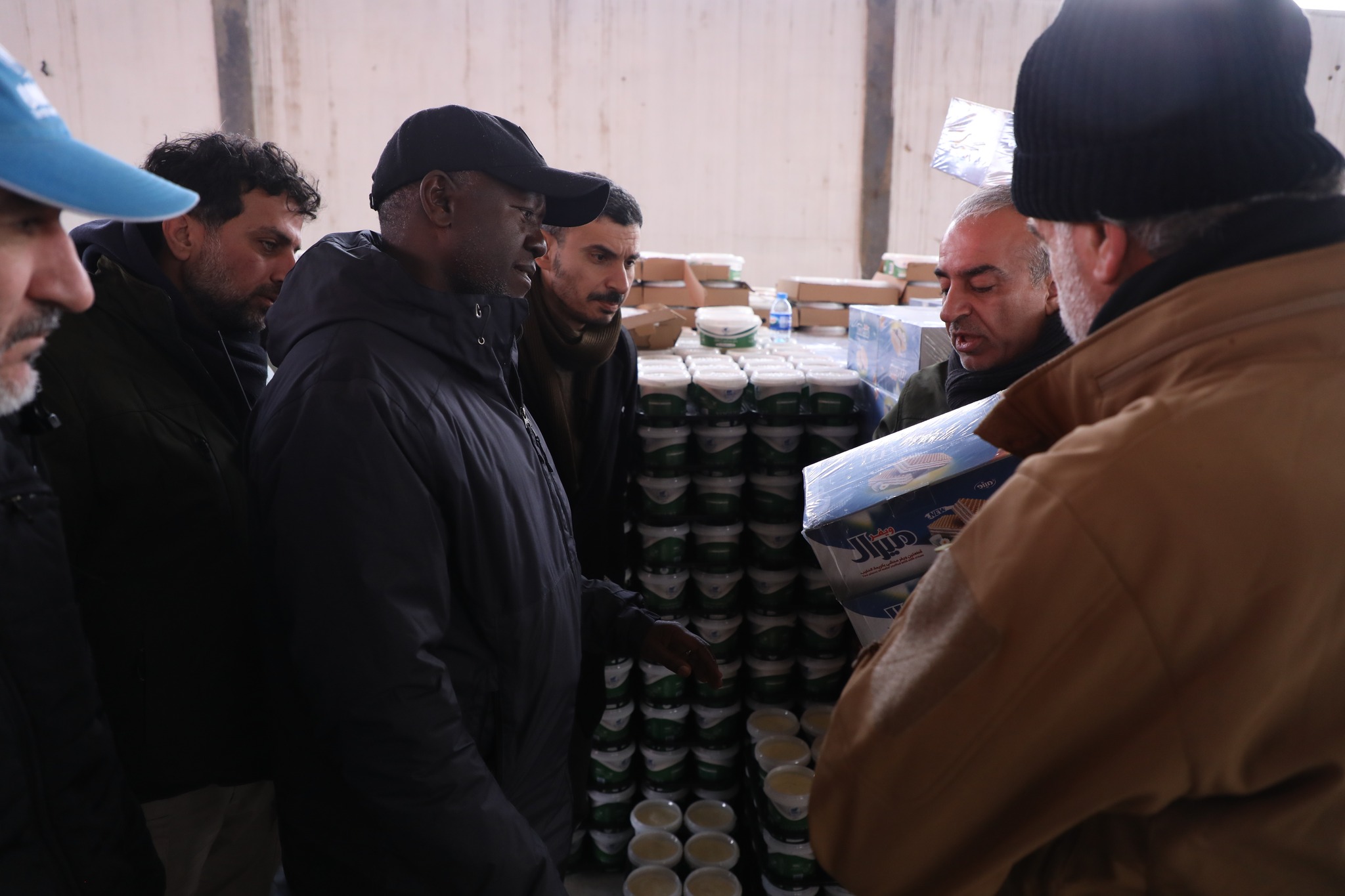
ERBIL (Kurdistan24) — A high-level delegation from the United Nations High Commissioner for Refugees (UNHCR) in Syria has expressed strong appreciation for the humanitarian work of the Barzani Charity Foundation (BCF) during a visit to its office in Qamishli on Saturday. The delegation, led by James Karanja, held an extensive meeting with foundation officials to discuss the deteriorating humanitarian situation in the region and the severe conditions facing displaced families.
During the visit, the UNHCR team toured several aid distribution sites and reviewed ongoing relief operations. Delegation members praised the quality, coordination, and professionalism of BCF’s humanitarian response, commending its ability to deliver assistance efficiently under highly challenging conditions.
They also thanked the foundation for its sustained efforts in alleviating human suffering in conflict-affected areas.
The Barzani Charity Foundation has significantly expanded its emergency response in recent weeks to meet urgent and rapidly escalating humanitarian needs in the Kurdistan Region–adjacent areas of northeastern Syria, particularly in al-Hasakah governorate and surrounding districts.
Acting under the directive of President Masoud Barzani and with the direct supervision of Kurdistan Regional Government Prime Minister Masrour Barzani, the foundation deployed a specialized humanitarian team of 160 personnel to deliver critical aid to displaced and affected populations.
On Thursday, BCF successfully crossed the Fishkhabour (Semalka) border crossing, delivering a large-scale humanitarian convoy into western Kurdistan. The operation, described as a major logistical and humanitarian achievement, underscored the foundation’s capacity to reach hard-to-access and high-risk areas despite severe operational constraints—an effort few organizations are able to carry out on such a scale.
The humanitarian assistance included the delivery of 710 tons of emergency and basic relief supplies transported by 67 trucks, comprising nearly 22 different aid items. Food packages contained staple items such as rice, bulgur, lentils, beans, cooking oil, yogurt, and poultry, while non-food items included hygiene kits, blankets, mattresses, and heating supplies.
The aid also covered clothing for all age groups, with special attention to children and the elderly, as well as tents to provide temporary shelter for displaced families.
In addition, fully equipped medical teams supported by ambulances were deployed to provide emergency treatment and rapid response to critical cases. Mobile kitchens were also established to prepare and distribute hot meals, ensuring continuous food support for beneficiaries.
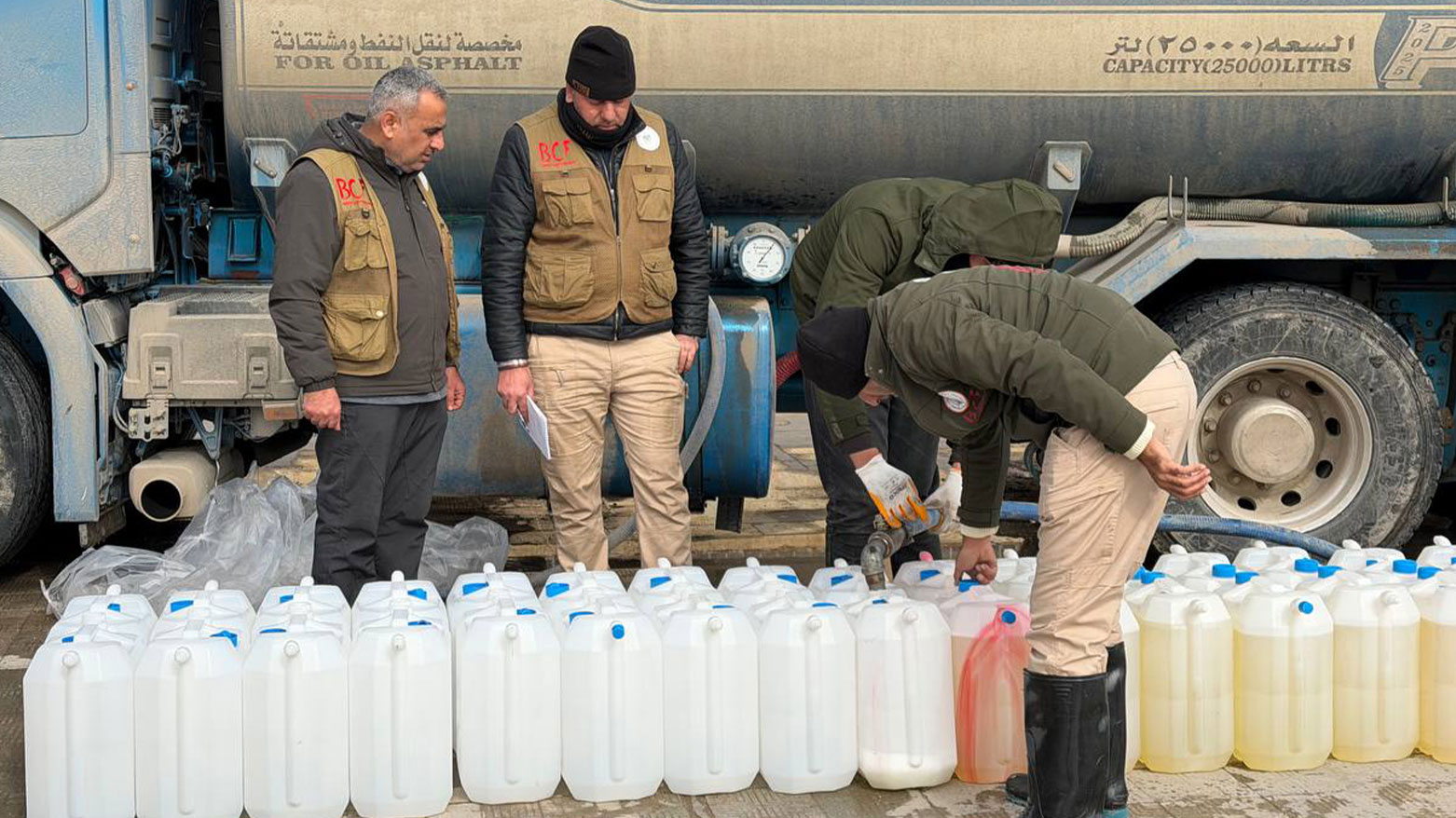
As part of the response, 100,000 liters of fuel (mazut) were provided—funded directly by Prime Minister Masrour Barzani—to support displaced families along the al-Hasakah border areas.
As part of its health intervention, BCF deployed a dedicated medical unit consisting of four ambulances and 25 healthcare workers. Over two days of operations, medical teams conducted examinations for 685 individuals and distributed 1,738 medical items to patients in need.
The foundation emphasized that the continuity of such humanitarian operations relies heavily on the ongoing support of partners, donors, and the people of the Kurdistan Region.
BCF expressed gratitude to all benefactors who responded to its appeals, stressing that their contributions play a vital role in ensuring further assistance reaches displaced Kurdish families in northeastern Syria.
The recent escalation in northeastern Syria has followed weeks of renewed clashes and military pressure by the Syrian Arab Army against predominantly Kurdish areas and positions held by the Kurdish-led Syrian Democratic Forces (SDF) fighters, known locally as Sharavan.
The confrontations have been concentrated around key towns and strategic corridors in Hasakah and parts of Raqqa and Deir ez-Zor provinces, where intermittent fighting, artillery exchanges, and security operations have disrupted already fragile stability.
Kurdish officials and local monitors say the violence has triggered fresh waves of displacement, with thousands of civilians fleeing frontline areas amid shortages of food, fuel, and medical supplies.
Humanitarian agencies have warned that the fighting has further strained overcrowded camps and weakened basic services, including electricity, water, and healthcare, in a region still grappling with the long-term impact of war, economic collapse, and the lingering threat posed by Islamic State cells.
Access constraints and insecurity have hampered aid delivery, raising concerns that the latest escalation could deepen an already severe humanitarian crisis affecting civilians across northeastern Syria.