Massive Wave of Displacement Sweeps Western Kurdistan
A massive wave of displacement has reached 130,000 people in Rojava as a siege on Kobani continues. Local officials report child fatalities from cold and medical shortages amid an aid blockade.
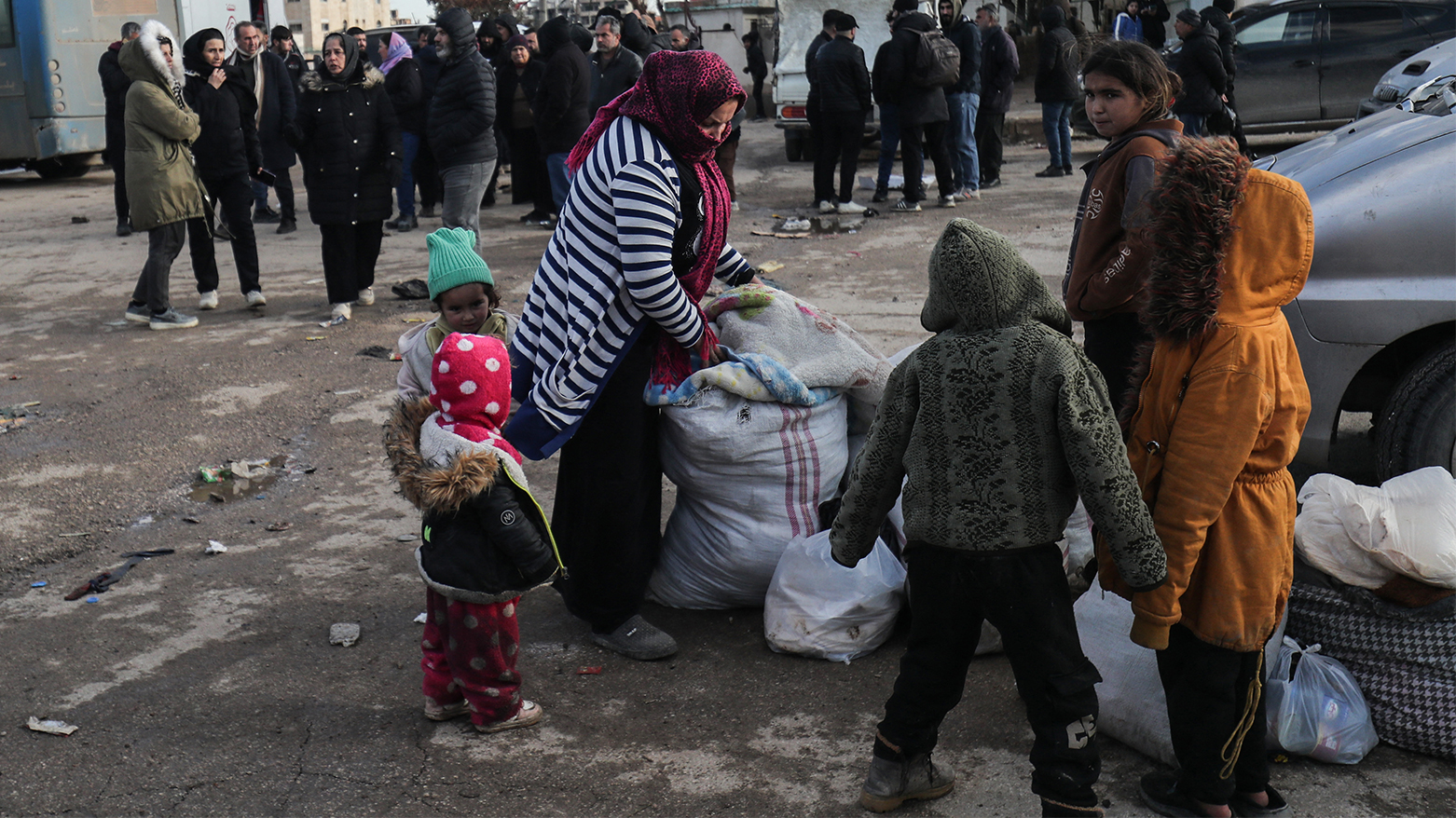
ERBIL (Kurdistan24) – A new and extensive wave of displacement has engulfed Western Kurdistan, also known as Rojava, as thousands of civilians flee deteriorating security conditions in outlying villages to seek refuge in urban centers. Akram Saleh, a correspondent for Kurdistan24 reporting from Qamishlo, confirmed on Sunday that a large number of citizens have abandoned their homes and belongings over the past few days, heading toward the center of Qamishlo city where they are currently being sheltered in mosques and schools under increasingly harsh conditions.
The humanitarian situation is trending toward further complexity as official statistics indicate that more than 130,000 displaced persons have already arrived in various regions from areas including Sheikh Maqsud, Ashrafiyeh, Raqqa, and Tabqa.
In the last several days, a significant portion of this population has redirected toward the city of Hasakah. Projections from local authorities suggest that if current tensions persist, the number of displaced individuals is likely to reach 150,000 in the coming days.
This demographic shift occurs at a time when the region is grappling with a severe lack of international humanitarian aid. While several international organizations and United Nations-affiliated agencies have historically maintained a presence in the region, reports indicate that none are currently providing significant assistance to the newly displaced.
Amid this gap in services, the Barzani Charity Foundation (BCF) remains the sole relief provider on the ground, continuing to deliver food and basic necessities to families uprooted by the conflict.
The displacement crisis arrives amidst a broader military and political escalation that has drawn sharp condemnation from regional leaders. Gulistan Kiliç, the head of the parliamentary group for the Peoples’ Equality and Democracy Party (DEM Party), characterized the ongoing offensive as a systematic campaign against the Kurdish population.
Speaking on Kurdistan24’s "Basi Roj" program on Saturday, Kiliç asserted that the current hostilities are a continuation of the violence that erupted in early January in the neighborhoods of Aleppo. She alleged that an "ISIS-like and extremist mindset" now governs the Syrian state’s approach, inciting ethnic conflict and risking the emergence of a new dictatorial structure in Damascus.
Kiliç specifically criticized the United States and Türkiye—both NATO members—arguing that their support for "Arab Syria" has allowed the advance to continue. She emphasized that international pressure could immediately lift the blockades on Kurdish districts, such as Kobani, but noted that no positive response has been received despite repeated appeals to European and Turkish authorities.
The geopolitical alarms are most acute in the city of Kobani, which has remained under an encompassing military blockade by the Syrian Arab Army and affiliated armed groups for seven days.
The Democratic Autonomous Administration of North and East Syria (DAANES) has described the situation in the city as a "slow death" for its 150,000 residents. Avin Qamishlo, Co-chair of the Media Office for the DAANES, reported to Kurdistan24 on Saturday that the medical crisis has reached a lethal stage, confirming the death of a child in a Kobani hospital due to a critical lack of medical oxygen.
Health facilities in the city have reportedly collapsed, with hospitals relying entirely on emergency generators that are running low on fuel.
Local Kurdish political organizations issued a joint statement on Saturday characterizing the siege as a form of "collective punishment" that constitutes a crime against humanity under the Geneva Conventions.
The statement noted that essential services, including electricity, water, and internet, have been completely cut for a week, leaving thousands of civilians in immediate danger. This infrastructure collapse is compounded by a historic winter storm, the most severe the region has experienced in 50 years.
The Kurdish Red Crescent reported on Saturday that five children, including an infant, have died in Kobani specifically due to the extreme cold and a total absence of heating fuel.
The obstruction of aid remains a primary obstacle to alleviating the suffering. While the Barzani Charity Foundation has managed to deliver 102 trucks of aid—comprising 850 tons of food and 300,000 liters of fuel—to other parts of Rojava, none of these supplies have been permitted to enter Kobani.
Farhan Haq, the Deputy Spokesperson for the UN Secretary-General, expressed concern on Friday that all access routes to the city are closed. While the UN has successfully reached other hubs like Hasakah and Raqqa, it has been forced to request specific "facilitation" from officials in Aleppo to reach the trapped population in Kobani.
Amidst this suffering, thousands of members of the Kurdish diaspora have mobilized in Europe. In Paris, official police statistics recorded approximately 7,500 participants in a demonstration on Saturday. Protesters raised banners reading "Kobane will not fall" and "Defend Rojava," calling on the French government to provide more than just rhetorical support.
Demet Sahin, a lawyer at the Paris protest, told Agence France-Presse (AFP) that there is a profound fear that the international community is remaining silent while Kurds face betrayal on the ground. The intensity of these protests has led to 24 arrests and injuries to 21 police officers in recent days, prompting a ban on demonstrations in Marseille.
Against this background of unrest and humanitarian disaster, a fragile 15-day ceasefire extension was announced late Saturday through international mediation. The Syrian Democratic Forces and the Syrian Ministry of Defense confirmed the truce, which Damascus indicated is intended to facilitate the transfer of approximately 7,000 ISIS detainees to Iraqi territory.
While 150 ISIS fighters have already been moved to Iraq, the duration of the ceasefire remains a vital window for potential political dialogue. However, local leaders maintain that the future of the region depends on whether these diplomatic efforts can translate into the immediate lifting of sieges to prevent further civilian fatalities.