Joe Wilson Backs Trump’s Iraq Policy, Calls for Militia Disarmament and Judicial Independence
U.S. Rep. Joe Wilson says Washington’s position under President Trump is “clear and unequivocal,” urges disarmament of militias, and closer U.S. ties.
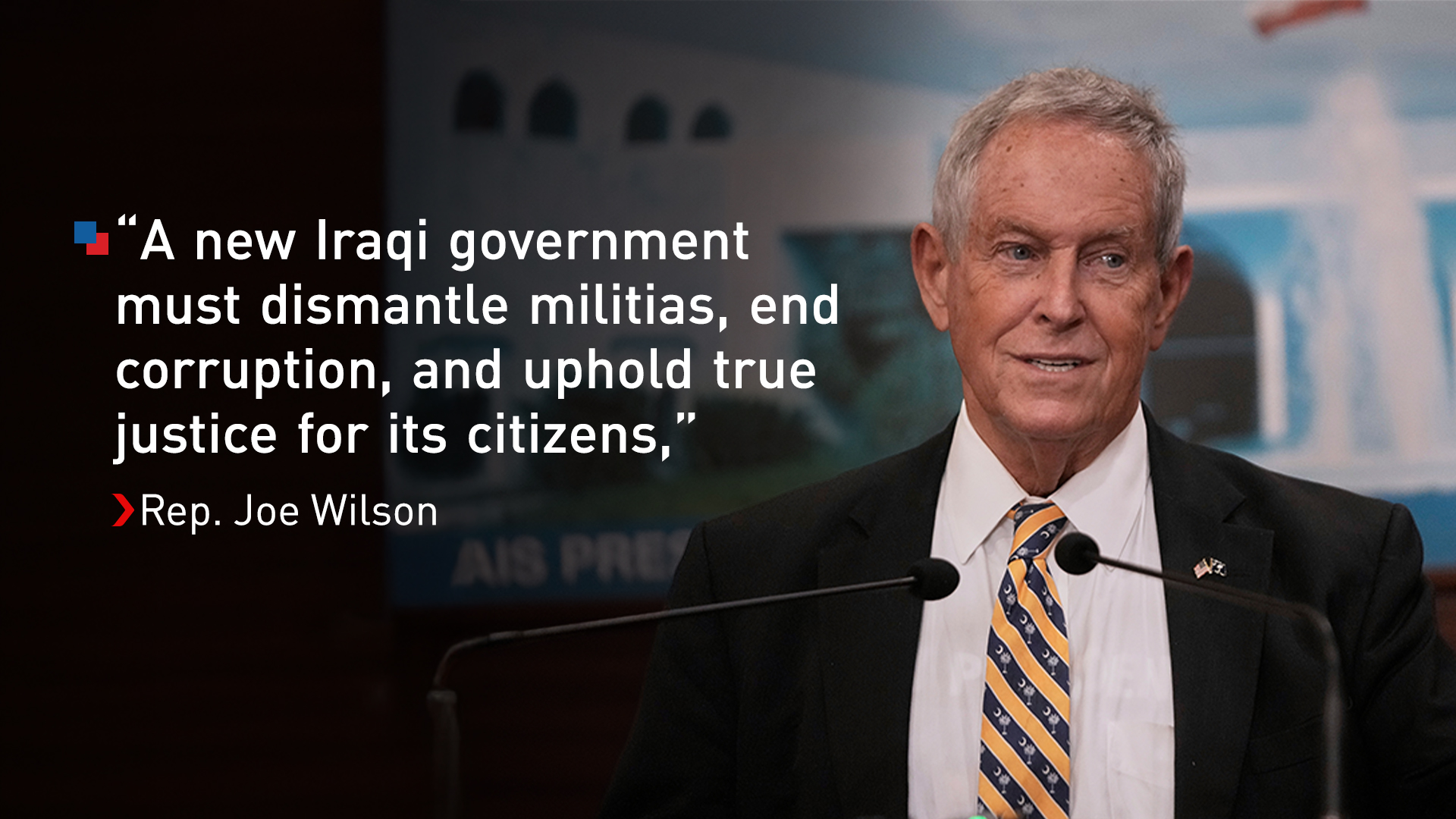
ERBIL (Kurdistan24) — U.S. Representative Joe Wilson issued a stark warning to Iraq’s political leadership on Wednesday, declaring that foreign influence in Iraq will no longer be tolerated and setting out a series of conditions he said any new Iraqi government must meet to retain U.S. support.
In a statement published on his X account, the South Carolina Republican praised the efforts of U.S. President Donald Trump and Special Envoy Mark Savaya, saying he was “grateful to support” their work on Iraq and to “Make Iraq Great Again.”
Wilson said it was “critical” that Iraqi leaders do not repeat past mistakes by misreading the U.S. position as “ambiguous or negotiable,” stressing that Washington’s stance under Trump is “clear and unequivocal.”
Foreign influence in Iraq will no longer be tolerated, Wilson wrote, adding that the era in which outside actors imposed prime ministers on Iraq is over.
The congressman said the next prime minister and government must serve “only the interests of the Iraqi people,” arguing that the practice of sacrificing Iraq’s wealth, sovereignty, and stability to serve external agendas had ended.
Wilson outlined a detailed list of requirements he said any incoming Iraqi government must fulfill, beginning with the full disarmament and dismantling of all militia groups within six to twelve months. He also called for immediate and systematic action to combat corruption and money laundering “with no exceptions.”
He further demanded the establishment of a genuinely independent judiciary, free from the influence of political parties or factions, warning that the courts must never be used as a political weapon. Iraqi authorities, he said, must also sever foreign influence in domestic affairs.
Addressing the Popular Mobilization Forces (PMF), Wilson said their role must be institutionalized and clearly defined under the Iraqi Armed Forces and official security institutions, with unified command and control and “no parallel or uncontrolled structures.”
He also emphasized that all cabinet members should be competent professionals loyal to the state rather than to parties, factions, or individuals, and urged Iraq to commit to building “strong, durable, and strategic economic and security ties” with the United States.
Wilson concluded by reiterating that Special Envoy Savaya would play “a decisive role” in helping Iraq restore its sovereignty, stability, and national strength, underscoring what he described as a more assertive U.S. approach toward Iraq under the Trump administration.
These remarks underscore the tougher U.S. posture outlined by congressional leaders, as Washington signals that its political, security, and economic engagement with Iraq will be conditional on decisive action against corruption, militias, and foreign interference.
Trump's Special Envoy Savaya on Tuesday said U.S. efforts in Iraq extend beyond supporting government formation and countering militias to confronting what he described as a deep-rooted corruption crisis undermining the state.
In a post he published on X, He said Washington’s approach goes further than tracing looted funds transferred abroad, focusing instead on identifying how those assets were ultimately used and who benefited from them, including senior Iraqi officials and members of their families.
Savaya said U.S. authorities, working in coordination with other institutions, have developed a comprehensive picture of corruption networks, revealing that stolen Iraqi funds were used to purchase properties in multiple countries and to obtain foreign citizenships and passports—sometimes under false identities—to evade accountability.
He warned that corruption not only harms Iraq’s people and national security but also empowers terrorist groups, adding that the United States will work closely with the Treasury Department and the Office of Foreign Assets Control to enforce accountability “without exception,” stressing that no one is above the law and that justice must be delivered to the Iraqi people.