Sustained Siege of Kobani Triggers Acute Bread Crisis as Humanitarian Conditions Deteriorate
Kobani faces a major humanitarian crisis as a military siege has left only three bakeries operational with three days of flour remaining. Children have died from cold and medical shortages.
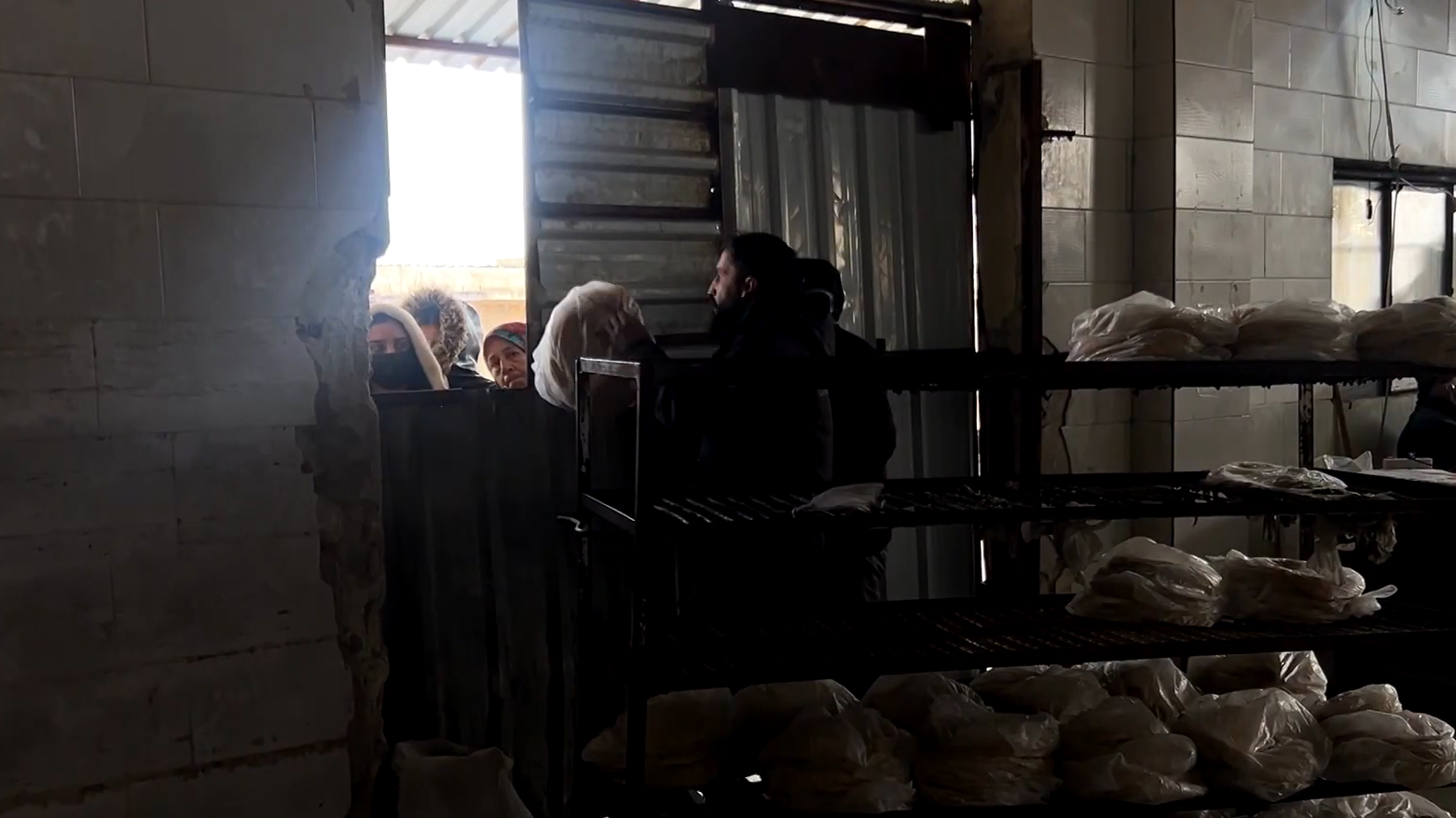
ERBIL (Kurdistan24) - The city of Kobani and its surrounding districts in northeastern Syria are facing a rapidly accelerating humanitarian crisis as a strict military siege by the Syrian Arab Army and affiliated armed groups enters a critical phase, resulting in a severe shortage of bread and the collapse of basic services.
Local officials and international observers warned on Tuesday that food security for approximately 150,000 civilians is now in immediate jeopardy, compounded by a lack of fuel, electricity, and a record-breaking winter storm.
According to a report detailing the conditions within the city, the population of central Kobani has nearly doubled in recent weeks as displaced persons from Raqqa, Tabqa, and various frontline villages seek refuge from ongoing instability. This demographic surge has placed unsustainable pressure on the city's limited resources.
The most acute threat to survival has emerged in the industrial sector responsible for the city’s food supply; out of 30 bakeries that previously served the area, only three—the Sheran, Qara-Mazre, and Ali bakeries—remain operational.
Ismail Hajim, the Director of Kobani Bakeries, provided a stark assessment of the logistics of survival under the blockade. "Due to the influx of displaced people, the city's population has doubled," Hajim stated.
He noted that while daily production was increased from a pre-war average of 15 to 20 tons to a current output of 25 to 30 tons, it remains insufficient to meet the needs of the residents.
Crucially, Hajim issued a three-day warning regarding the city’s remaining reserves. "We warn that we only have flour remaining in our warehouses for three more days; if aid does not arrive, the bakeries will also cease to function," he said.
The city is currently encircled on three sides by the Syrian Arab Army and Damascus-affiliated militias, while the border with Turkey remains closed on the final side. This total isolation has led to a complete cutoff of electricity and municipal water since January 15.
The energy crisis was precipitated by the targeting of the Tishrin Dam, the region’s sole source of power. In the absence of a centralized grid, some families have attempted to utilize solar energy, but the utility of such measures is limited during a winter that meteorologists have described as the most severe in 50 years.
Lethal Consequences of the Encirclement
The human cost of the siege has already turned lethal. The Democratic Autonomous Administration of North and East Syria (DAANES) announced that at least one child died in a Kobani hospital on Saturday due to a critical lack of medical oxygen.
Health facilities are reportedly functioning solely on emergency generators, and medical professionals warn that diesel reserves are almost entirely depleted.
Dr. Haqi Ali Demir, a specialist in anesthesia and intensive care at Aykor Hospital, characterized the situation as "living the final hours before a major catastrophe," noting that if generators fail, patients dependent on ventilators face an effective death sentence.
Furthermore, the Kurdish Red Crescent reported on Saturday that five children, including an infant, died in the city specifically due to exposure to the extreme cold. The fatalities are linked to a significant drop in temperatures and a total lack of heating fuel, which has also allowed for the rapid spread of respiratory and chest illnesses among the youth population.
Monitoring groups like the Syrian Observatory for Human Rights have corroborated these reports, describing the situation as a "major humanitarian catastrophe" where citizens lack access to medicine for chronic conditions like diabetes and hypertension.
The crisis in Kobani persists despite the formal announcement of a 15-day extension of a regional ceasefire between the Syrian Democratic Forces (SDF) and Damascus, intended to facilitate the transfer of approximately 7,000 Islamic State (ISIS) detainees to Iraq.
While the United Nations has welcomed the start of some aid deliveries to the region, Farhan Haq, Deputy Spokesperson for the UN Secretary-General, emphasized that access routes to Kobani remain mostly closed.
He noted that while the UN has reached Hasakah and Raqqa, it has been forced to request specific "facilitation" from authorities in Aleppo to reach the trapped population in Kobani.
International Diplomatic and Material Response
The Barzani Charity Foundation (BCF) has been at the forefront of the regional relief effort. Musa Ahmad, the President of the BCF, confirmed during a press conference in Qamishlo that the foundation has successfully dispatched 114 trucks to Rojava (Western Kurdistan), providing food, medicine, and fuel to tens of thousands of individuals.
Under a directive from Kurdistan Region Prime Minister Masrour Barzani, the BCF has tripled its fuel distribution to 300,000 liters and provided kerosene to 81 schools. However, despite these efforts, only a very limited portion of aid has successfully penetrated the blockade around Kobani.
The deteriorating conditions have sparked international condemnation. In Washington, U.S. Senator Lindsey Graham announced the "Save the Kurds Act," which seeks to impose "crippling sanctions" on any government or group that targets Kurdish forces.
Former Secretary of State Mike Pompeo also cautioned that abandoning Kurdish allies would be a "moral and strategic disaster." In London, British MP Feryal Clark urged the Foreign Office to take "immediate and decisive action," citing reports of collective punishment against civilians.
Within the city, displaced families continue to shelter in mosques and schools, often possessing only the clothes they were wearing when they fled. The Kurdish Red Crescent and local political organizations have characterized the blockade as an act of "collective punishment" that violates the Geneva Conventions.
As the 15-day ceasefire extension proceeds, the focus of humanitarian agencies remains on the three-day window for flour supplies. Without a secured humanitarian corridor to replenish the city's bakeries and medical facilities, the 150,000 civilians in Kobani face a total suspension of food production amidst one of the most volatile periods in the region’s history.