Maliki Rejects U.S. Interference, Defends Coordination Framework’s Nomination
Former prime minister and current Shiite Coordination Framework nominee says Washington’s remarks violate Iraq’s sovereignty and its post-2003 democratic system.
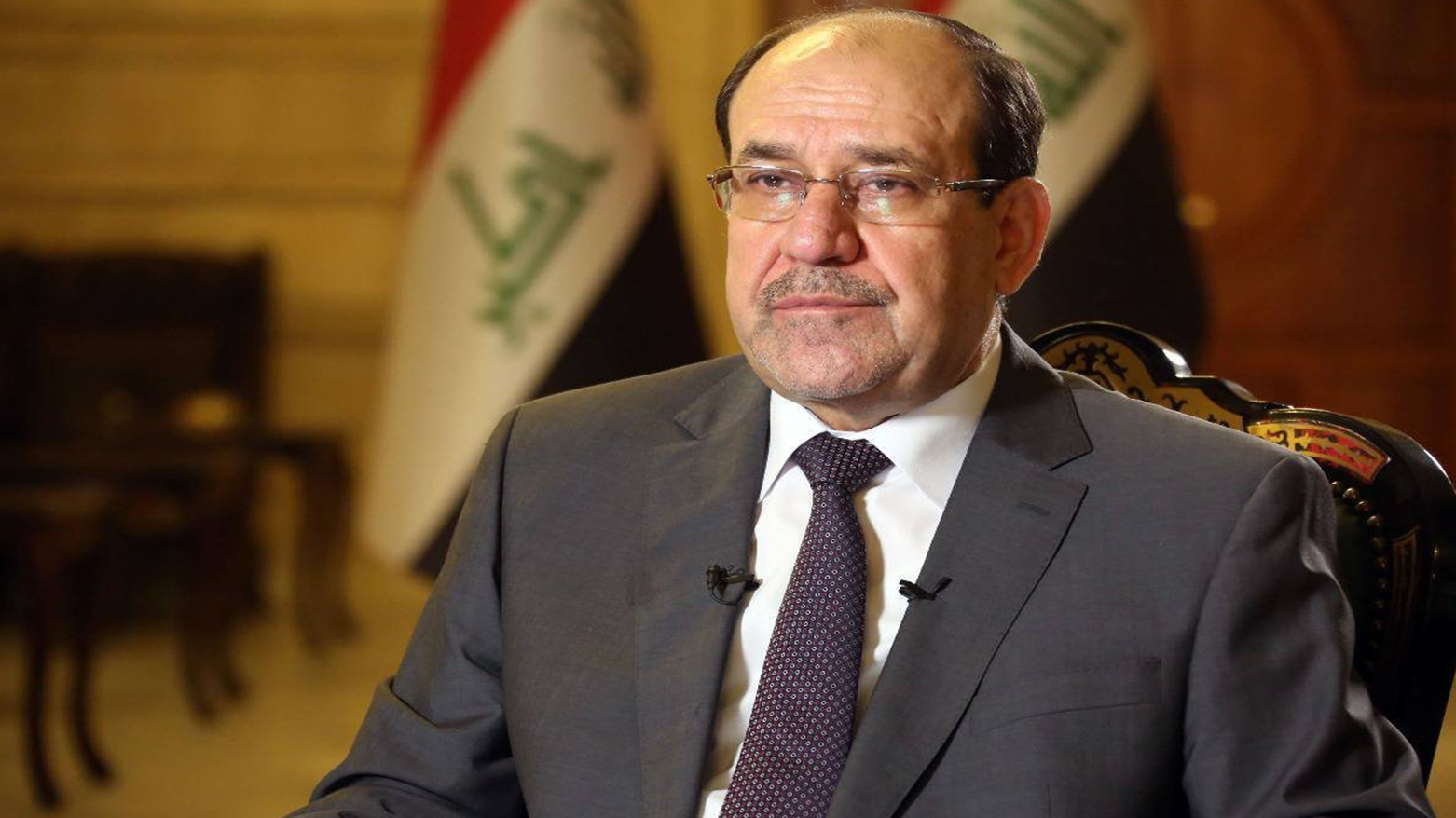
ERBIL (Kurdistan24) — Nouri al-Maliki, Iraq’s former prime minister and the current prime ministerial nominee of the Shiite Coordination Framework, issued a sharp rebuke on Wednesday of what he described as “blatant American interference” in Iraq’s internal affairs, insisting such actions violate the country’s sovereignty and undermine its democratic system established after 2003.
In a statement published on his X account, Maliki said he “categorically rejects” U.S. involvement in Iraq’s internal affairs, calling it an assault on the Coordination Framework’s decision to select its candidate for prime minister. He stressed that relations between states must be governed by dialogue rather than “the language of dictates and threats.”
“Stemming from my respect for the national will and the decision of the Coordination Framework, I will continue to work until the very end in a manner that achieves the supreme interests of the Iraqi people,” Maliki wrote on X.
Notably, Maliki briefly deleted the post from X before republishing it minutes later with a small but pointed modification, adding the phrase “and in violation of the democratic system in Iraq after the year 2003” to his original text.
Maliki’s statement came in direct response to comments made a day earlier by U.S. President Donald Trump, who publicly warned against Maliki’s potential return to power.
In a post published on his TruthSocial on Tuesday, Trump said he was “hearing that the Great Country of Iraq might make a very bad choice by reinstalling Nouri al-Maliki as Prime Minister,” accusing him of policies that previously led the country into “poverty and total chaos.”
Trump warned that if Maliki were elected again, the United States would no longer assist Iraq, arguing that without U.S. support the country would have “ZERO chance of Success, Prosperity, or Freedom.”
He concluded his remarks with the slogan: “MAKE IRAQ GREAT AGAIN!”
The exchange underscores escalating tensions between Maliki and Washington at a sensitive moment in Iraq’s government formation process, as political blocs negotiate the next prime minister and cabinet formation, amid heightened U.S. scrutiny and warnings over future bilateral relations.
In the early hours of Wednesday, Capitol Hill added additional layers to the U.S. pressure and policy toward Iraq. U.S. Representative Joe Wilson also warned Iraq’s political leadership that Washington’s position under President Donald Trump is “clear and unequivocal,” stressing that foreign influence in Iraqi affairs would no longer be tolerated.
In a statement published on X, the South Carolina Republican praised Trump and Special Envoy Mark Savaya for their approach to Iraq, saying Iraqi leaders must not misread the U.S. stance as “ambiguous or negotiable,” and insisting that any new government must serve only the interests of the Iraqi people.
Wilson outlined a series of conditions he said Iraq’s next government must meet to retain U.S. support, including the disarmament and dismantling of militias within six to twelve months, immediate action against corruption and money laundering, and the establishment of an independent judiciary free from political influence.
He also called for clearly defining the role of the Popular Mobilization Forces under unified state command and urged Baghdad to pursue stronger, strategic economic and security ties with the United States, underscoring what he described as a more assertive U.S. posture toward Iraq under the Trump administration.
Trump's Special Envoy Savaya on Tuesday said U.S. efforts in Iraq extend beyond supporting government formation and countering militias to confronting what he described as a deep-rooted corruption crisis undermining the state.
In a post he published on X, He said Washington’s approach goes further than tracing looted funds transferred abroad, focusing instead on identifying how those assets were ultimately used and who benefited from them, including senior Iraqi officials and members of their families.
Savaya said U.S. authorities, working in coordination with other institutions, have developed a comprehensive picture of corruption networks, revealing that stolen Iraqi funds were used to purchase properties in multiple countries and to obtain foreign citizenships and passports—sometimes under false identities—to evade accountability.
He warned that corruption not only harms Iraq’s people and national security but also empowers terrorist groups, adding that the United States will work closely with the Treasury Department and the Office of Foreign Assets Control to enforce accountability “without exception,” stressing that no one is above the law and that justice must be delivered to the Iraqi people.