President Barzani Calls for Unified Support for West of Kurdistan at Major Diaspora Rally in Germany
President Barzani urges international responsibility as the Bonn gathering highlights risks facing Western Kurdistan.
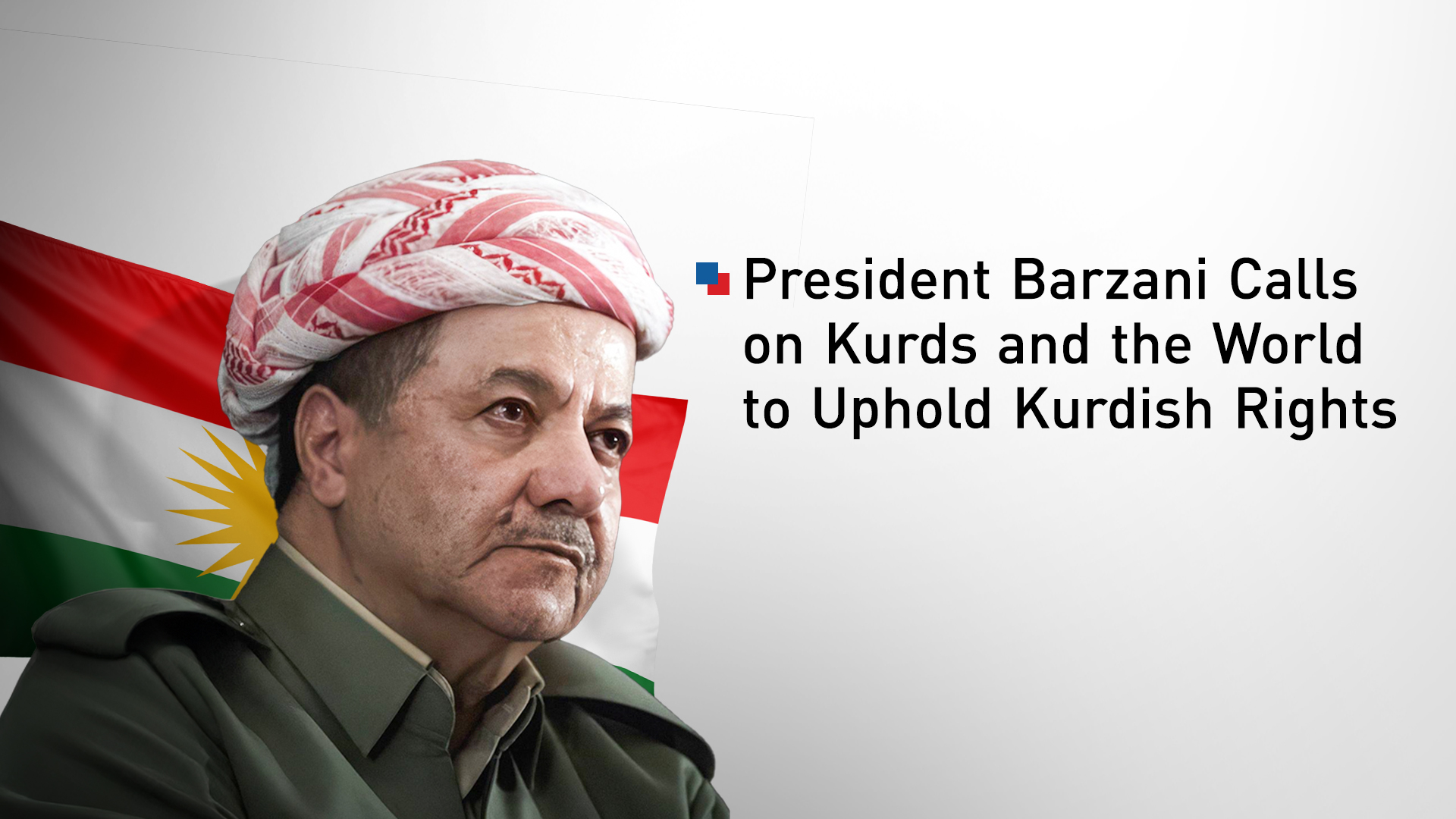
ERBIL (Kurdistan24) — President Masoud Barzani on Saturday delivered a strong message of unity and solidarity with Western Kurdistan, in Syria, warning of new threats facing the region and calling on the international community to uphold its responsibilities toward the Kurdish people.
The message was read out by Shifa Barzani, Director General of the Kurdistani Diaspora Confederation, during a large-scale demonstration organized by the Kurdistani Diaspora Confederation in the German city of Bonn on Saturday.
The rally drew thousands of Kurds and Kurdistani people from the diaspora in a show of support for Western Kurdistan at a time of heightened political and security sensitivity.
In his message, Barzani praised the unity and national stance of Kurds and other Kurdistani people living abroad, describing it as a source of pride that Kurdistani people continue to raise a strong and unified voice in defense of their people’s just cause across all parts of Kurdistan.
He reflected on the long history of Kurdish struggle, noting that the division of Kurdistan in the 20th century was a grave injustice. However, he stressed that decades of suffering and repression failed to break the will of the Kurdish people, instead strengthening their determination to secure their legitimate rights.
Barzani paid tribute to the countless sacrifices made by fighters and civilians in Western Kurdistan, in Syria, highlighting years of displacement, imprisonment, and hardship. He underscored the decisive role Kurdish forces played in the fight against the Islamic State (ISIS), saying the blood of Kurdish youth formed a defensive shield not only for Kurdistan but for humanity as a whole.
The Kurdish leader warned that Western Kurdistan is once again facing a new and complex phase marked by emerging threats, stressing that supporting the people of Western Kurdistan is a national duty for every Kurd.
He called on the international community and Western countries in particular to act responsibly and prevent a repetition of humanitarian catastrophes.
“Kurdish forces were defenders of humanity in the war against ISIS,” Barzani said in his message, adding that "it is now a moral and humanitarian obligation to protect Kurdistan and its people."
Barzani emphasized that political differences, borders, and divergent views cannot weaken the deep historical and national bonds among Kurds, stressing that Kurds are one nation with a shared destiny.
He urged demonstrators to continue their activities in a peaceful and lawful manner, respecting the laws of the countries in which they live.
He also underlined that the Kurdish issue is a conflict with political regimes rather than with other nations, cautioning against allowing hatred or ethnic tension to emerge between Kurds and other peoples.
The Kurdish message, he said, has always been one of peace, coexistence, and humanity.
In the final part of his message, Barzani called on the Syrian government and the Syrian Democratic Forces (SDF) to maintain the ceasefire and prioritize dialogue and mutual understanding. He stressed that the political, civil, and national rights of the Kurdish people must be guaranteed in Syria’s future constitution.
Barzani concluded by urging Kurds everywhere to remain hopeful about the future and to continue placing their trust in the legitimacy of their national cause.
The Bonn rally and Barzani’s message come as Western Kurdistan enters a sensitive political and security phase. Barzani’s 2014 decision to send Peshmerga forces to support Kobani, widely seen as a historic moment of Kurdish unity, was recalled as a defining precedent.
In 2026, Kurdistani diaspora groups, through the Kurdish Diaspora Confederation, are seeking to transform that unity into sustained diplomatic pressure on the world's governments to ensure constitutional guarantees for Kurdish rights in a future Syrian state and to prevent any new military or political escalation against Rojava.
President Barzani has long been regarded as a unifying national figure whose influence extends far beyond the borders of the Kurdistan Region, bringing together Kurds and Kurdistani communities across the globe around a shared sense of purpose and responsibility.
Through decades of leadership, he has played a central role in advancing dialogue, reconciliation, and political stability in Iraq and the wider Middle East, earning a reputation as a principled and trustworthy mediator.
Regional and international leaders have repeatedly turned to Barzani for counsel and mediation, recognizing his credibility, deep understanding of the region’s complexities, and consistent commitment to peaceful solutions.
His ability to balance Kurdish national rights with broader regional stability has positioned him as a respected statesman whose leadership continues to serve as a bridge between conflicting parties and a cornerstone for peace-building efforts in a deeply volatile region.
The SDF and the Syrian government reached a comprehensive agreement on Friday to end hostilities and integrate military, security, and administrative structures in Western Kurdistan, according to details released by the SDF.
The deal provides for a full ceasefire and the withdrawal of forces from current front lines, with Syrian Interior Ministry units set to enter the centers of Hasakah and Qamishlo and a process launched to merge the Asayish internal security forces into the state framework.
Militarily, the agreement establishes a new division made up of three SDF brigades and a special Kobani brigade operating under Aleppo province’s command.
Administratively, it places institutions of the Democratic Autonomous Administration of North and East Syria under Syrian state authority, ensures the continuation of civil services, guarantees Kurdish civil and educational rights, and facilitates the return of internally displaced persons to their home areas.