Kurdish Artist Avan Omar Maps a 'Territory of Freedom' from Kurdistan to the Netherlands
Avan Omar told Kurdistan24 about her artistic journey, international exhibition in Utrecht, and major projects “Zero Art” and “These People are Working,” reflecting on art, identity, and freedom across Kurdistan and the Netherlands.
ERBIL (Kurdistan24) - From Erbil to Utrecht, and from childhood sketches to performative bodies, Avan Omar has shaped a path where art becomes the only territory of freedom. In a special interview with Kurdistan24, the Kurdish writer and visual artist reflects on her life, her projects, and the ideas that have driven her for more than two decades.
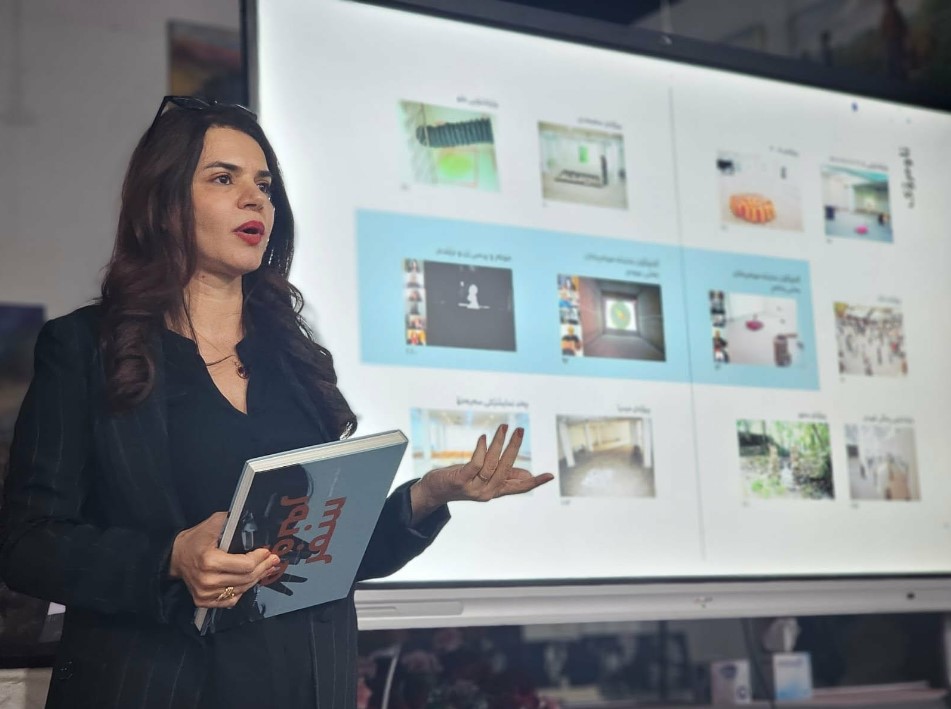
Speaking to Kurdistan24, Avan Omar said she is currently preparing for a joint exhibition in the Dutch city of Utrecht with foreign artists, where she is presenting several works, including her project “Zero Art.”
Omar explained that her artistic journey began early, shaped by a family environment that included many calligraphers and painters. “Art and visual expression were a living and continuous topic in our home,” she said. She began drawing in childhood and stood out among her peers, to the extent that special exhibitions of her work were organized within school activities.
After completing secondary school, she enrolled in the College of Fine Arts with great passion. In 2009, she left the country and has lived in the Netherlands since then. After settling there, she studied at the Dutch Art Institute in Arnhem, from which she earned a master’s degree in 2017. She currently works as an independent artist on diverse artistic projects and works.
Since the beginning of the 2000s, Omar has been actively engaged in the art scene. She considers herself a visual artist rather than a writer, explaining that her writing attempts emerged in response to the needs of her work in the visual arts field. In 2006, she began preparing and translating texts from English into Kurdish about international artists and their different working methods. She said this stemmed from her personal need to learn about global art, but she wanted to share this knowledge with others who needed it, so she organized and published the material.
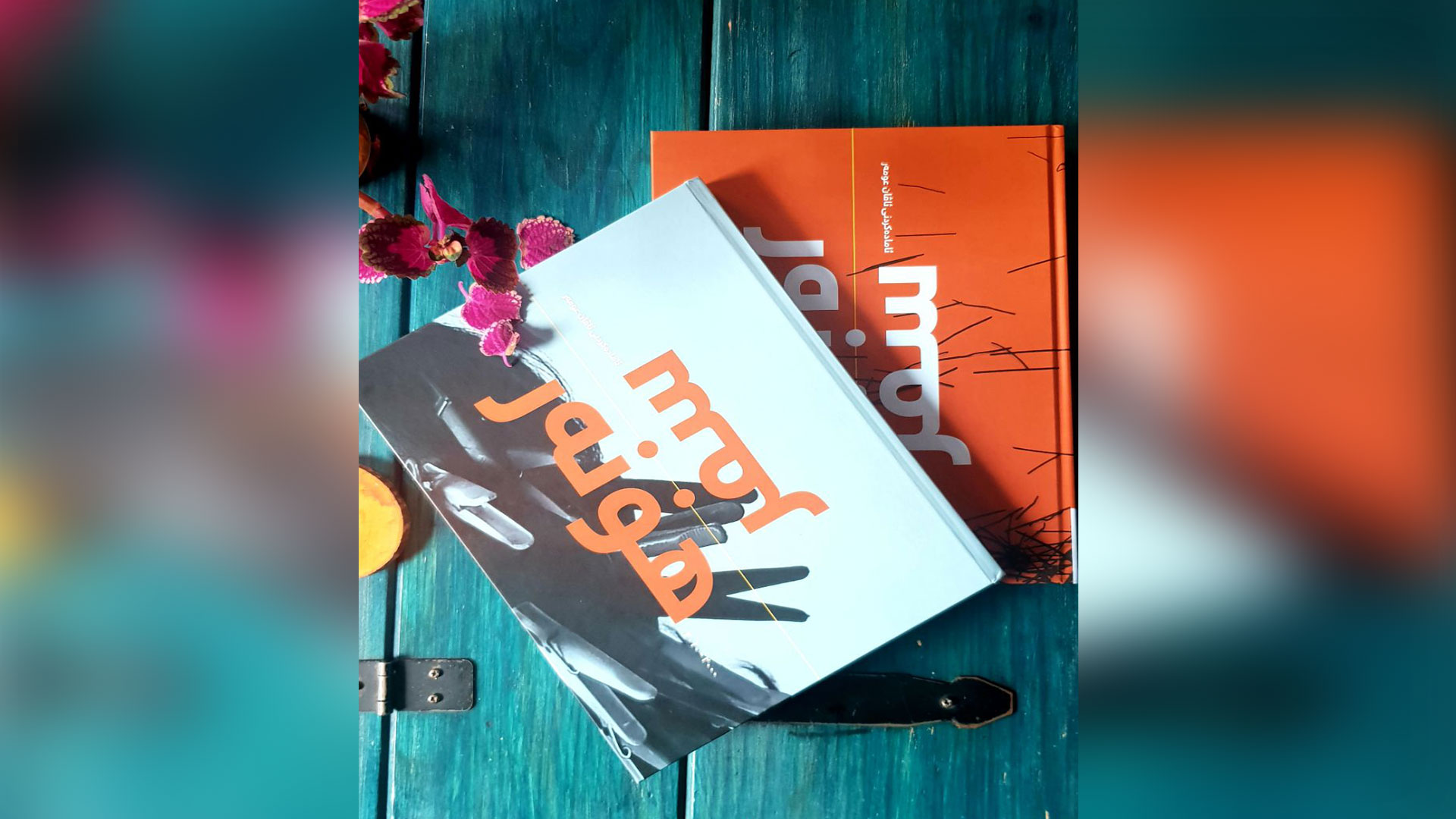
She later published texts on “the issue of the Other in the eyes of the white man and colonialism,” a study she conducted on stereotypes. This was followed by the zero Art project, which is now printed in two volumes and appears as a written work by her.
Omar said she independently formulated the dialogues, selected the artists, and wrote the discussions. She described the project as research and as part of her artistic work, noting that writing was a necessity to build this project, which is based on dialogue and archiving. She has also published two short stories, which she considers writing as well, but produced through a visual approach. She explained that she felt and saw the surrounding world, then wrote and organized it, and that both stories address the subject of the body.
Although she studied painting, Omar said she did not pursue it as a profession after graduation. At the College of Fine Arts, she learned painting techniques in a scientific and academic way, but said she discovered real art in the artistic environment outside the college. Instead of traditional painting, she turned to different artistic media such as performance, video art, and installation, which she said better align with the ideas behind her work.
She said that when she began working, she realized the extent of restrictions imposed by society, family, and the country in general on women’s fields of work. At that time, women’s mobility was very limited and confined to essential needs, a situation she said is now slightly better. “I realized that my body is my material,” she said. She explained that she needed to work through the presence of her body in the artistic field, rather than painting a canvas at home and showing it once a year. She therefore began a series of performance works, using her body with surrounding objects.
During that period, Kurdistan was experiencing a different phase following the fall of Saddam’s regime, which created a notable openness to the world and allowed the emergence of global artistic criticism and dialogues in Kurdistan. Omar said young artists began to think “globally,” and through her studies she entered into dialogues with friends from the Institute of Fine Arts. Together, they shared a desire to think in new directions and launched projects that differed from the traditional dominant styles of painting and sculpture.
Omar said her two largest projects, which she has been working on since 2020 in the Kurdistan Region and the Netherlands, are “These People are Working” and “Zero Art.”
“These Humans Work” addresses the identity of labor and has involved many artists presenting different ideas and exhibiting their works in Kurdistan. Writers and thinkers have also contributed texts and scenarios around the concept of the project. Omar works as a coordinator and artist in the project and has organized a series of exhibitions in different halls across Kurdistan. She said the project opened participation to everyone, not only artists and writers.
“Zero Art,” she said, focuses on visual art in southern Kurdistan between 1990 and 2010, two decades during which Kurdistan passed through highly diverse economic, political, cultural, and social conditions. The project was built on dialogue, hosting groups of artists and writers in critical discussions on historical, artistic, and personal issues. Through collecting documents, archiving works, and facilitating intergenerational dialogue, the project created what she described as a distinct vision and strong artistic convergence.
Asked about her books, Omar said she has only “Zero Art,” a single project printed in two volumes totaling nearly 600 pages and now available to readers and art enthusiasts. Last year, one of her projects with people was printed as a small booklet titled “Tastes of Your Independence,” a project centered on food and memory. She has also contributed a chapter to other publications, including the book “Inland,” which features sixteen artists. In that volume, she wrote a chapter in English on the subject of the body and the body of the Kurdish woman in the village, the mountain, and the city.