Traders' Strike Paralyzes Basra, Iraq's Economic Hub, Over Drastic Customs Fee Hike
Basra markets closed as traders launched a general strike against new customs tariffs, warning that soaring fees, stalled imports, and falling purchasing power are crippling commerce and harming citizens.
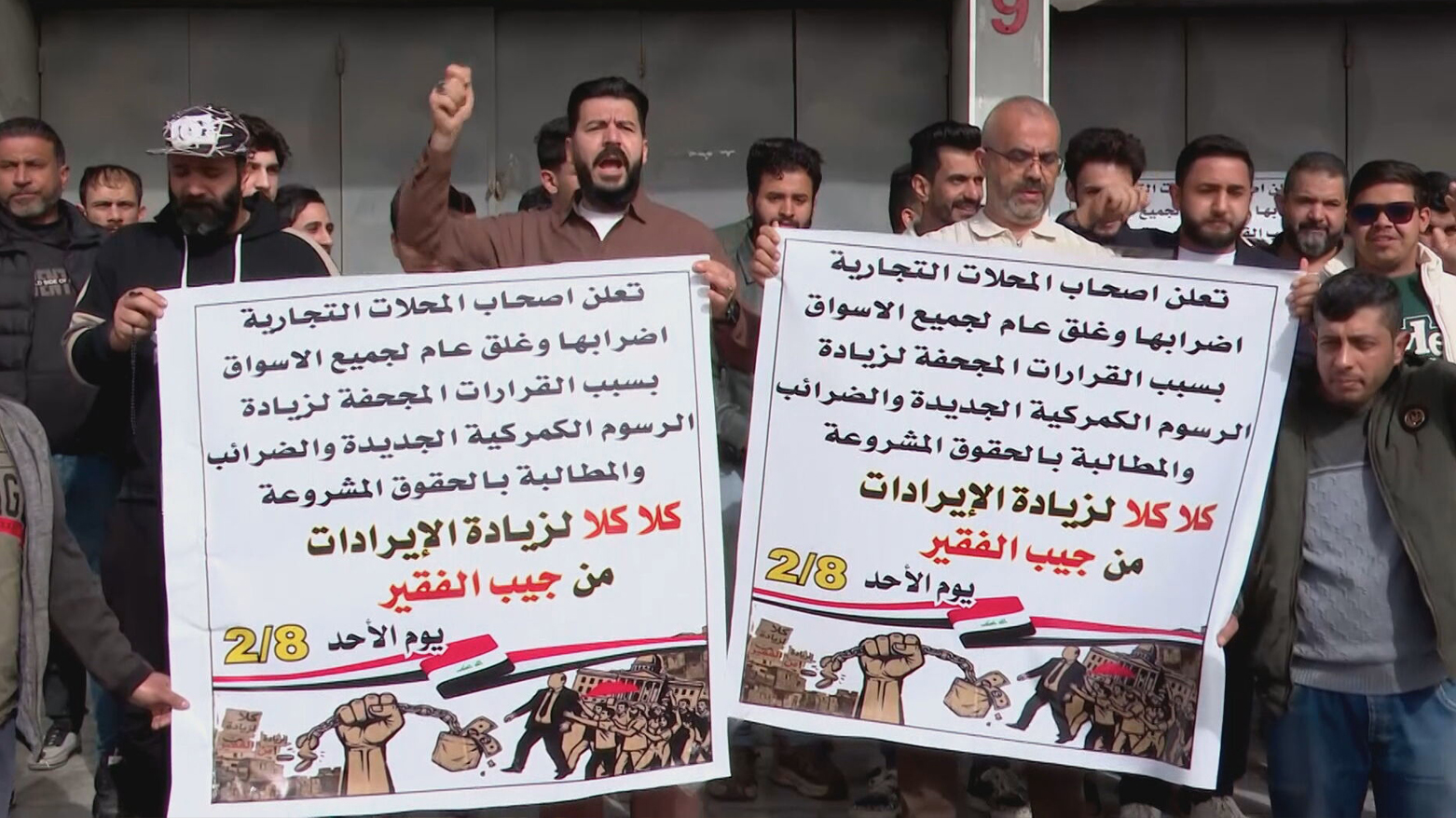
ERBIL (Kurdistan24) - Metal shutters rolled down across Basra’s markets as shopkeepers abandoned their counters and wholesalers closed their warehouses, turning one of Iraq’s busiest commercial hubs into a city of silence. The strike, triggered by a sharp rise in customs tariffs, has left goods stranded, prices soaring, and thousands of livelihoods under threat.
Markets across Basra province announced a general strike after the imposition of new customs tariffs, insisting they will not reopen until the government withdraws the decision and reduces the new customs fees.
A wholesaler said that previously, for each container arriving in Iraq through Basra’s ports, traders paid three million dinars in customs fees. He said the government has now increased that amount to thirty-five million dinars. “This is a disaster,” he said. “We will be forced to sell goods at several times their normal prices.”
Local markets in Basra have witnessed widespread closures after shop owners and traders shut their stores in protest against the new customs tariffs imposed by the federal government. The decision has had a direct impact on commodity prices, placed heavy burdens on citizens, and driven purchasing power to its lowest level.
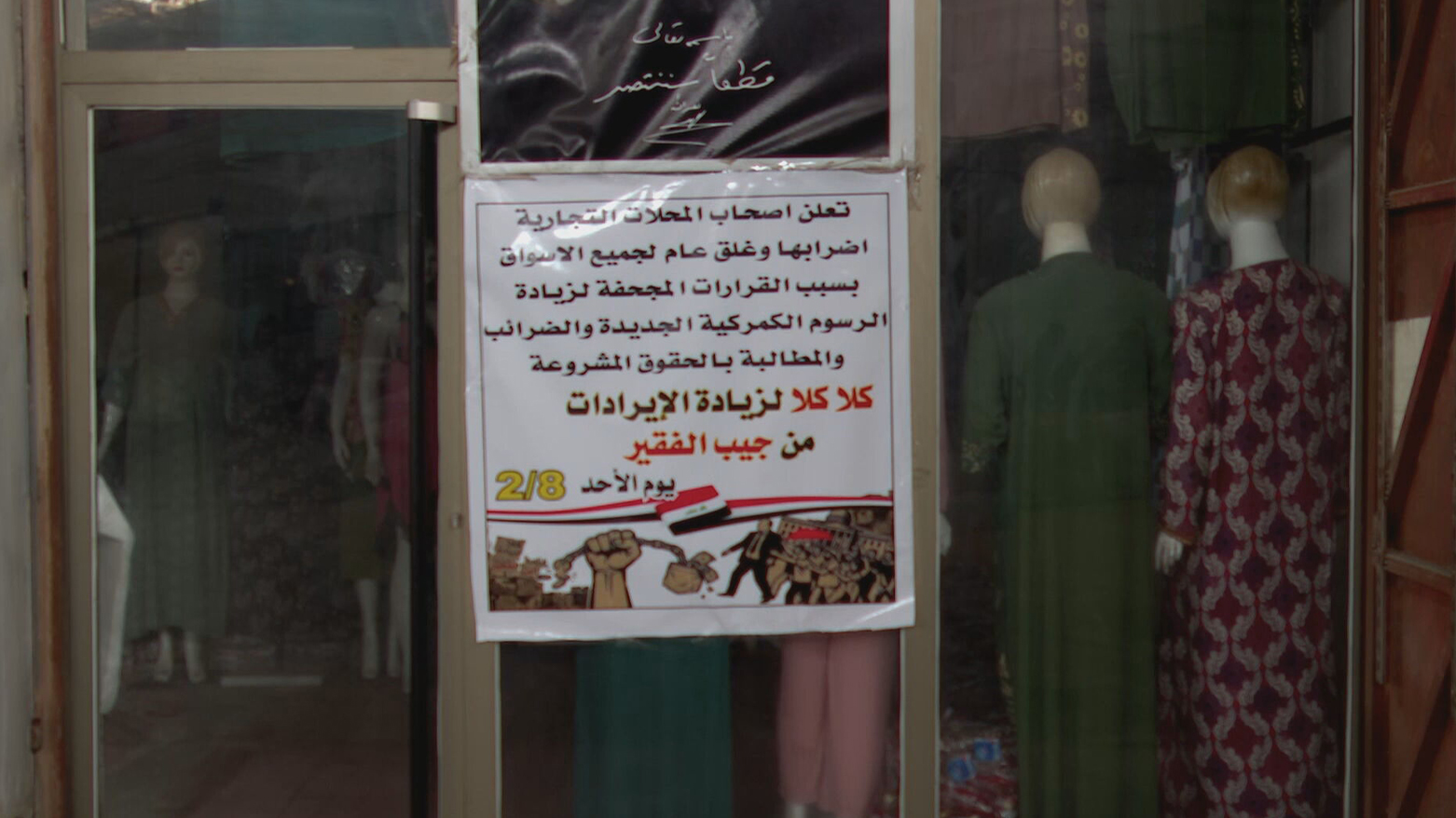
One shop owner told Kurdistan24: “We gathered and announced a general strike in Basra because of these excessive customs tariffs. The strike will continue until the fees are reduced. We have had shops here for twenty years, and now we are forced to send some of our workers home. For some of us, customs charges have reached thirty-five million dinars. This is a disaster. We want the government to reverse its decision and reduce these tariffs, because the main victim is the citizen.”
A trader said: “On behalf of shop owners and wholesalers, we call on the Baghdad government to take an urgent decision regarding these new customs tariffs, especially at this time as we approach Ramadan and the Eid. Our goods are stuck at Basra’s ports and cannot enter Iraq.” He added: “I personally imported three hundred and fifty pieces of clothing and paid nearly three hundred and fifty thousand dinars in transportation costs, and now we are also required to pay additional customs fees.”
Traders and shop owners stressed that the new customs tariffs have significantly increased import costs, preventing them from bringing in goods as needed. They said citizens’ purchasing power has declined sharply, warning that if the situation continues, more shops will close, causing trade, sales, and the livelihoods of thousands of people to collapse.
Another shop owner said: “As clothing shops in Basra, we are nearly one hundred stores, and all of us have announced the strike. Each of us employs five workers, but we were forced to send them home because of the new customs tariffs. Previously, a container arriving in Basra paid three million dinars. Now they demand thirty-five million dinars. How can we sell our goods? Prices will rise dramatically.”
As public complaints continue to grow, the closure of shops and markets has led to a sharp decline in commercial activity. Citizens are calling for commercial policies to be designed in a way that balances the market and the value of the dinar, to ensure the continuity of trade rather than placing both people’s lives and the commercial sector at risk through an unassessed decision.
The protests follow a statement issued on Saturday by the Iraqi Traders Association, which called on all merchants and business owners across Iraq to take part in a nationwide strike and close markets in opposition to the new customs tariffs and additional financial obligations imposed on the commercial sector.
According to the association, the campaign to shut down commercial markets is set to continue for an indefinite period. The group described the action as a direct response to what it called unjustified customs policies and escalating fiscal pressures that have negatively affected trade and consumer demand.
The association also demanded the immediate release of shipping containers currently stalled at Umm Qasr Port in Basra, where new procedures and fees have reportedly led to bottlenecks and operational paralysis. Traders argue that delays at the port have compounded losses by preventing goods from reaching markets on time.
The Iraqi Traders Association said the protests aim to protect the interests of the commercial sector and to press for legitimate demands, urging all shop owners and market operators to adhere to the strike to compel the government to reconsider its customs policies.
With shutters down and supply chains frozen, Basra’s traders warn that without swift government action to revise the tariffs, the strike will deepen, prices will rise further, and the economic strain on citizens will only intensify.