Druze Leader Warns Syrian Community Still at Risk Months After Clashes
In an interview with AFP, Tarif said Druze areas are still “completely encircled,” alleging restrictions on humanitarian aid deliveries. His remarks were delivered from Julis, where local Druze have established an operations room to coordinate assistance for Syrians across the border.
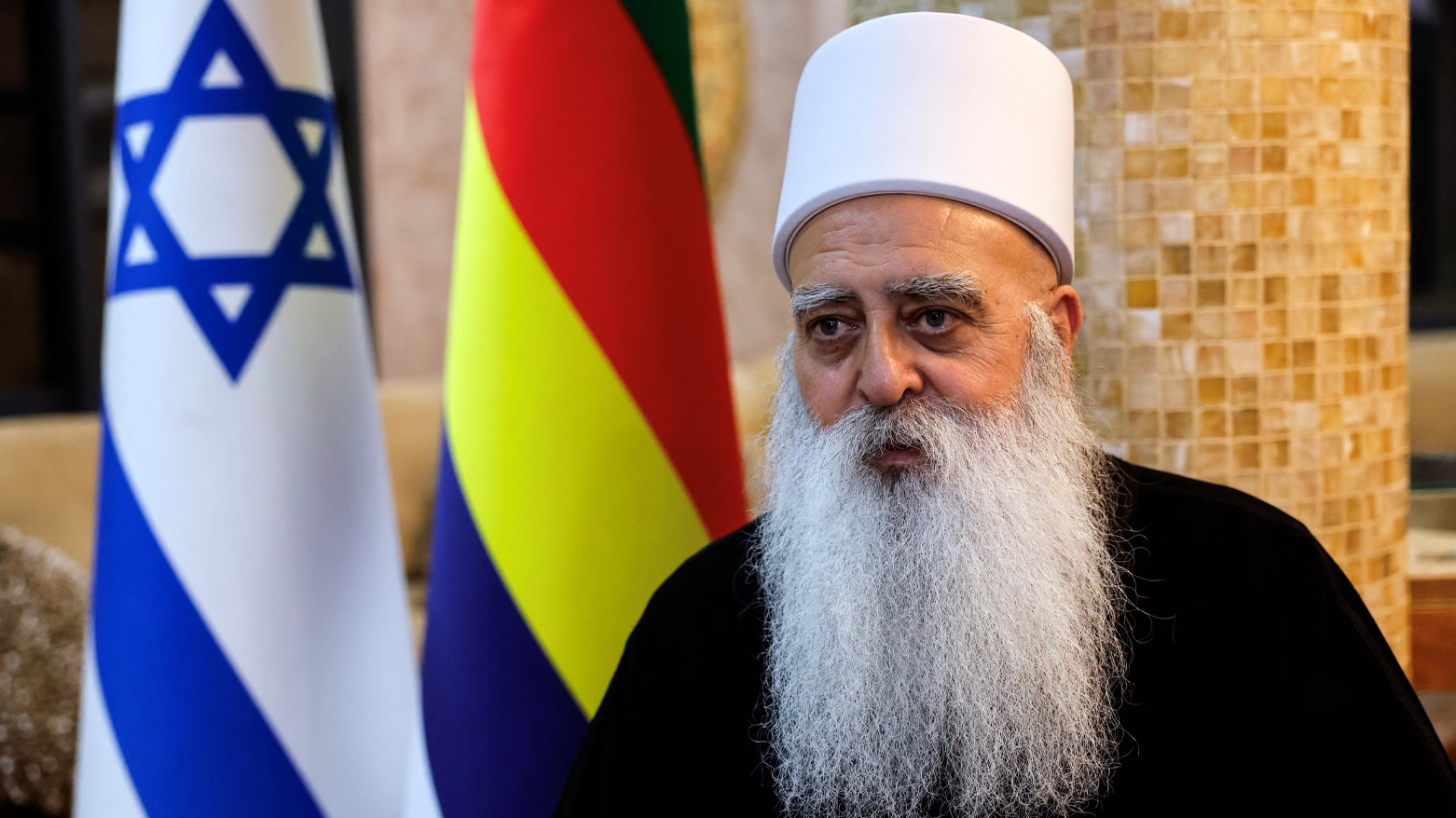
ERBIL (Kurdistan24) — Sheikh Mowafaq Tarif, the spiritual leader of the Druze in Israel, says members of the minority community in neighboring Syria remain in danger seven months after deadly clashes in the country’s south.
In an interview with AFP, Tarif said Druze areas are still “completely encircled,” alleging restrictions on humanitarian aid deliveries. His remarks were delivered from Julis, where local Druze have established an operations room to coordinate assistance for Syrians across the border.
Violence erupted last July between Druze fighters and Sunni Bedouin tribes. While Syrian authorities said they intervened to stop the fighting, witnesses and monitors accused government-backed forces of siding against Druze factions. According to the Syrian Observatory for Human Rights, more than 2,000 people were killed, including hundreds of Druze civilians. The UN Office for the Coordination of Humanitarian Affairs estimates about 187,000 people were displaced.
Despite a ceasefire reached last summer, access to Sweida, a Druze-majority province, remains limited. Tarif claimed more than 120,000 residents are still displaced, dozens of villages remain under outside control, and hundreds of people are being held captive—figures that could not be independently verified.
He also called for greater freedom of movement for Druze across the region, including access to holy sites in neighboring countries and expanded work opportunities, as economic hardship deepens in Syria.
Meanwhile, Israel and Syria—longtime adversaries without formal diplomatic ties—have reportedly held several rounds of talks in recent months, agreeing in January to establish an intelligence-sharing mechanism under U.S. pressure, a step seen as part of broader efforts to stabilize the region.