Pro-Iran Demonstrators March Toward U.S. Embassy in Baghdad as Airstrikes Hit Jurf al-Sakhar
Iraqi Security Forces Deploy Heavily in Green Zone; New Airstrikes Target Popular Mobilization Forces Positions
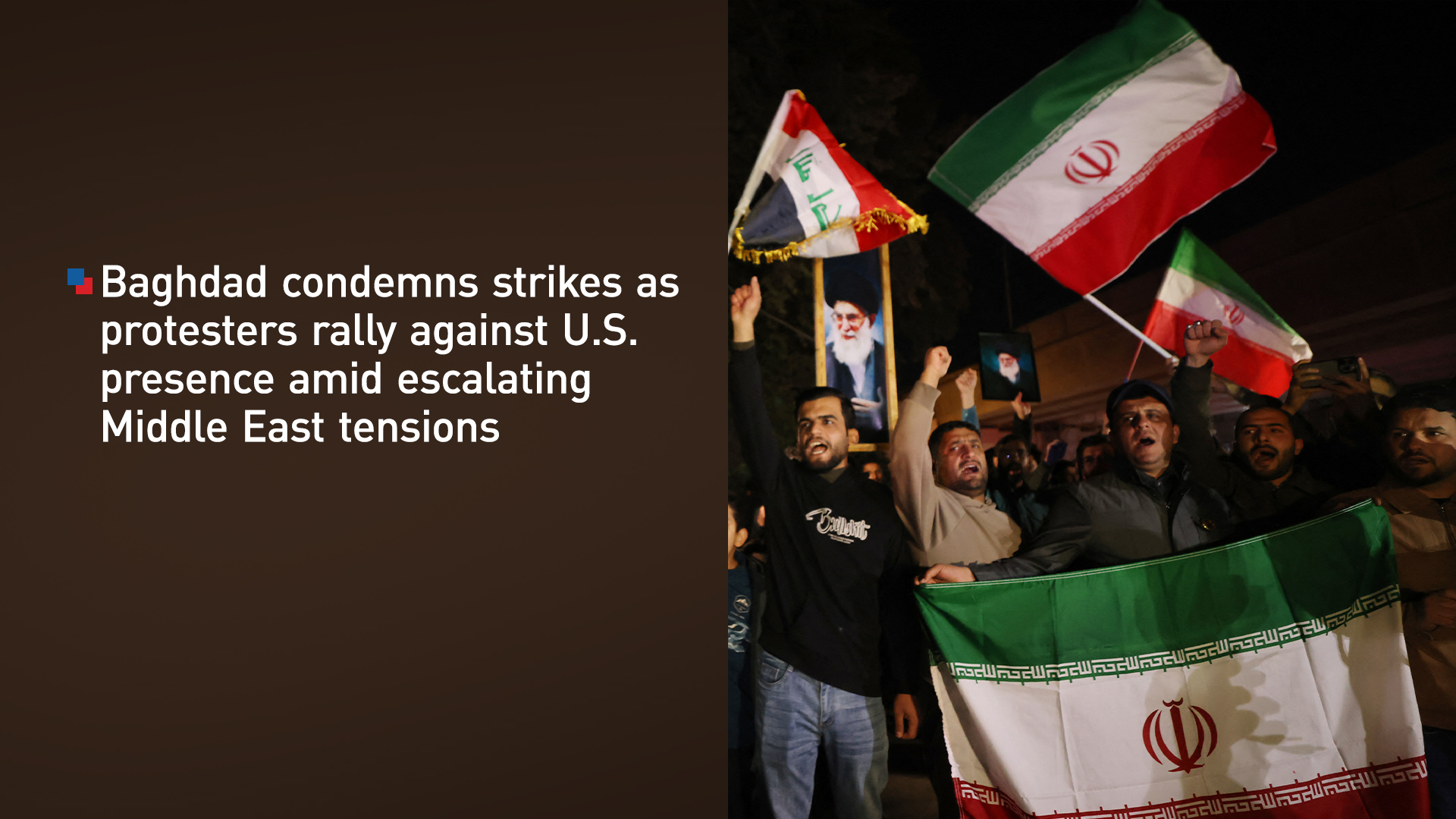
ERBIL (Kurdistan24) — Supporters of Iran-aligned factions poured into the streets of Baghdad on Saturday night, attempting to march toward the U.S. Embassy in the heavily fortified Green Zone, in response to early-morning U.S. and Israeli strikes on Iran, a Kurdistan24 correspondent reported.
Dilan Barzan, Kurdistan24’s correspondent in Baghdad, said demonstrators affiliated with the so-called “Islamic Resistance” groups gathered in large numbers and advanced from Al-Muallaq Bridge, a main gateway into the Green Zone, with the apparent aim of reaching the U.S. Embassy compound to stage protests and declare solidarity with Tehran.
Despite the heavy deployment of Iraqi security forces to prevent protesters from breaching the area, the large crowd continued pushing forward, chanting anti-American slogans and waving Iranian flags, portraits of Iran’s supreme leader Ayatollah Ali Khamenei, and the Iraq Hezbollah flag as they marched.
Simultaneously, Iraq’s Security Media Cell confirmed that two new airstrikes struck the Jurf al-Sakhar area in Babil province at approximately 7:25 p.m. on Saturday. Authorities said relevant agencies immediately began assessing the situation and taking necessary security measures.
Security sources indicated that the latest bombardment targeted positions belonging to the Popular Mobilization Forces (PMF), known in Arabic as Hashd al-Shaabi. The strikes follow earlier attacks on the same area.
Earlier Saturday at 11:50 a.m., Jurf al-Sakhar was hit by a series of airstrikes. According to preliminary figures, two people were killed and three others wounded, sustaining varying degrees of injuries.
The PMF confirmed that specialized teams have launched investigations into the incident and are assessing the extent of the damage inflicted on their facilities.
The developments come amid heightened regional escalation following coordinated U.S. and Israeli strikes on Iran in the early hours of Saturday. Iraq, home to multiple Iran-aligned armed factions and U.S. military personnel, has once again become a flashpoint as tensions spill over its borders.
The situation remains fluid, with Iraqi authorities on high alert as demonstrations continue and further retaliatory actions cannot be ruled out.
In a related development, the Iraqi Ministry of Foreign Affairs on Saturday strongly condemned the bombardment of areas in central Iraq and the Kurdistan Region, warning that such actions risk dragging the country into the widening regional conflict.
In an official statement, the ministry described the strikes as a “dangerous attempt” to pull Baghdad into the “fire and epicenter of war,” expressing deep concern over what it called violations of Iraqi sovereignty.
It stressed that targeting locations inside Iraq, including in the Kurdistan Region, represents a direct threat to the country’s security and stability.
The ministry said the attacks appear aimed at entangling Iraq in the broader confrontation currently unfolding in the region. It reaffirmed Baghdad’s long-standing policy of rejecting war and adhering to diplomatic solutions, emphasizing that disputes must be resolved through dialogue and negotiations rather than military escalation.
Iraq also clarified its stance regarding its neighbor, Iran, condemning ongoing military operations against the Islamic Republic and warning that any further expansion of the conflict would pose a serious threat to the security of all countries in the region.
The statement came after the United States and Israel launched aerial strikes against Iran early Saturday, reportedly killing several senior Iranian figures. Tehran responded swiftly by firing multiple missiles toward Israel and targeting several U.S. military bases and facilities across the region, raising fears of a broader regional confrontation.