Iran’s Security Chief Warns Against Division, Announces Interim Leadership Council After Khamenei Killing
Tehran Confirms Supreme Leader’s Death as Region Engulfed in Escalating Conflict
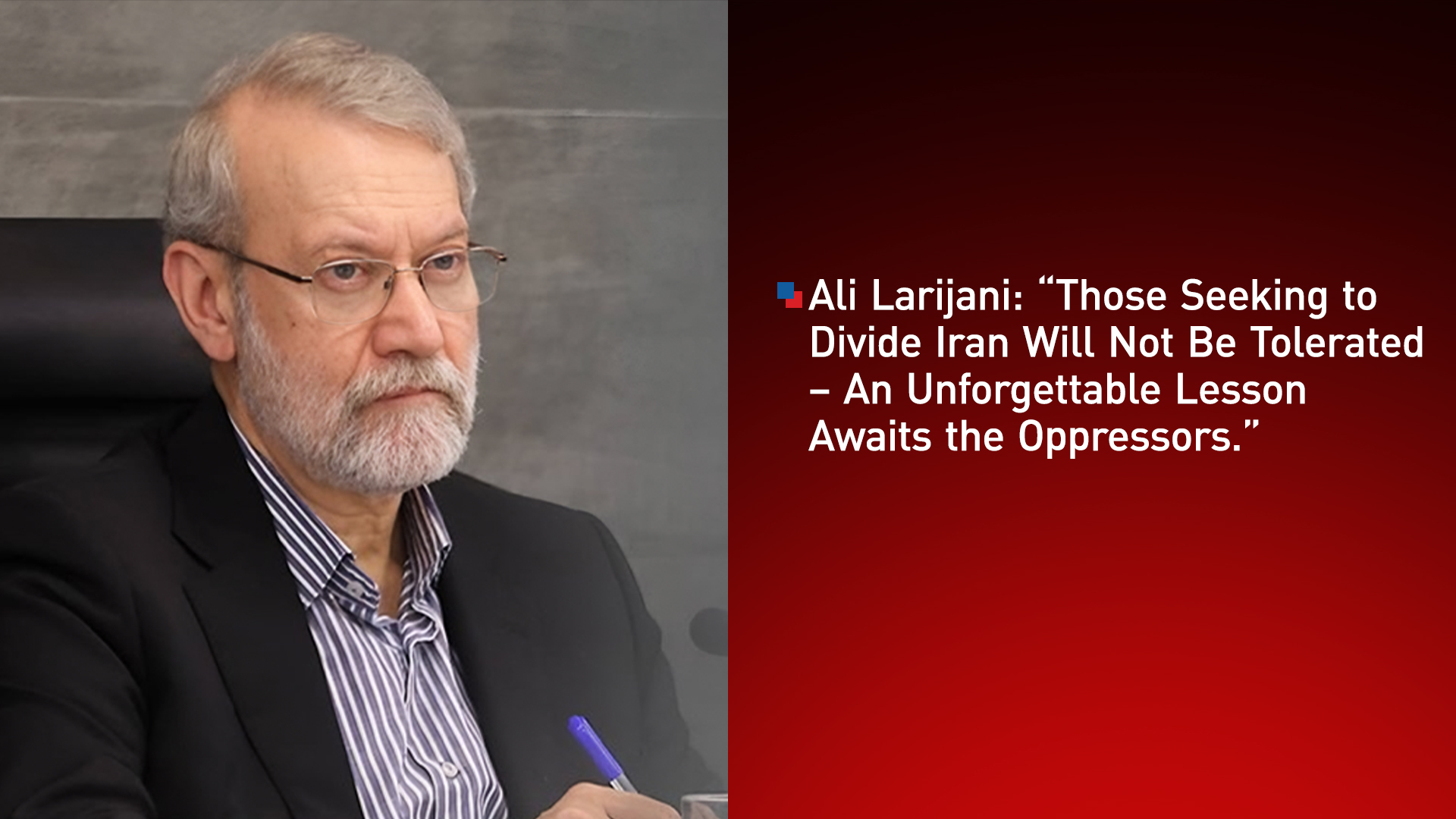
ERBIL (Kurdistan24) — Iran’s top security official on Sunday warned against attempts to destabilize the country following the killing of Supreme Leader Ali Khamenei in large-scale U.S. and Israeli strikes, as Tehran confirmed the 86-year-old cleric’s death and unveiled plans for a transitional leadership structure.
Ali Larijani, head of Iran’s Supreme National Security Council, said in a televised interview that what he described as U.S. and Israeli plans to sow instability and division inside Iran had failed.
“America and Israel believed that by carrying out heavy strikes against military sectors and assassinating senior leaders, they could spread fear and intimidation,” Larijani said. “They hoped people would pour into the streets and force change upon the regime, but the Iranian people, through vigilance and unity, shattered this illusion.”
"YESTERDAY, IRAN FIRED MISSILES AT THE UNITED STATES AND ISRAEL, AND THEY DID HURT. TODAY WE WILL HIT THEM WITH A FORCE THAT THEY HAVE NEVER EXPERIENCED BEFORE," he wrote on X.
YESTERDAY IRAN FIRED MISSILES AT THE UNITED STATES AND ISRAEL, AND THEY DID HURT. TODAY WE WILL HIT THEM WITH A FORCE THAT THEY HAVE NEVER EXPERIENCED BEFORE.
— Ali Larijani | علی لاریجانی (@alilarijani_ir) March 1, 2026
He added that hostile actors had exhausted multiple pressure tactics in recent years, ranging from economic sanctions to attempts to create livelihood crises aimed at turning the public against the government.
“In recent events, the enemies sought to weaken national unity, but the people’s presence demonstrated that their plots would not succeed,” he said, referring to mass mobilizations earlier this year.
Larijani also warned groups against exploiting the current moment to fragment the country. “Those seeking to divide Iran should know that we will not tolerate it,” he said, calling on citizens to maintain cohesion during what he described as a sensitive transitional period.
Larijani confirmed that the constitutional transition process had formally begun. “An interim leadership council will soon be formed,” he said. “The president, the head of the judiciary, and a jurist from the Guardian Council will assume responsibility until the election of the next leader.”
He indicated that the council could be established as early as Sunday, describing efforts to expedite its formation. State television also reported that President Masoud Pezeshkian and two senior officials would oversee executive affairs during the interim phase.
Khamenei, who had led Iran since 1989 following the death of Ruhollah Khomeini, was killed in what U.S. President Donald Trump described as the opening phase of a massive joint U.S.–Israeli operation.
Iranian state television confirmed Khamenei’s death early Sunday, hours after Trump announced it and characterized the cleric as “one of the most evil people in history.”
In response, Iran launched successive waves of missile and drone strikes targeting U.S. bases and Israeli military infrastructure across the region. The Islamic Revolutionary Guard Corps (IRGC) vowed what it called the “most ferocious” retaliation in its history.
Explosions were reported in Gulf capitals, including Doha, Dubai, and Manama, while sirens sounded across central Israel. Iranian state media said 27 U.S. bases, as well as Israeli military headquarters and a defense industrial complex in Tel Aviv, were among the targets.
Iran’s judiciary confirmed that senior figures, including top advisor Ali Shamkhani and IRGC chief General Mohammad Pakpour, were killed in the initial strikes.
Larijani vowed defiance, saying, “The brave soldiers and the great nation of Iran will teach an unforgettable lesson to the international oppressors.”
Parliament Speaker Mohammad Bagher Ghalibaf said Washington and Tel Aviv had “crossed our red lines” and would “suffer the consequences.”
The unprecedented scale of the operation has drawn comparisons to the 2003 U.S. invasion of Iraq. Israeli military chief Lieutenant General Eyal Zamir described the campaign as occurring “at a completely different scale” than previous confrontations.
Airspaces across Iran, Iraq, Kuwait, Syria, the United Arab Emirates, and Israel were partially or fully closed, and multiple airlines suspended flights to the region. Iran also signaled the potential closure of the Strait of Hormuz, a critical artery for global oil shipments.
Meanwhile, debate intensified over Iran’s long-term succession. Observers have speculated that the Revolutionary Guards could gain expanded influence in the post-Khamenei era.
Exiled opposition figure Reza Pahlavi declared that any successor within the current system would lack legitimacy, asserting that the Islamic Republic was nearing its end. However, opposition factions remain divided over a unified alternative.
Larijani, however, stressed institutional continuity, describing Iran as resting on “two main pillars: an aware people and vigilant leadership.”
He acknowledged the emotional weight of recent events but warned that actions by the United States and what he termed the “Zionist regime” would not go unanswered.
“Just as Iran has stood firm throughout history against invasions and major challenges, it will overcome this difficult stage with dignity,” he said.
Khamenei’s death marks the end of a 37-year tenure as Iran’s highest authority, overseeing the armed forces, judiciary, and key security institutions. His passing has triggered one of the most volatile moments in the modern history of the Islamic Republic, with regional and global consequences still unfolding.