Iran Strikes Gulf States as Residential Areas Targeted, Hormuz Closed and Widespread Missile Exchanges Rock Region
Residential Buildings Hit in Manama; UAE, Qatar, Kuwait Airspace Closed as Jordan Intercepts Missiles and Türkiye Voices Alarm
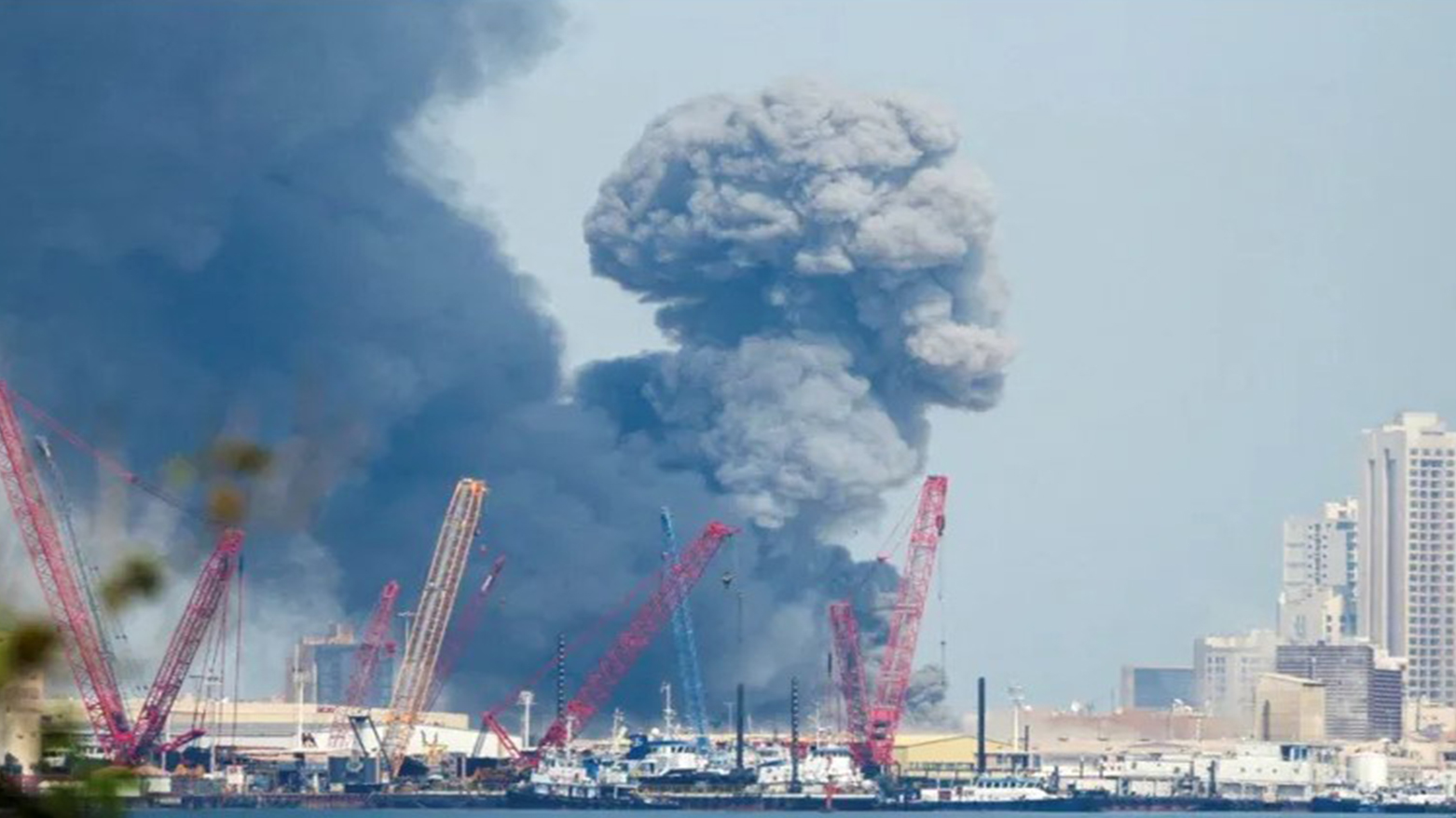
ERBIL (Kurdistan24) — Explosions and missile barrages rocked major cities across the oil‑rich Gulf on Saturday as Iran launched wide‑ranging attacks in retaliation for US and Israeli strikes on Iranian targets, with residential districts, military installations, and vital maritime routes coming under fire in an unprecedented escalation of the regional conflict.
The Bahrain Interior Ministry said residential buildings in Manama were struck by Iranian missiles, prompting ongoing firefighting and rescue operations. Residents near the US Navy’s Fifth Fleet base in Manama’s Juffair district were evacuated after loud explosions rattled the area.
Across the Gulf, smoke and flames rose from Dubai’s Palm Jumeirah luxury district, where missiles struck, injuring four people and triggering a fire brought under control by civil defense authorities.
Explosions and intercepted missiles also shook Doha, Abu Dhabi, Kuwait, and Riyadh as air‑defense systems engaged dozens of inbound threats.
Iran’s Revolutionary Guards warned that the Strait of Hormuz — a critical artery for global oil and gas shipments — was unsafe due to ongoing military operations by the United States, Israel, and Iran’s retaliatory strikes. The Guards said maritime traffic had effectively ceased, though no formal closure order has been issued.
“The IRGC has warned various ships that due to the insecure atmosphere around the strait … it is not safe to pass through the strait at the moment,” Iran’s Tasnim news agency reported, marking a dangerous shift in a waterway that handles a significant portion of global energy exports.
The barrage of Iranian missiles targeted US military bases across the region, including Al Udeid Air Base in Qatar, home to US Central Command, and positions in Bahrain and Kuwait. Qatar’s defense ministry said it repelled several attacks, while the UAE said its air defenses responded with high efficiency.
In Kuwait, an Iranian missile strike inflicted “significant damage” to the runway of an air base hosting Italian air force personnel, Italian Foreign Minister Antonio Tajani confirmed. A separate drone strike hit around Kuwait’s international airport, causing minor injuries to airport personnel.
Saudi Arabia reported strikes on Riyadh and its eastern provinces, and warned it would take “all necessary measures” to defend its territory. The UAE labelled the attacks a “dangerous escalation,” asserting that Iranian ballistic missiles constituted a blatant attack on its soil.
Jordan’s armed forces said they successfully intercepted 13 ballistic missiles and numerous drones targeting its territory, resulting in material damage but no casualties. Civil defense units across Jordan dealt with dozens of incidents from falling debris and shockwaves in multiple governorates.
Across the Gulf, authorities announced temporary airspace closures, and major airlines, including Emirates, Qatar Airways, and several international carriers, suspended flights to and from conflict‑affected destinations.
Maritime transport suspensions were also reported in Doha as authorities sought to secure key sea lanes.
The widening conflict has drawn concern from global leaders. Turkish President Recep Tayyip Erdoğan said he was “deeply disturbed” by the escalation following US‑Israel strikes and Iranian retaliation, urging restraint.
Other world capitals called for urgent diplomatic engagement to prevent the conflagration from expanding further. For many expatriates and residents in the Gulf — traditionally seen as stable and secure — the scale and proximity of the attacks have sparked fear and uncertainty.
A major military confrontation erupted Saturday as the United States and Israel launched coordinated air and missile strikes on multiple targets in Iran, in what both described as a pre‑emptive move to disable Tehran’s military infrastructure.
Explosions were reported in several Iranian cities, including Tehran, while airspace closures and emergency alerts spread across the region. Iran retaliated with missiles and drones targeting Israel and U.S. bases in Bahrain, Qatar, the UAE, and Kuwait.
The U.S. framed the campaign as necessary to eliminate threats, while Israel cited existential security concerns. The escalation follows years of tension, failed nuclear negotiations, and a 12‑day war in June 2025.