Iraqi Oil Minister: No Agreement Yet with Kurdistan Region Regarding Oil Exports
Abdul-Ghani noted that the Ministry of Oil has requested permission from the Kurdistan Region to transport 200,000 to 250,000 bpd of Kirkuk oil through its pipeline to Ceyhan, but formal approval has not yet been secured.
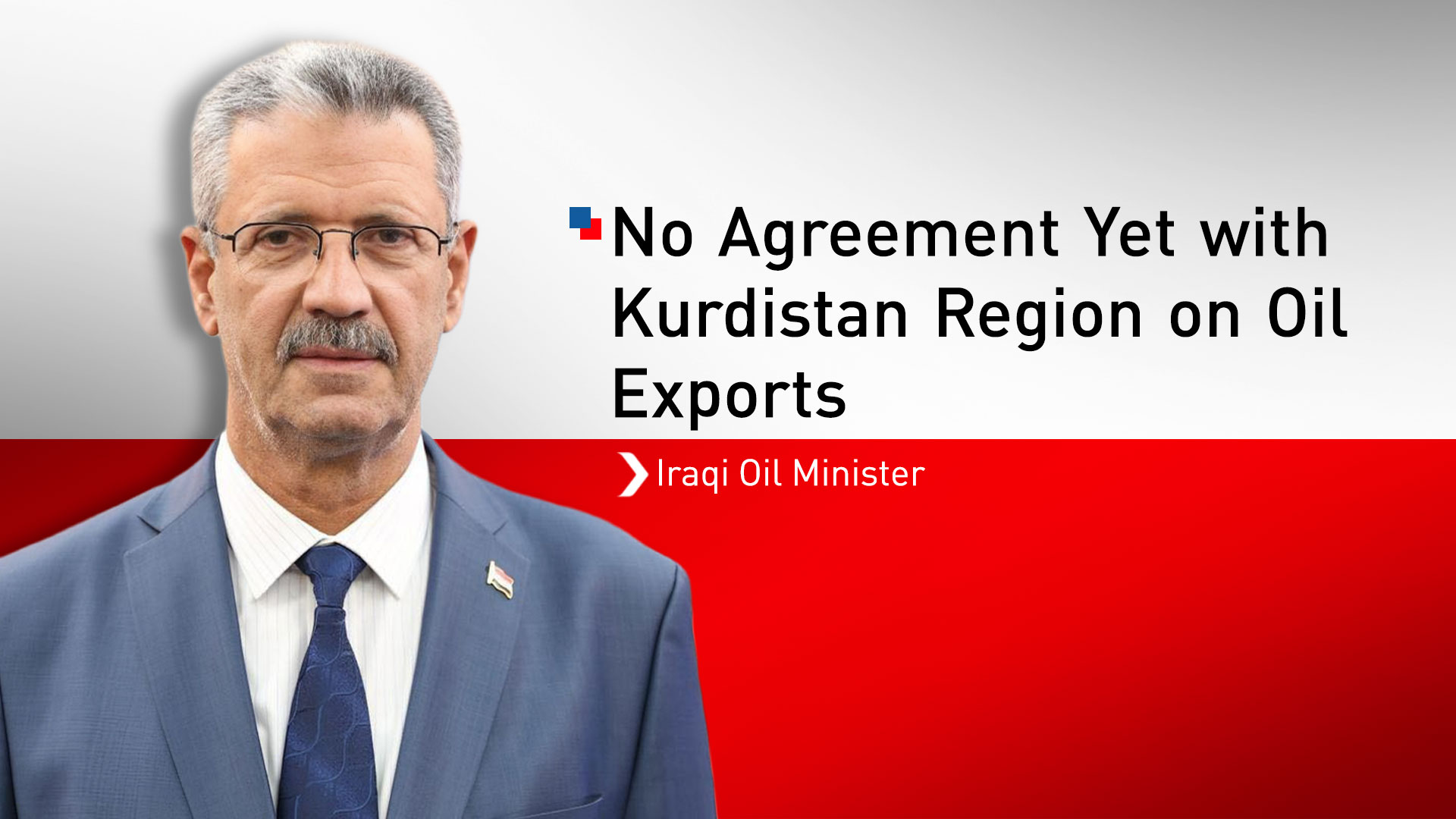
ERBIL (Kurdistan24) - Iraq’s Oil Minister Hayan Abdul-Ghani announced Monday that negotiations with the Kurdistan Region to export Kirkuk oil through the Region’s pipeline to the Ceyhan port in Türkiye have not yet resulted in an agreement, amid a complete halt of southern port shipments due to ongoing military tensions in the Gulf.
In a video message, Abdul-Ghani said that the closure of the Strait of Hormuz has forced Iraq to reduce its oil production to less than half of its normal output. Prior to the conflict, Iraq exported approximately 3.4 million barrels per day (bpd) through southern ports under its OPEC allocation of 4.4 million bpd.
Exports ceased within two to three days after the escalation of hostilities, prompting the Ministry of Oil to implement an urgent plan to reduce production to roughly 1.5 to 1.6 million bpd.
This output is being maintained exclusively to meet domestic consumption and ensure the operation of refineries, which collectively require over 1.1 million bpd, and to provide fuel for power plants, Abdul-Ghani said.
The Oil Minister highlighted efforts to identify alternative export routes. Iraq has initiated plans to ship oil via tanker trucks to the ports of Baniyas in Syria and Aqaba in Jordan, pending the announcement of a tender in the coming days.
Abdul-Ghani noted that the Ministry of Oil has also requested permission from the Kurdistan Region to transport 200,000 to 250,000 bpd of Kirkuk oil through its pipeline to Ceyhan, but formal approval has not yet been secured.
As a result of the export disruptions, operations have been suspended in several of Iraq’s largest oil fields, including West Qurna 1 and 2, Majnoon, Fayhaa, Halfaya, and Buzurgan. Only North Rumaila and Zubair in the southern region, along with the Siba gas field, continue to produce output, primarily to extract associated gas needed for power generation, the minister said.
Abdul-Ghani reassured citizens that despite the reduction in exports, domestic energy supply remains stable.
All refineries are operating at full capacity to produce gasoline, diesel, kerosene, and liquefied petroleum gas (LPG). He added that Iraq currently produces 6,000 tons of domestic gas daily and maintains a strategic underground reserve of over 50,000 tons, which can be released to meet market needs as necessary.
The oil minister emphasized that securing new export outlets is a priority given the ongoing geopolitical instability affecting the Gulf region. He noted that the Ministry is pursuing every available option to maintain revenue streams while ensuring domestic energy security.
The situation in the Gulf, including the closure of the Strait of Hormuz, has caused global concerns over energy supply and market stability.
Iraq’s reduction in production reflects the impact of regional hostilities on major oil-producing countries, according to Abdul-Ghani. Export disruptions have forced the government to prioritize domestic consumption and the operation of critical energy infrastructure.
Efforts to route Kirkuk oil through the Kurdistan Region pipeline underscore the ongoing coordination challenges between Baghdad and Erbil in managing Iraq’s oil exports.
The absence of a formal agreement with Kurdish authorities highlights the complexities of Iraq’s federal and regional arrangements for energy management, particularly under conditions of international instability and infrastructure limitations.
Abdul-Ghani’s announcement also clarified that oil shipments through the southern ports remain entirely halted, and alternative transportation methods—including tanker truck shipments to neighboring countries—are in planning stages but not yet operational.
Iraq’s oil production continues at a reduced level of 1.5 to 1.6 million bpd to meet domestic demand, while southern port exports remain suspended and negotiations with the Kurdistan Region for pipeline access are ongoing.
This article was updated on Monday, March 16, 2026, at 01:32pm.