Politico: Trump Set to Declare Victory in Iran War Amid Rising Tensions with NATO Allies
Trump is expected to declare victory in the Iran war, claiming all objectives met, while criticizing NATO allies and maintaining military deployments in the region.
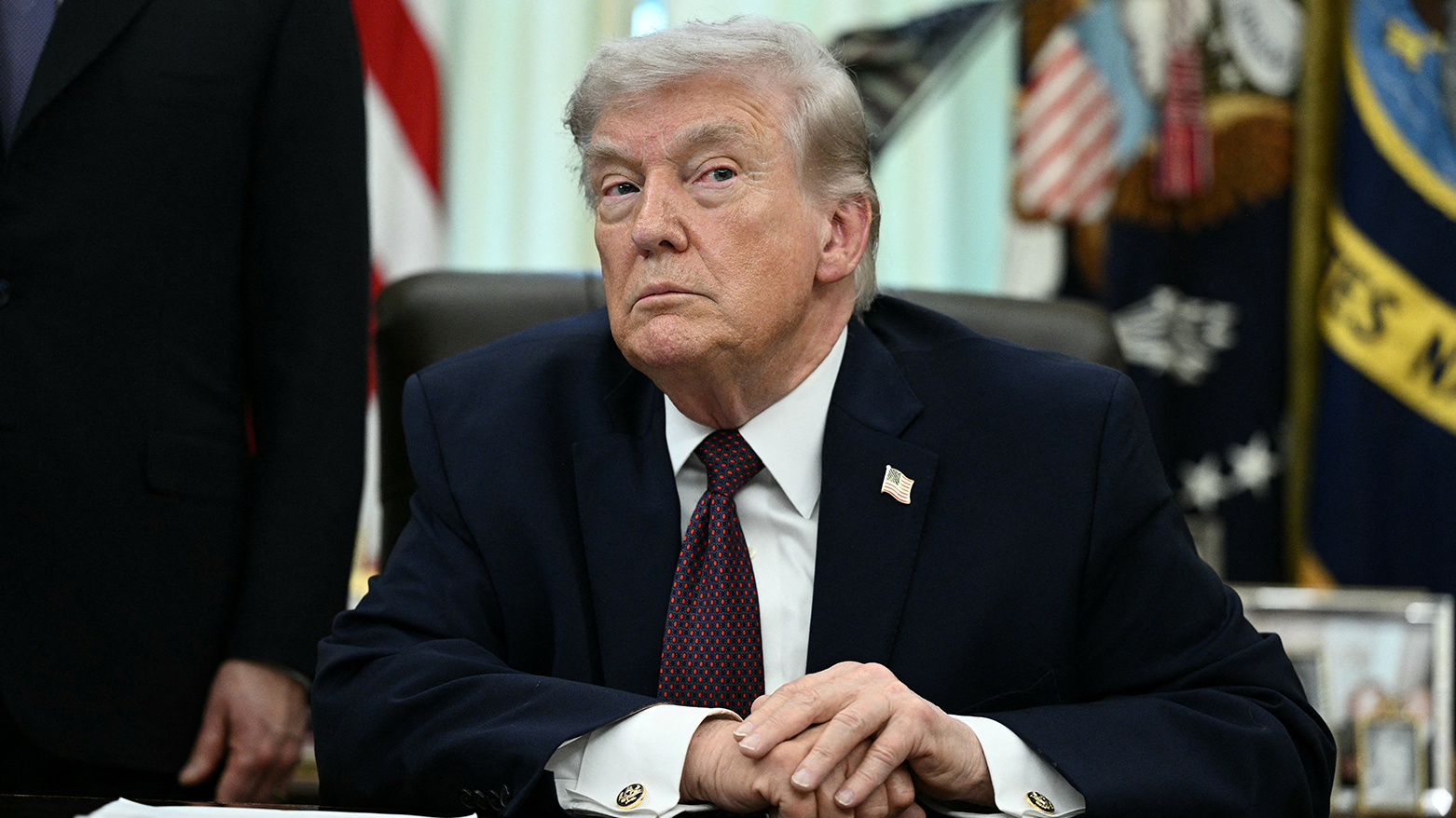
ERBIL (Kurdistan24) - US President Donald Trump is expected to declare military victory in the Iran war during a primetime televised address, as tensions with NATO allies intensify and additional US forces move into the region.
According to a report by Politico published on Wednesday, Trump is preparing to announce that the month-long war in Iran is winding down, claiming that all military objectives have been achieved. The report cited six sources familiar with the planning who said the speech will outline what the administration considers a successful end to the conflict.
The address comes as approximately 2,500 additional US Marines are being deployed to the Middle East, signaling continued military presence even as the president frames the war as nearing its conclusion.
Trump has already hinted at this message through recent interviews, public remarks, and social media posts, laying the groundwork for a declaration of success. In the speech, he is also expected to deliver a sharp message to NATO allies, blaming them for unresolved issues, particularly Iran’s continued restrictions on maritime traffic through the Strait of Hormuz.
Steve Bannon, Trump’s former White House chief strategist, said the president is likely to present the outcome in stark terms, stating: “Two, three weeks, definable objectives. ‘I came, I saw, I conquered’ — and we are hanging around a couple of weeks to conquer some more — maybe even then a ceasefire, while reiterating that the Hormuz situation is the Gulf Emirates’ and the Europeans’ to solve, and declare victory.”
The planned address is seen as an effort to reassure domestic audiences amid rising oil prices, which have surpassed $100 per barrel, and declining public support for the war. It also comes as the administration seeks to define the endgame of the conflict and outline next steps if ceasefire negotiations fail.
Despite Trump’s repeated claims that indirect talks with Iran are making progress, the report noted there is little evidence that the two sides are close to an agreement. Iranian officials have also continued to deny that any negotiations are taking place.
In a social media post earlier on Wednesday, Trump said Iran had requested a ceasefire, adding that the United States would consider it only if the Strait of Hormuz is reopened “free and clear.”
The conflict, now in its 32nd day, began on Feb. 28, 2026, when the United States and Israel launched airstrikes on Iran. Since then, Iran has responded with missile and drone attacks targeting Israel and US positions across the region.
Trump has not ruled out further escalation, including deploying ground forces to secure maritime routes or seize Iranian oil assets. However, he has increasingly directed criticism toward European allies, accusing them of failing to support US efforts.
He recently urged European countries to “build up some delayed courage” and “go get your own oil,” while also threatening to withdraw the United States from NATO altogether. In an interview with The Telegraph, he described the alliance as a “paper tiger” and said reconsidering US membership was “beyond reconsideration.”
According to the report, Trump’s frustration has intensified after several European countries, including Italy and the United Kingdom, restricted US forces involved in the Iran war from using their bases and airspace.
Officials close to the White House said the president’s anger is “very real,” reflecting deep divisions within the transatlantic alliance. While some European leaders appear to be taking Trump’s rhetoric in stride, others suggest the threats are part of a broader effort to renegotiate security arrangements.
Despite tensions, more than 20 countries have pledged to join a coalition to secure the Strait of Hormuz once the fighting ends. However, disagreements over timing and participation continue to complicate coordination.
The upcoming address marks Trump’s first primetime speech since the war began and is expected to play a critical role in shaping both domestic perception and international response to the evolving conflict.