Trump Weighs Next Steps as Iran Talks End Without Agreement in Islamabad
After marathon talks in Islamabad ended without agreement, U.S. and Iranian officials remain locked over Iran’s nuclear program and the Strait of Hormuz, as Washington weighs next steps between renewed diplomacy, continued stalemate, or potential escalation.
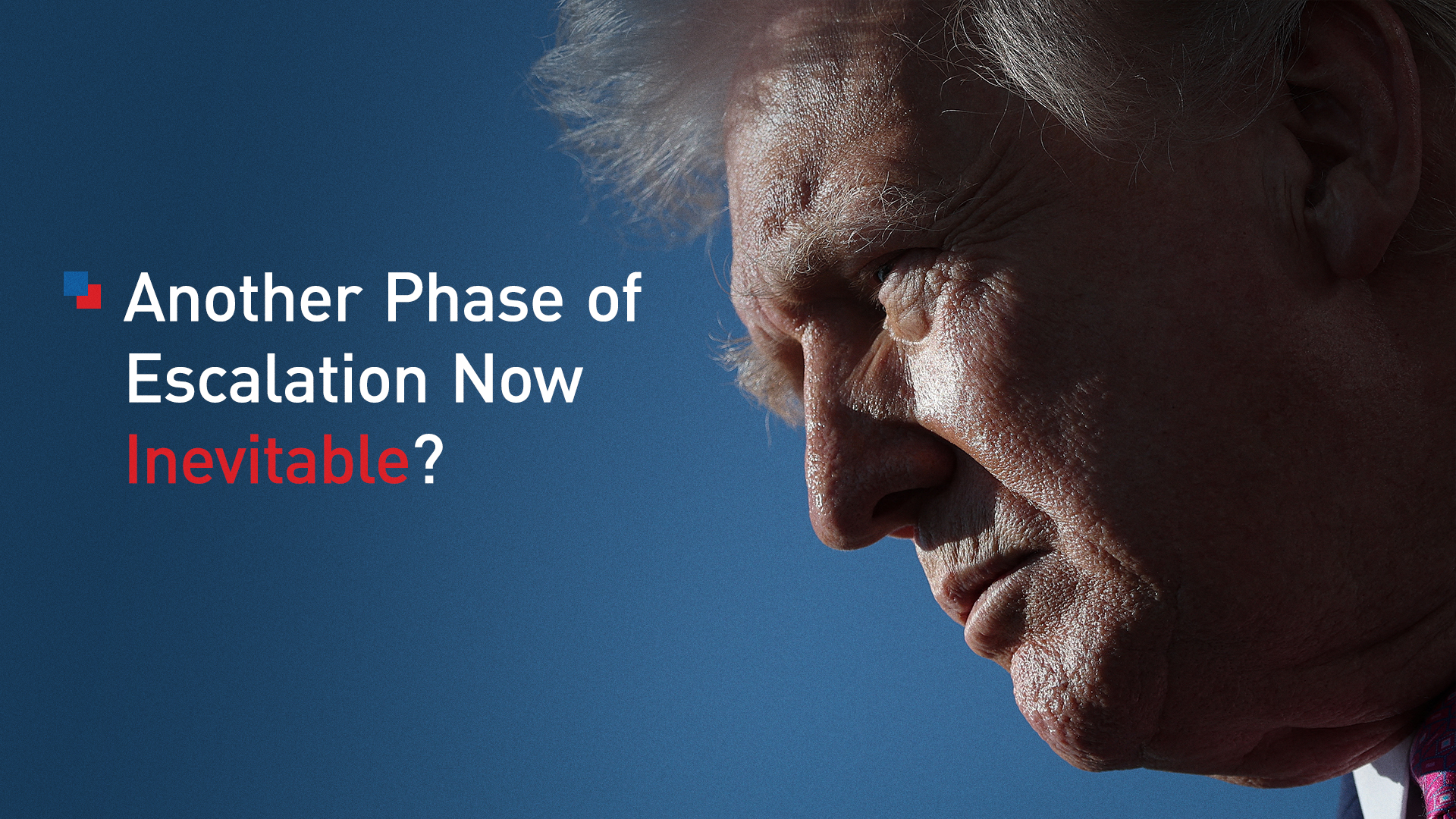
ERBIL (Kurdistan24) - President Donald Trump is facing renewed strategic uncertainty after marathon negotiations between U.S. and Iranian officials ended without agreement in Islamabad, according to reporting by The New York Times, leaving unresolved the central disputes over Iran’s nuclear program and intensifying pressure points tied to the Strait of Hormuz and the fragile cease-fire that has held since last month’s escalation.
The talks, which stretched for more than 21 hours inside a secured government facility in Pakistan’s capital, were intended to determine whether a U.S.-backed framework could halt Iran’s uranium enrichment program and establish a pathway toward sanctions relief, according to the Times dispatch by Tyler Pager and David E. Sanger, who traveled with Vice President JD Vance to the negotiations. Instead, the discussions concluded without a breakthrough, U.S. officials said, underscoring what both sides privately acknowledge has been a persistent impasse.
According to The New York Times, citing U.S. officials familiar with the talks, Washington presented what was effectively a “take-it-or-leave-it” proposal centered on the permanent termination of Iran’s enrichment capabilities. The Iranian delegation, the newspaper reported, declined to accept the terms, maintaining positions that have remained largely consistent across previous rounds of diplomacy.
Speaking to reporters before departing Islamabad, Vice President Vance offered a limited account of the negotiations, saying the United States had defined “very clear red lines.” As quoted in the Times report, he added: “We’ve made very clear what our red lines are, what things we’re willing to accommodate them on,” while noting that Iran had “chosen not to accept our terms.”
Iranian officials, for their part, issued a markedly different description of the talks. In a statement carried by Iranian state media and cited in international reporting, the foreign ministry said discussions had covered “various dimensions of the main topics,” including the nuclear file, sanctions relief, war-related damages, and maritime security in the Strait of Hormuz. The statement framed Iran’s position within its obligations under the Nuclear Nonproliferation Treaty and reiterated what Tehran describes as its sovereign right to maintain a civilian enrichment program.
The breakdown in Islamabad comes against the backdrop of weeks of heightened confrontation following a U.S. military campaign that, according to Pentagon figures cited by American officials, struck more than 13,000 targets across Iran over a 38-day period. As reported by The New York Times, those strikes were aimed at degrading missile production infrastructure and associated military-industrial capacity, though independent assessments of their full impact remain limited.
A fragile cease-fire followed the escalation, temporarily easing pressure on global energy markets. But according to the Times analysis, the truce is widely viewed within diplomatic and military circles as time-limited, with a key expiration point approaching on April 21. Officials cited in the report cautioned that the absence of a diplomatic breakthrough increases the risk of renewed instability.
The Strait of Hormuz has emerged as a central axis of the negotiations. In its coverage, The New York Times noted that Iranian officials explicitly raised maritime security during the Islamabad talks, linking it to broader demands on sanctions relief and the cessation of hostilities. Tehran’s foreign ministry statement, as quoted in the report, placed the “complete end to the war against Iran” alongside nuclear restrictions and sanctions relief as part of a single negotiating package.
American officials, according to the Times dispatch, view the strait through a different strategic lens: as a critical global energy corridor whose disruption could rapidly reverberate through oil markets, inflation rates, and supply chains. Previous periods of heightened tension in the waterway, the newspaper reported, were associated with sharp increases in fuel prices and broader volatility in global commodities.
The diplomatic deadlock in Islamabad reflects a structural divide that has persisted across multiple administrations. As The New York Times observed, Washington continues to insist on the permanent elimination of Iran’s uranium enrichment capacity, while Tehran maintains that enrichment at limited levels is protected under international nuclear law as long as it remains subject to monitoring.
That divide has defined earlier diplomatic efforts, including the landmark nuclear agreement reached during the Obama administration after two years of negotiations. According to historical accounts referenced in the Times reporting, that deal imposed restrictions on Iran’s nuclear program in exchange for phased sanctions relief. It later collapsed after the United States withdrew, leading to renewed sanctions and a gradual expansion of Iran’s nuclear activity.
In the current negotiations, U.S. officials traveling with Vice President Vance told reporters, according to the Times, that the latest proposal was intended to test whether Iran was prepared to accept a permanent halt to enrichment in exchange for structured economic relief. Iranian officials, however, have consistently rejected such terms, arguing that they exceed the boundaries of international nuclear agreements.
Following the breakdown in Islamabad, The New York Times reported that the Trump administration is weighing a limited set of options. These include extending negotiations over a longer timeline, maintaining the current cease-fire while preparing for potential escalation, or returning to a more coercive posture should Iran advance its nuclear program further.
Each option carries significant trade-offs. The newspaper noted that prolonged diplomacy risks signaling diminished leverage, while renewed military action could destabilize global energy markets already sensitive to disruptions in the Strait of Hormuz. A continuation of the current stalemate, meanwhile, leaves unresolved the central question of Iran’s nuclear threshold capability.
President Trump, according to officials cited by The New York Times, is expected to make the final determination on the administration’s approach. White House aides described the decision as one that will weigh diplomatic feasibility against the strategic risks of both escalation and extended negotiation.
Outside of official channels, commentary in international media has underscored the political sensitivity of the moment in Washington. An opinion piece published in The i Paper described emerging divisions within political and media ecosystems surrounding the administration’s handling of the Iran file, framing it as part of a broader contest over policy direction and leadership stability. While not part of the formal policy record, such commentary reflects the heightened attention the negotiations are drawing across Western media.
Still, on the diplomatic track itself, both Washington and Tehran appear entrenched. U.S. officials have consistently characterized Iran’s position as incompatible with non-proliferation objectives if enrichment continues indefinitely. Iranian officials, meanwhile, have framed U.S. demands as incompatible with sovereignty and existing treaty obligations.
As reported by The New York Times, neither side left the Islamabad talks signaling willingness to shift from core positions. That absence of flexibility, combined with the proximity of the cease-fire’s expiration and the unresolved status of the Strait of Hormuz, leaves the broader trajectory of the crisis uncertain.
For now, the negotiations have ended where they began: with competing claims of legal authority, divergent interpretations of deterrence, and a strategic environment in which diplomacy remains active but inconclusive. According to U.S. and Iranian officials cited across multiple reports, the next phase will depend less on what was discussed in Islamabad than on the decisions still to be taken in Washington and Tehran.