Three Vessels hit by Iran's Gunfire in Strait of Hormuz as Maritime Tensions Escalate
Three vessels were hit by Iran's gunfire in the Strait of Hormuz, crews safe, as tensions rise amid Iran’s restrictions and a US blockade, alongside a proposed $1.5 trillion Pentagon budget.
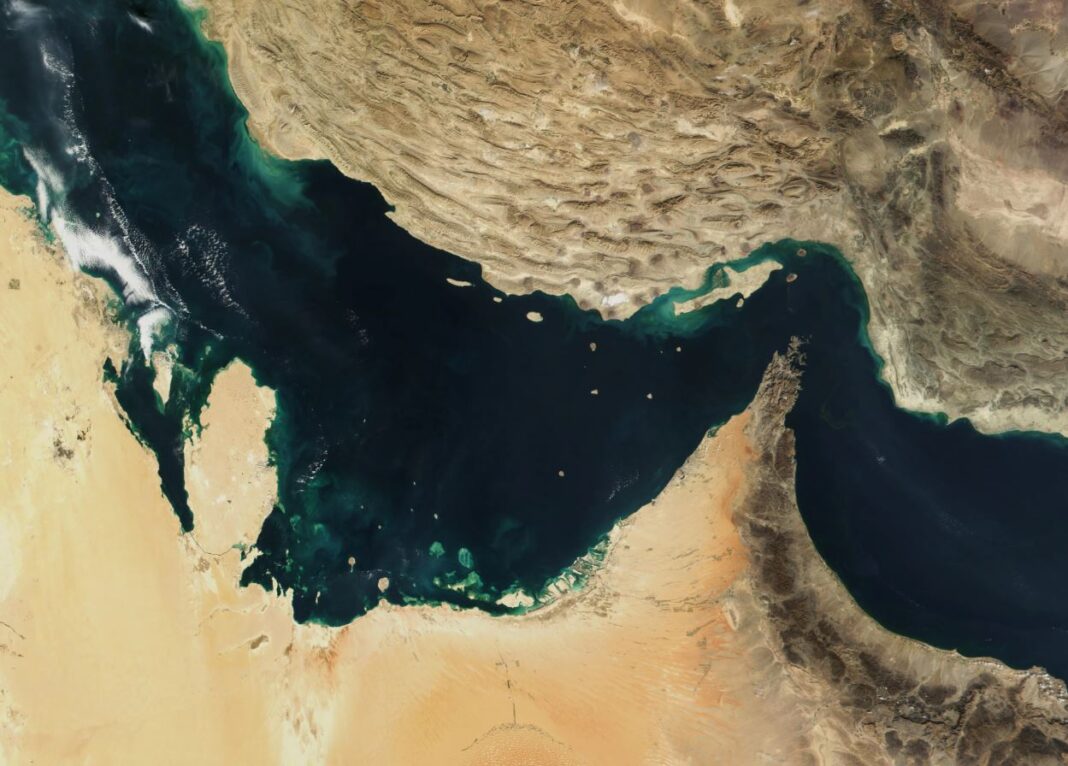
ERBIL (Kurdistan 24) — At least three container ships were struck by Iranian gunfire while transiting the Strait of Hormuz on Wednesday, according to maritime security sources and the United Kingdom Maritime Trade Operations (UKMTO), in the latest escalation affecting one of the world’s most critical shipping routes.
The incidents occurred amid continued restrictions imposed by Iran on vessels using the strait, initially in response to U.S.-Israeli bombardments and later tied to a U.S. blockade of Iranian ports.
According to the UKMTO, a Liberia-flagged container ship sustained damage to its bridge after being hit by gunfire and rocket-propelled grenades northeast of Oman. The vessel’s master reported being approached by a gunboat linked to Iran’s Islamic Revolutionary Guard Corps (IRGC), after which the ship came under fire.
All crew members onboard were reported safe, with no fire or environmental damage resulting from the attack. Maritime security sources said three individuals were aboard the gunboat involved in the incident.
The master of the Greek-operated vessel also indicated that no radio contact had been made prior to the encounter, adding that the ship had previously been informed it had permission to transit the strait.
In a separate incident, the UKMTO reported that a second container vessel, sailing under a Panama flag, was fired upon approximately eight nautical miles west of Iran. The ship was not damaged, and its crew remained safe.
Maritime sources also confirmed a third incident involving a Liberia-flagged container ship, which was targeted by gunfire while outbound from the Strait of Hormuz. The vessel was not damaged but halted in the water following the encounter. Its crew members were reported safe.
This rapid escalation comes in the aftermath of the collapse of the second round of U.S.-Iran talks scheduled for Wednesday, followed by tense remarks from U.S. President Donald Trump that the naval blockade on Iran will remain in force.
The Strait of Hormuz, which handled roughly one-fifth of the world’s oil and liquefied natural gas supply prior to the outbreak of conflict on Feb. 28, 2026, has become a focal point of rising tensions, with repeated disruptions to maritime traffic.
The incidents come amid broader regional escalation involving the United States and Iran, where control over maritime access in the Strait of Hormuz has emerged as a central point of contention. Iran has imposed restrictions on vessel movement, while the United States has enforced a blockade targeting Iranian ports, creating overlapping constraints on shipping routes.
At the same time, the United States is pursuing expanded military capabilities linked to the evolving security environment. The Pentagon recently outlined a proposed $1.5 trillion defense budget for the coming year, representing a nearly 50 percent increase in spending.
The proposal includes funding for new military initiatives such as the Navy’s “Golden Fleet” battleship program, the F-47 Air Force fighter jet, and an $18 billion “Golden Dome” missile defense system designed to counter ballistic threats through a combination of space-based sensors, interceptors, and radar systems.
The budget proposal, however, faces uncertainty as it requires approval from a divided Congress, where some lawmakers have raised concerns about the scale of the spending increase.