Britain Targets Russia’s 'Shadow Fleet' Ahead of G7 Summit
Starmer hails the operation in the English Channel while Sweden scrambles fighter jets to monitor Russian aircraft and concerns grow over Ukraine’s Zaporizhzhia nuclear plant
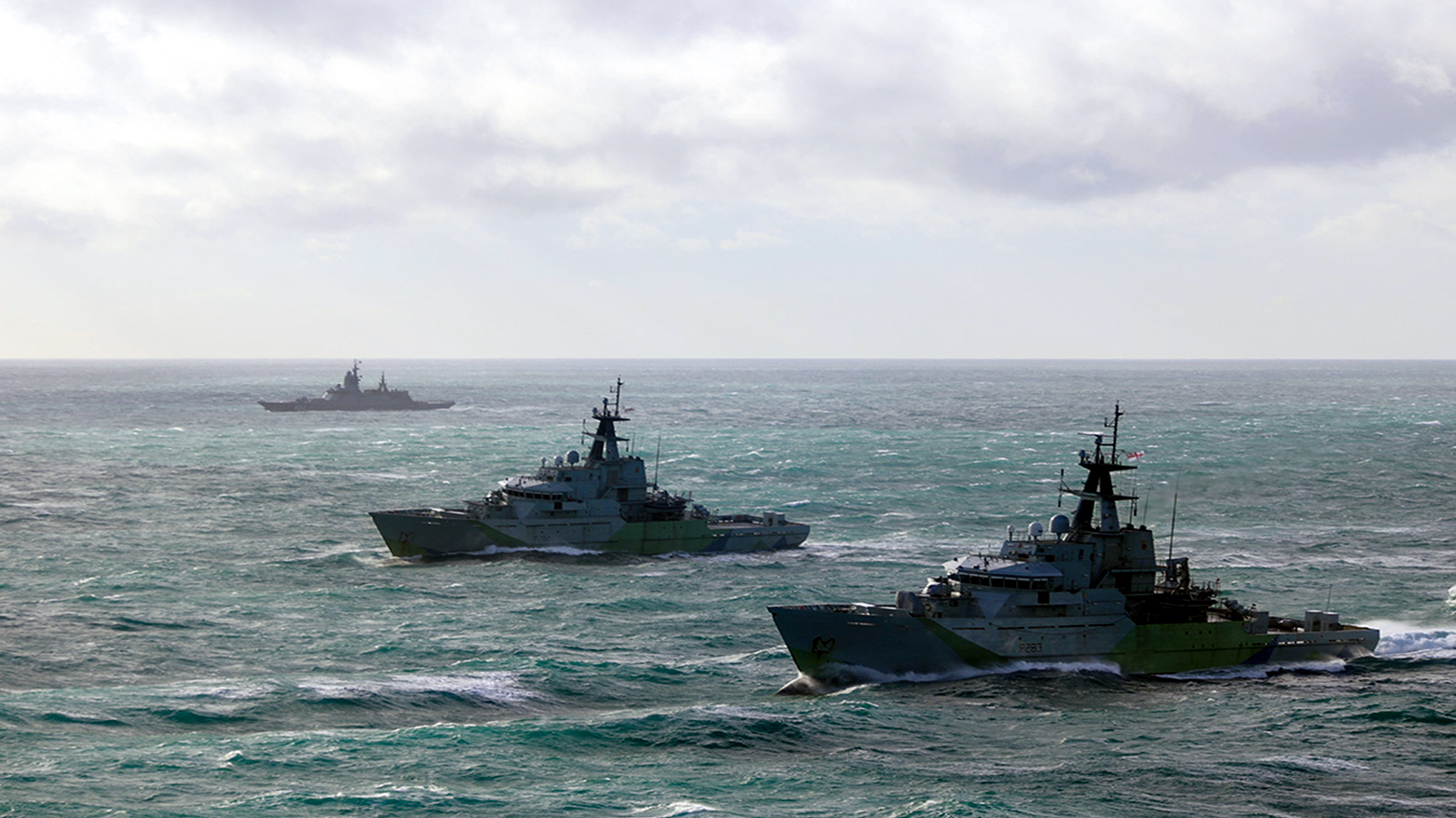
ERBIL (Kurdistan24) — British Prime Minister Keir Starmer announced Sunday that the United Kingdom had intercepted a suspected Russian “shadow fleet” oil tanker attempting to transit the English Channel, in the latest sign of growing Western efforts to curb Moscow’s ability to finance its war in Ukraine.
“In the early hours of this morning, I directed our Armed Forces to intercept a shadow fleet oil tanker attempting to pass through the English Channel,” Starmer wrote on X.
“This successful operation delivers yet another blow to Russia and reminds those fueling Putin's war in Ukraine that we will not let them hide.”
The British leader thanked military personnel and law enforcement officers involved in the operation, describing it as part of the country's ongoing efforts to safeguard national security and enforce sanctions targeting Russia.
The incident comes amid heightened tensions across Europe as Russia’s war in Ukraine enters its fifth year, with NATO members increasingly vigilant over Russian military activities in the Baltic region and continued threats to critical infrastructure.
On Saturday, Sweden revealed that it had scrambled two pairs of JAS 39 Gripen fighter jets the previous day to intercept two Russian military aircraft operating near Swedish airspace over the Baltic Sea.
According to the Swedish Armed Forces, the encounters occurred in both the southern and northern Baltic Sea, prompting NATO aircraft to also launch in support of regional air security operations.
While no violation of Swedish airspace occurred, Swedish military officials described the flights as part of a concerning pattern of Russian behavior.
“The Russian actions are serious and constitute a recurring pattern of behavior that threatens both our territorial integrity and security,” Vice Admiral Ewa Skoog Haslum said.
The incidents underscore growing security concerns in the Baltic Sea region since Russia launched its full-scale military operations in Ukraine in February 2022.
Security tensions have intensified further following Sweden’s accession to NATO in March 2024, a historic move that expanded the alliance's presence around Russia’s northwestern borders.
Meanwhile, concerns over nuclear safety in Ukraine resurfaced after the Russian-occupied Zaporizhzhia Nuclear Power Plant was reconnected to the electricity grid on Saturday following nearly three days without external power.
The facility, Europe's largest nuclear power plant, lost off-site electricity after a strike on a substation Wednesday, forcing operators to rely on emergency diesel generators to maintain cooling systems for its reactors.
The International Atomic Energy Agency said power was restored after repairs were carried out under a temporary local ceasefire.
The outage marked the 19th time the facility has lost external power since the war began in 2022. The agency described the episode as one of the longest power interruptions experienced at the plant during the war, highlighting the vulnerability of Ukraine’s electricity infrastructure near active front lines.
Russian forces seized the Zaporizhzhia facility in the opening weeks of the military operations and have remained a focal point of international concern. Both Moscow and Kyiv have repeatedly accused one another of actions that could trigger a nuclear disaster at the site.
The developments come as world leaders prepare to gather for the Group of Seven summit in the French city of Evian from June 15 to 17, where the wars in Ukraine and the Middle East are expected to dominate discussions.
A senior U.S. administration official confirmed Saturday that U.S. President Donald Trump will participate in a G7 working session alongside Ukrainian President Volodymyr Zelensky on Tuesday, although no formal bilateral meeting between the two leaders is currently scheduled.
Trump is also expected to hold separate meetings with French President Emmanuel Macron and the leaders of Qatar, the United Arab Emirates, Egypt, and India on the sidelines of the summit.
According to French officials, Trump and Macron will attend a special dinner at the Palace of Versailles following the summit to commemorate the 250th anniversary of American independence and celebrate the long-standing historical ties between France and the United States.
The G7 meeting takes place amid shifting geopolitical priorities. While Trump previously made ending the Russia-Ukraine war a central foreign policy objective, Washington’s attention has increasingly focused on the Middle East following the outbreak of conflict involving Iran, Israel, and the United States earlier this year.
The status of efforts to stabilize the region, including discussions surrounding maritime security and potential mine-clearing operations in the strategically vital Strait of Hormuz, is expected to feature prominently during summit deliberations.
The Strait of Hormuz remains one of the world's most critical energy chokepoints, handling a substantial portion of global oil and liquefied natural gas shipments. Disruptions in the waterway have raised concerns over energy markets and international trade.
The G7—comprising Canada, France, Germany, Italy, Japan, the United Kingdom, and the United States—is expected to address a wide range of issues, including security, artificial intelligence, energy, migration, and global trade.
Trump has also continued to advocate for Russia’s eventual return to the grouping, which became the G7 after Moscow was suspended from what was then the G8 following its 2014 annexation of Crimea. The proposal remains contentious among Western allies as Russia's war against Ukraine continues with no immediate end in sight.