UAE Expands Financial and Strategic Reforms Amid Regional Tensions and Energy Realignment
Currency swap talks with the U.S., aviation recovery efforts, and a post-OPEC strategy highlight Abu Dhabi’s push to reshape its economic and security posture
ERBIL (Kurdistan24) — The United Arab Emirates is simultaneously navigating financial diplomacy, post-conflict economic recovery, and a sweeping restructuring of its energy strategy as it responds to the broader geopolitical and economic consequences of recent regional tensions.
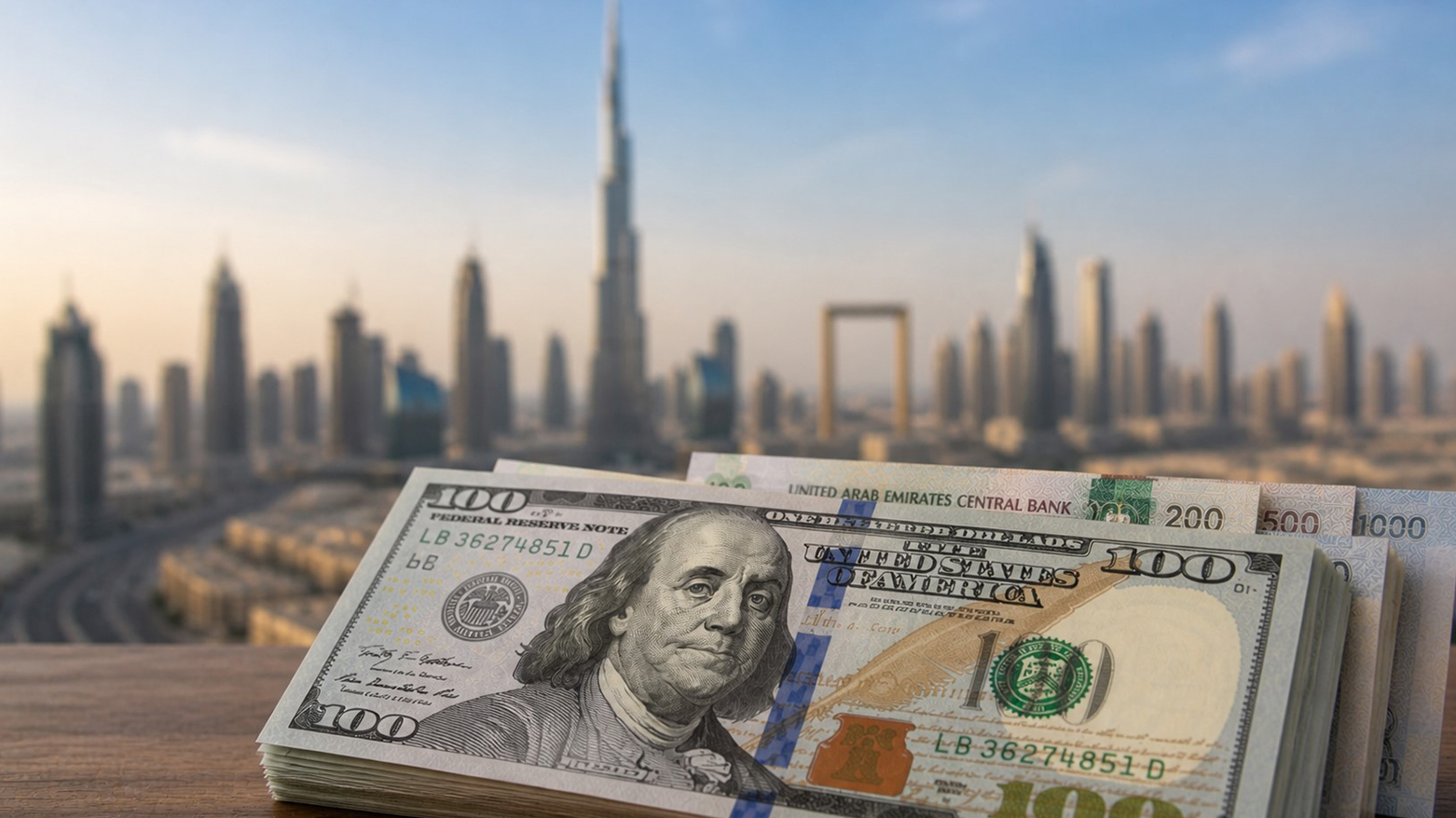
The UAE’s Minister of Foreign Trade, Thani Al Zeyoudi, confirmed on Monday that Abu Dhabi is in ongoing discussions with Washington over a potential currency swap line with the United States, while firmly rejecting suggestions that the move represents a bailout request.
Such arrangements, typically established between central banks, allow for the temporary exchange of currencies—primarily to provide access to U.S. dollar liquidity during periods of market stress—and are widely viewed as precautionary tools to support financial stability rather than emergency aid.
Speaking at the “Make it in the Emirates” conference in Abu Dhabi, Al Zeyoudi said the arrangement remains “under discussion,” stressing that the UAE’s objective is to join an “elite group” of countries with similar financial agreements with the U.S. He denied any financial distress motive behind the request.
Last month, however, the Wall Street Journal reported, citing U.S. officials, that the UAE had sought such a facility as a financial safeguard in the event that regional conflict further strains its economy.
The financial discussions come as the UAE continues to recover from significant disruption to its aviation sector. The Dubai Media Office reported on Monday that passenger traffic at Dubai International Airport fell by 66 percent in March, following regional instability and attacks attributed to Iranian retaliation during the Middle East conflict.
The airport, which is typically the world’s busiest for international travel, handled 2.5 million passengers during the period. Authorities said airspace restrictions and disrupted flight schedules severely constrained operations, though conditions have since begun to stabilize.
“With airspace within the UAE now fully restored, Dubai Airports is moving decisively to scale up operations,” the statement said, noting that recovery efforts are underway to restore flight capacity across regional routes.
Dubai Airports CEO Paul Griffiths described the recent downturn as “unprecedented for any major airport hub,” adding that quarterly traffic still fell 21 percent in early 2026 compared to the previous year.
Alongside financial and aviation pressures, the UAE is also undergoing a major shift in its long-term energy policy. The country’s oil chief confirmed that Abu Dhabi’s recent decision to exit OPEC was part of a broader strategy to future-proof the economy rather than a political move targeting any state or bloc.
Sultan Al Jaber said the withdrawal from OPEC and OPEC+ reflects a sovereign decision aligned with the UAE’s industrial and technological ambitions, aimed at accelerating diversification beyond fossil fuels.
“This move was not done in isolation,” Al Jaber said, describing it as part of a broader national effort to integrate energy, technology, and industrial development.
The UAE had long expressed frustration over production limits imposed by OPEC, particularly as it seeks to expand capacity to five million barrels per day by 2027, significantly above current quotas.
The decision also comes amid shifting regional dynamics and strained relations with Saudi Arabia, the de facto leader of OPEC, following disagreements over energy policy and Middle East conflicts.
Despite the geopolitical implications, officials emphasized that the UAE’s exit was conducted on amicable terms. Energy Minister Suhail Al Mazrouei said the decision was made “on good terms,” underscoring that it serves long-term national economic interests.
Meanwhile, Abu Dhabi is also accelerating investments in defense and domestic security technology. Officials from the Emirati defense conglomerate EDGE Group said the country is increasingly self-reliant in electronic warfare systems, including drone jamming capabilities used during recent attacks.
Faisal Al Bannai, adviser to the UAE president and chairman of EDGE Group, said the country now produces the majority of its defensive jamming systems domestically and aims to achieve full local production of air defense capabilities in the coming years.
As the UAE recalibrates its economic, financial, and security posture, the convergence of external pressures and internal reforms highlights a broader strategy aimed at strengthening resilience while reducing dependence on traditional geopolitical and energy frameworks.