PKK Announces Name Change to 'Apoist Movement'
PKK announces rebranding as "Apoist Movement," declares disarmament steps complete, and urges Türkiye to enact legal reforms to advance the stalled peace process.
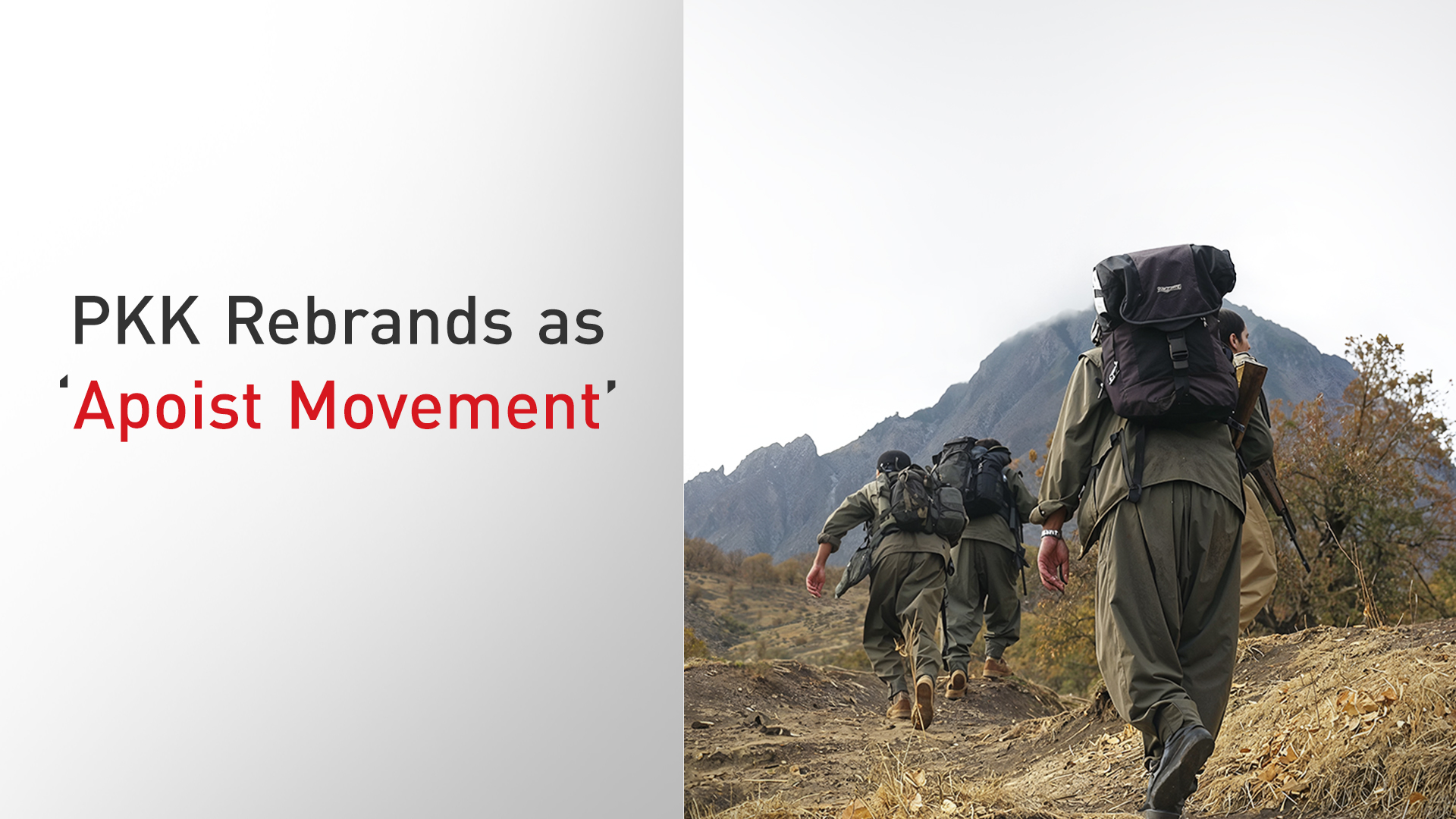
ERBIL (Kurdistan24) - The Kurdistan Workers' Party (PKK) changes its name and awaits the Turkish government's legal steps, according to a press conference outlining the organization's ongoing political transition. On Tuesday, top-level members of the organization's leadership convened to announce this rebranding and to declare their expectations regarding reciprocal legislative actions from authorities in Ankara.
During the briefing, which marked the first anniversary of the group's self-dissolution congress, the leadership announced the establishment of a newly formed political entity designated as the "Apoist Movement."
According to the announcement, this new structure replaces the former organizational identity of the PKK as part of a broader transition toward a non-violent political framework.
The leadership stated that the movement has fully achieved its required obligations following the formal cessation of its armed struggle and its subsequent dissolution process.
By framing their organizational transition as complete, the representatives of the newly named Apoist Movement emphasized that the responsibility for advancing the ongoing peace and democratic society process now rests entirely upon the Turkish government.
According to the movement, further progress in the political settlement is directly contingent upon the state implementing a comprehensive legal and legislative foundation.
The press conference served as a platform to assert that the group's transition into a civilian political entity cannot reach its final conclusion without corresponding legal guarantees from the government in Türkiye.
Announcement of New Movement
According to the statements delivered during the Tuesday press conference, the transition from the Kurdistan Workers' Party to the Apoist Movement signifies a definitive organizational rebranding.
The leadership stated that this new entity has been established to guide the movement through the current phase of the peace and democratic society process.
The timing of the announcement was deliberately aligned with a significant internal milestone.
The movement stated that the press conference was convened specifically on the first anniversary of its self-dissolution congress.
According to the announcement, this gathering of high-level leadership members was organized to evaluate the year that has elapsed since the group officially decided to terminate its previous organizational existence.
The representatives at the press conference noted that the creation of the Apoist Movement is the direct structural result of the resolutions passed during that preceding congress.
By introducing this new nomenclature, the leadership stated they are establishing the formal political vehicle through which their demographic and ideological base will engage with the ongoing political transformation.
Reference to Öcalan's Call
The ideological and strategic foundation for this organizational shift is firmly rooted in a sequence of political developments that commenced in late 2024.
According to the press conference, the newly named the 'Apoist Movement' evaluates its current posture as one of full commitment to the directives issued by their imprisoned leader, Abdullah Öcalan.
The leadership stated that the genesis of this transformative phase traces back to Oct. 2024.
The new peace process was initiated by Devlet Bahçeli, the leader of the Nationalist Movement Party (MHP). The report noted that Bahçeli issued an initiative calling on Abdullah Öcalan to publicly urge the dissolution of the PKK.
According to the announcement, this initiative culminated on Feb. 27, 2025, when Öcalan issued what the movement described as a historic call to officially end the strategy of armed struggle and to initiate the phase of peace and democratic society.
The movement stated that they have remained absolutely dedicated to executing this directive over the past year.
Following Öcalan's declaration, the organization convened its 12th Congress, which took place between May 4 and May 5, 2025.
During this assembly, the leadership noted that the organization formally adopted the decision to end its existing organizational structure and dissolve the PKK, an action that ultimately paved the way for the emergence of the Apoist Movement currently overseeing the transition.
Declared Steps in Transition Process
During the briefing, the leadership of the movement delineated a specific inventory of operational actions they assert have already been implemented to satisfy their obligations under the peace framework.
The movement stated that it has taken major, irreversible steps in accordance with the transition process outlined during the previous year's congress.
According to the press conference, the first of these major operational steps involved the territorial withdrawal of their affiliated personnel. The leadership stated that they have successfully withdrawn their forces from within the borders of Türkiye.
This relocation of personnel was framed by the movement as a primary indicator of their commitment to ceasing hostilities.
Furthermore, the movement stated that it has executed the systematic burning of its weapons.
According to the announcement, this destruction of armaments serves as the physical manifestation of their decision to lay down arms and permanently abandon the strategy of armed conflict.
In addition to the withdrawal of forces and the destruction of military hardware, the leadership noted a significant development regarding captive personnel.
According to the announcement, the movement has completed the release of prisoners associated with the Turkish National Intelligence Organization, widely referred to as "MIT."
The movement stated that these combined actions, withdrawal, disarmament, and prisoner release, constitute the full fulfillment of their responsibilities in the preliminary stages of the peace process.
Calls for Legal Framework in Türkiye
While highlighting their own organizational compliance, the representatives at the press conference directed pointed criticism toward the Turkish government.
The leadership stated that despite the movement's extensive disarmament and transition efforts, officials in Ankara have thus far failed to reciprocate with necessary administrative and legislative actions.
According to the PKK leadership's announcement, the Turkish government has taken no practical steps to implement the proposals put forward in parliament, nor has it established the legal foundation required to secure the peace and democratic society process.
The movement stated that this lack of legislative progress threatens to stall the momentum generated over the past twelve months.
The Apoist Movement emphasized a specific set of political demands directed at the state.
According to the press conference, the leadership argued that for this political transformation to be successful, the Turkish government must formally recognize Abdullah Öcalan as the chief negotiator and as an official party to the settlement.
The movement stated that establishing a formal legal status and securing conditions of freedom for Öcalan are non-negotiable prerequisites for the process. Furthermore, the leadership stated that defining the working conditions of their leadership and enacting laws necessary for democratic participation are crucial.
According to the announcement, the movement warned that relying solely on occasional meetings will not solve the 100-year-old Kurdish issue, and without a robust legal framework, the process will not reach a definitive and final conclusion.
Political Reactions and Demands
The frustration expressed by the newly branded movement aligns with broader sentiments articulated within the sphere of legitimate civilian politics.
The Peoples' Equality and Democracy Party (DEM Party), alongside various other Kurdish political factions, has voiced significant criticism regarding the current pace of the Turkish government's response.
The report noted that despite the organization's verified decision to lay down arms, these legal political entities criticize the governmental slowness in implementing corresponding legal steps.
It is also reported that the DEM Party has formulated its own primary demands to address the ongoing political bottleneck in Ankara.
Among these primary political demands, the DEM Party insists on an immediate end to the state's practice of imposing appointed trustees, commonly known as qayyuums, over democratically elected municipalities.
According to the report, the political factions argue that this practice undermines the democratic society framework envisioned in the peace process.
Additionally, the DEM Party and aligned Kurdish parties are demanding the release of political prisoners currently held within the Turkish penal system.
Finally, parallel to the demands articulated by the Apoist Movement, these political parties insist that the government must establish a clear legal status that allows for the safe return of former PKK members to civilian life, according to the report.