Türkiye Reopens Key Border Crossing With Syria After 12-Year Closure as Security Challenges Persist
Akcakale crossing to resume civilian travel amid growing Ankara-Damascus ties, while deadly attack in northeast Syria underscores ongoing instability
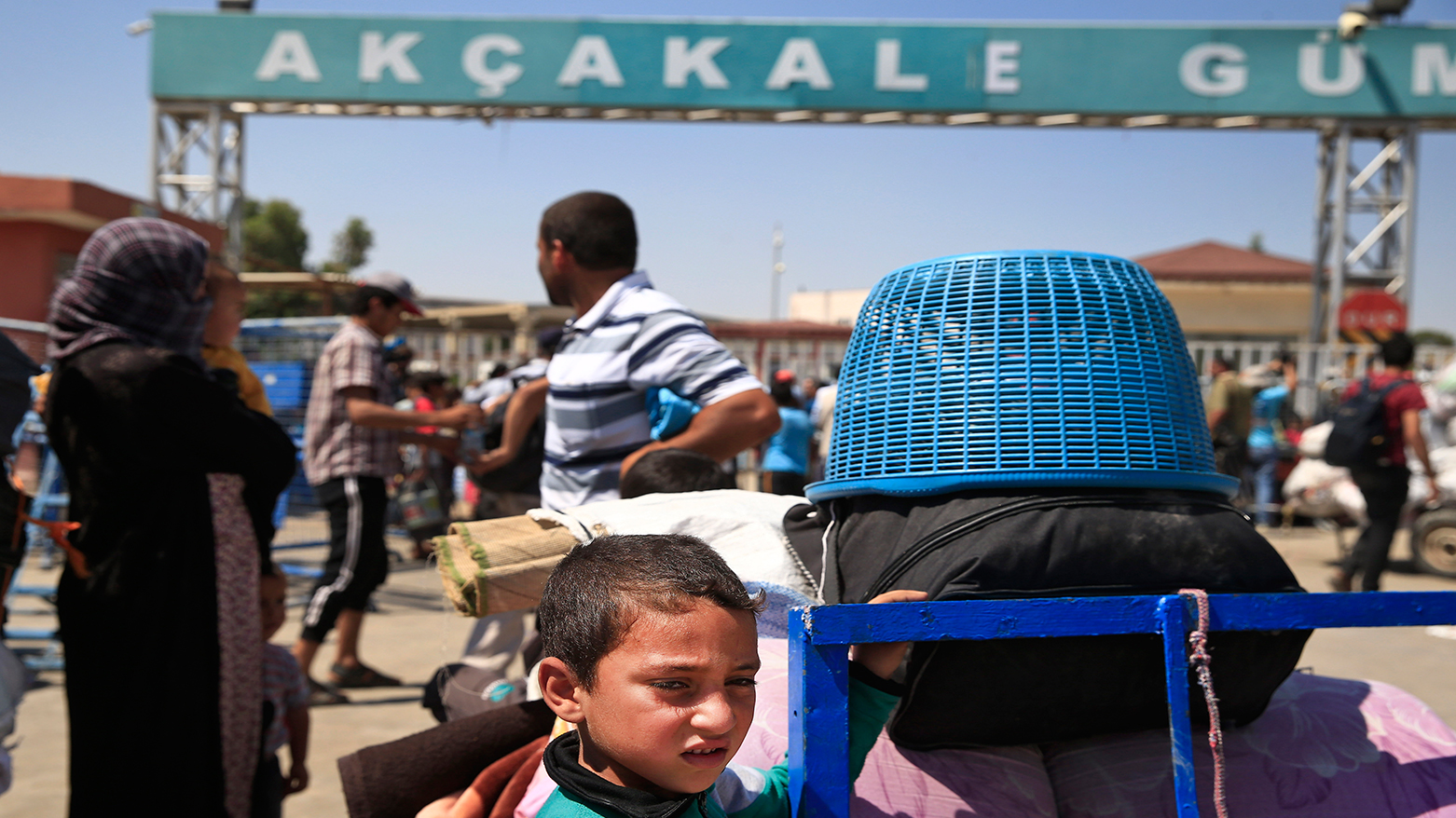
ERBIL (Kurdistan24) — One of the main border crossings between Türkiye and Syria is set to reopen to civilian traffic on Tuesday after being closed for 12 years, marking another step in the normalization of relations between Ankara and Damascus as Syria continues to grapple with persistent security threats in its northeast.
The reopening of the Akcakale border crossing, located in Türkiye’s southeastern Sanliurfa province opposite the Syrian town of Tal Abyad, was announced Monday by local Turkish authorities.
“In light of the normalization of life in the region... entry and exit procedures using passports to and from the Syrian Arab Republic via the Akcakale Land Border Crossing will start on Tuesday,” the Sanliurfa governor’s office said in a statement.
The move will make Akcakale the sixth operational crossing along the roughly 900-kilometer (550-mile) Türkiye-Syria frontier, which has remained largely restricted since the outbreak of the Syrian conflict in 2011.
The crossing was shut down in 2014 after the Kurdish-led Syrian Democratic Forces (SDF) captured Tal Abyad from the Islamic State (ISIS). Ankara has long viewed the SDF as closely linked to the Kurdistan Workers’ Party (PKK), which Türkiye designates as a terrorist organization, and considers the group a major national security threat along its southern border.
Although the crossing partially reopened in 2019 for limited trade activity, funerals, and official transit following Turkish military operations in northern Syria, Tuesday’s reopening will restore access for ordinary civilian travelers.
The decision comes amid deepening diplomatic and political coordination between Türkiye and Syria’s new leadership under President Ahmed al-Sharaa. Ankara has recently moved to strengthen ties with Damascus, with Sharaa participating in a regional diplomacy forum in the Turkish resort city of Antalya in April.
The reopening also reflects broader efforts by Syria’s government to reestablish administrative and economic control across the country following years of conflict and fragmentation. However, despite signs of normalization, violence continues to plague parts of northeastern Syria.
On Monday, Syria’s defense ministry announced that two soldiers were killed and several others wounded in what it described as a “treacherous attack by unknown assailants” targeting a military bus in Hasakeh province.
According to Syria’s state news agency SANA, the attack occurred in northeastern Syria, where government forces have in recent months expanded their presence into territories previously controlled by Kurdish-led factions.
A military source told AFP that the bus came under gunfire along the highway connecting Ras al-Ain in Hasakeh province with Ain Issa in neighboring Raqa province. Two soldiers were killed and two others injured in the assault, the source said, adding that investigations were underway to identify those responsible.
No group immediately claimed responsibility for the attack.
The incident highlights the continuing threat posed by ISIS remnants in Syria despite the group’s territorial defeat in 2019 by Kurdish-led forces backed by the U.S.-led international coalition.
ISIS militants continue to operate in Syria’s vast central desert and have repeatedly targeted both Kurdish-led forces and Syrian government personnel.
Earlier this year, ISIS called on its fighters to confront Syria’s new authorities after Damascus extended its control into parts of the northeast. Days later, Syrian state media reported that four security personnel were killed in an ISIS attack in the northern city of Raqa shortly after government forces entered the area.
Syria’s government has since formally joined the international coalition against ISIS, signaling a shift in security coordination as Damascus seeks to stabilize newly regained territories while rebuilding relations with neighboring countries.