Trump Heads to Beijing for High-Stakes Xi Talks Amid Iran War and Hormuz Crisis
Washington seeks Chinese pressure on Tehran while both powers try to prevent wider tensions from derailing fragile U.S.-China ties
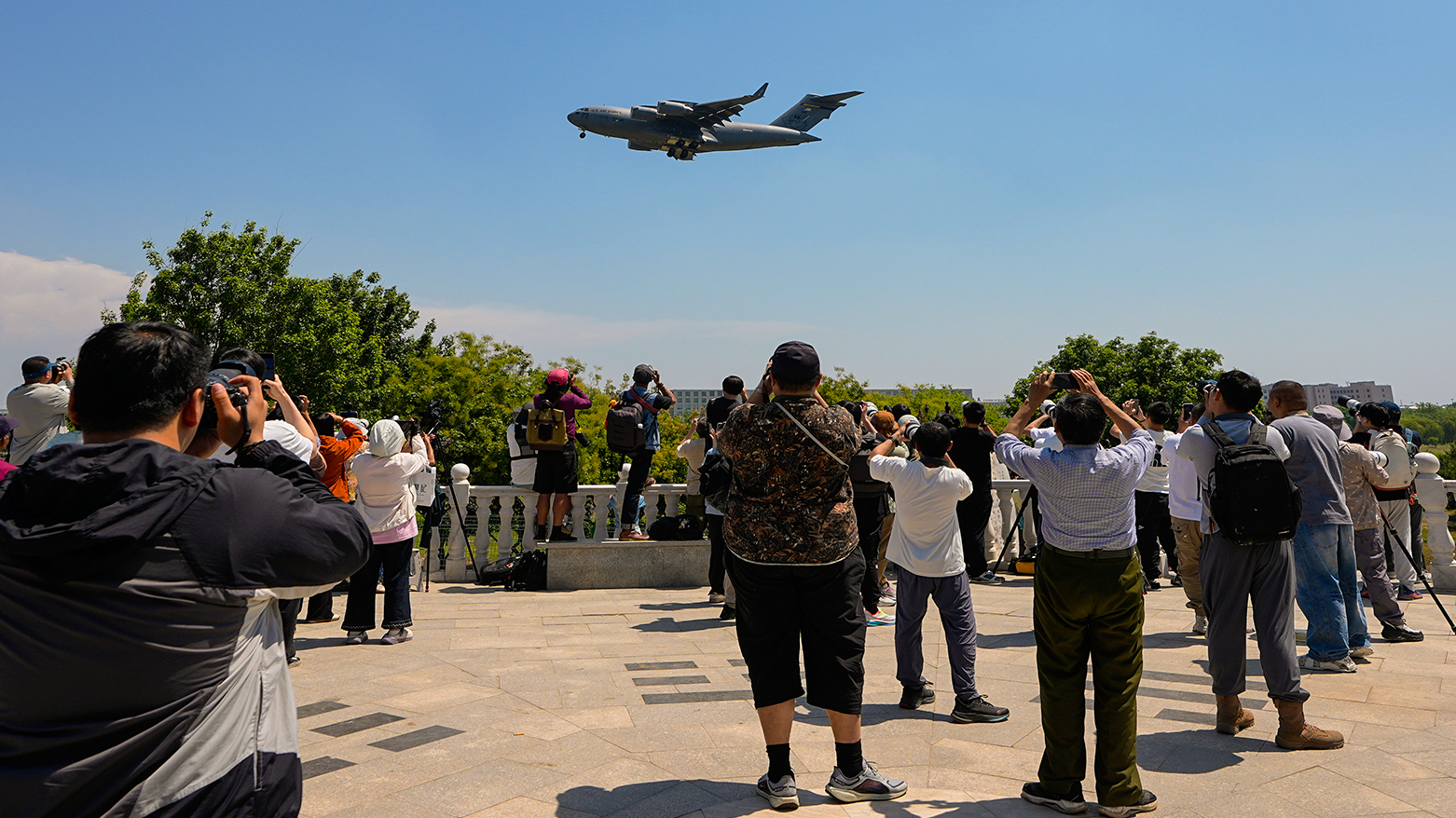
ERBIL (Kurdistan24) — U.S. President Donald Trump is set to travel to Beijing on Tuesday for a high-stakes meeting with Chinese President Xi Jinping, as Washington intensifies efforts to persuade China to use its influence over Iran to help end the ongoing regional conflict and reopen the strategically vital Strait of Hormuz.
The visit comes after weeks of unsuccessful U.S. attempts to convince Beijing — the world’s largest purchaser of Iranian oil — to pressure Tehran into accepting American terms aimed at ending the two-month-old war and restoring maritime traffic through the narrow waterway, through which roughly 20% of global crude oil shipments passed before the conflict erupted.
Despite repeated appeals from Washington, China has largely avoided direct involvement in the crisis, opting instead for cautious diplomacy while seeking to preserve its broader geopolitical and economic interests in the Middle East.
Ahead of Trump’s arrival, White House officials signaled that expectations for a breakthrough on Iran remain low. Instead, the administration appears focused on ensuring disagreements over Tehran do not overshadow broader negotiations with Beijing on trade, tariffs, fentanyl-related exports, and economic stability.
“We don’t want this to be something that derails the broader relationship or the agreements that might come out of our meeting in Beijing,” U.S. Trade Representative Jamieson Greer said last week in an interview with Bloomberg TV.
The diplomatic balancing act underscores the increasingly complex dynamics between Washington and Beijing as both powers attempt to manage tensions without triggering another major deterioration in bilateral relations.
China has publicly called for an end to the war while working quietly behind the scenes with regional partners, including Pakistan, to encourage peace negotiations. Analysts say Beijing has also privately expressed dissatisfaction both with Iran’s closure of the Strait of Hormuz and with U.S. military measures targeting Iranian shipping.
“They are very cautious, risk-averse, and they don’t want to be involved in anything that would drag them into something that they don’t consider their problem,” Ahmed Aboudouh, a China-Middle East specialist at Chatham House, told AP.
In recent days, senior U.S. officials have escalated pressure on Beijing. Secretary of State Marco Rubio and Treasury Secretary Scott Bessent publicly urged China to use its leverage over Tehran to reopen the strait, arguing that China stands to suffer greater economic damage from prolonged disruptions than the United States.
“China is an export-driven economy. That means they depend on other countries to buy from them,” Rubio told reporters last week. “You can’t buy from them if you can’t ship it there, and you can’t buy from them if your economy is being destroyed by what Iran is doing.”
At the same time, the Trump administration has imposed new sanctions on Chinese entities accused of assisting Iran’s military operations.
The U.S. State Department announced Friday sanctions against four entities — including three Chinese firms — accused of supplying satellite imagery used in Iranian military strikes against American forces in the Middle East. Earlier, the Treasury Department targeted Chinese oil refineries and shipping companies allegedly involved in purchasing and transporting Iranian crude.
The measures cut off the sanctioned firms from the U.S. financial system and penalize companies conducting business with them.
Beijing sharply condemned the sanctions, calling them “illegal unilateral pressure,” and activated a 2021 blocking statute that prohibits Chinese entities from complying with foreign sanctions deemed harmful to Chinese interests.
The dispute has added another layer of friction to already strained U.S.-China relations, though both governments appear determined to prevent the Iran crisis from escalating into a wider economic confrontation.
Ahead of Trump’s visit, Chinese Foreign Minister Wang Yi hosted Iranian Foreign Minister Abbas Araghchi in Beijing, where Wang defended Iran’s right to develop civilian nuclear energy while also reiterating China’s support for diplomatic solutions.
Xi has also issued indirect criticism of Washington’s handling of the conflict, warning that international law “must not be selectively applied or disregarded” and cautioning against a return to “the law of the jungle.”
Still, Trump on Monday sought to downplay tensions with Beijing over Iran, saying Xi also wanted to see the Strait of Hormuz reopened. “He’d like to see it get done,” Trump said of the Chinese leader.
Analysts say both leaders have strong incentives to maintain stability in bilateral ties, particularly after the two countries narrowly avoided a major tariff war last year.
China imports nearly half of its crude oil and roughly one-third of its liquefied natural gas from Middle Eastern states affected by the Hormuz disruption, according to Chinese customs data. Prolonged instability threatens to deepen existing economic pressures on Beijing’s slowing economy.
“I think for Xi, a win is continued stability without surrender,” said Craig Singleton of the Foundation for Defense of Democracies. “He wants the summit to validate China’s superpower status, preserve the tariff predictability, and reaffirm that Washington has to deal with Beijing on Beijing’s terms.”
Despite efforts to maintain stability, the war has periodically pushed relations toward confrontation.
Last month, Trump threatened to impose 50% tariffs on Chinese goods after reports emerged that Beijing was preparing to send advanced air defense systems to Iran. He later backed away from the threat, saying Xi had assured him in writing that China would not provide Tehran with weapons.
Days later, Trump claimed the U.S. Navy intercepted a Chinese vessel carrying what he described cryptically as a “gift” for Iran, though he did not elaborate further.
“There have been moments where it seemed like it was going to spill over,” said Patricia Kim of the Brookings Institution. “But I think, again, the two sides are pretty invested in not allowing this to destabilize the broader relationship.”