President Barzani, Najaf Delegation Meeting Highlights Historical Ties Between Kurdistan Region and Najaf
Meeting discussed cooperation in reconstruction and environmental sectors and called for expanding bilateral relations
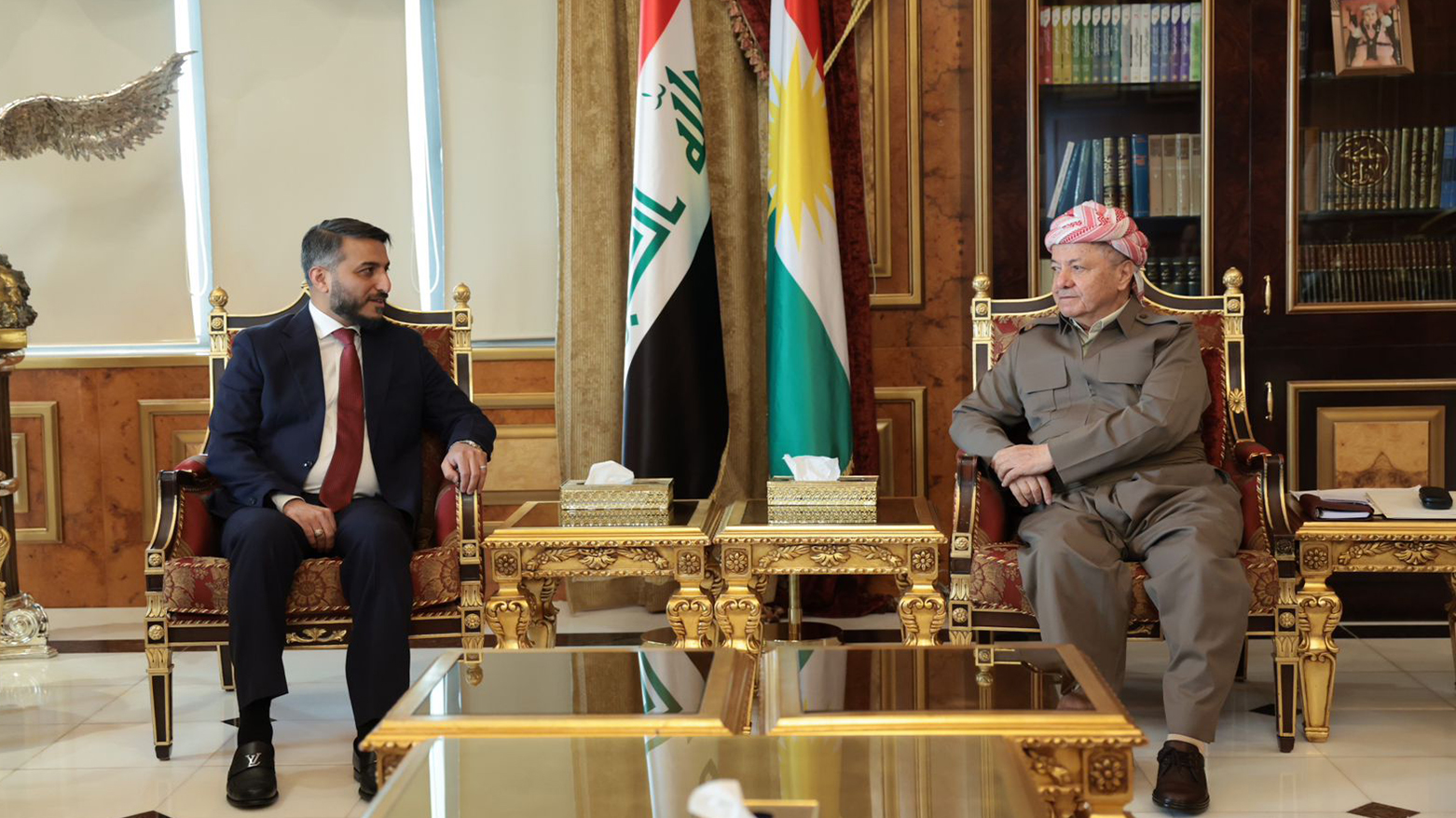
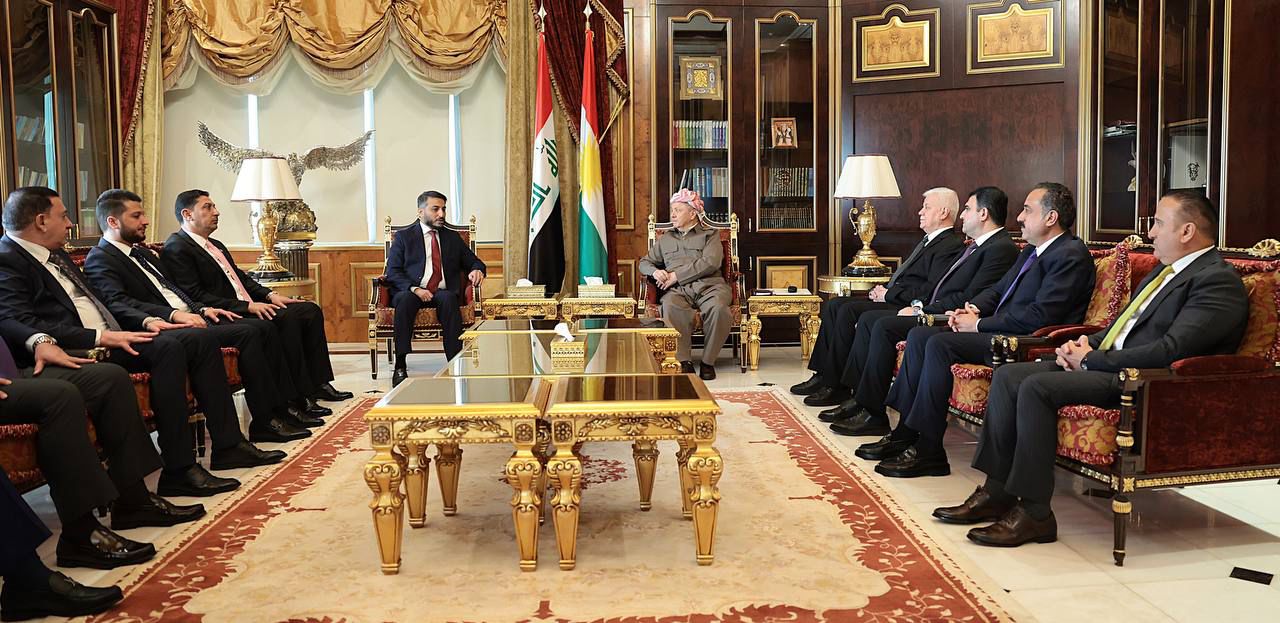
ERBIL (Kurdistan24) — President Masoud Barzani on Monday received Najaf Governor Yousef Al-Ghannawi and members of the Najaf Provincial Council in a meeting focused on strengthening bilateral relations and expanding cooperation in reconstruction, environmental protection, and other sectors.
According to a statement released by the Barzani Headquarters, the meeting also included discussions on Iraq’s broader political situation, while both sides emphasized the historical ties between the Kurdistan Region and Najaf Province.
The two sides stressed the importance of further developing relations and coordination between the Kurdistan Region and Najaf, particularly in the fields of reconstruction, environmental management, and public services.
The visit comes amid increasing engagement between Iraqi provincial officials and Kurdistan Region leaders as local governments across Iraq seek to benefit from the Kurdistan Region’s experience in infrastructure development, urban planning, and administrative modernization.
Over the past two decades, the Kurdistan Region — particularly the capital city of Erbil — has undergone significant transformation through large-scale development projects and investment-driven growth across multiple sectors.
The Region has witnessed rapid expansion in residential and commercial construction, including business centers, high-rise towers, road networks, tourism facilities, and modern housing projects that have reshaped the urban landscape of Erbil, Duhok, and Sulaimani.
At the same time, the Kurdistan Regional Government (KRG) has increasingly focused on modern governance approaches aimed at improving public services and infrastructure management. Authorities have implemented broad digitalization initiatives designed to streamline government procedures, reduce bureaucracy, and improve access to public services.
Environmental and infrastructure projects have also become a major priority for the KRG in recent years, particularly as population growth and urban expansion have increased pressure on public utilities and natural resources.
The Kurdistan Region has launched multiple sewage and sanitation projects, water treatment initiatives, and urban infrastructure programs aimed at improving environmental sustainability and living conditions in major cities and developing areas.
Energy reform has similarly become a central component of the KRG’s development agenda through initiatives such as the “Runaki Project,” which aims to provide uninterrupted 24-hour electricity service across the Kurdistan Region while reducing dependence on private generators.
Alongside urban development, the Region has pursued economic diversification efforts focused on agriculture, tourism, and industrial investment. Authorities have supported the expansion of agricultural production and food-processing industries through manufacturing projects utilizing locally produced poultry and agricultural goods.
Officials in both the Kurdistan Region and Iraqi provinces have increasingly pointed to such initiatives as examples of governance and development models that could help improve infrastructure, environmental management, and service delivery across other parts of Iraq.
Monday’s meeting reflected broader efforts to strengthen cooperation between the Kurdistan Region and Iraqi provinces at a time when reconstruction, environmental challenges, and infrastructure modernization remain major priorities nationwide.