Al-Araji: Peshmerga Arms Are Constitutional
Qasim al-Araji tells Al Jazeera that dialogue with armed factions will intensify after the coalition's September 30 withdrawal, that Iraq sees both Iran and the US as friends, and that PKK presence on Iraqi soil is illegal
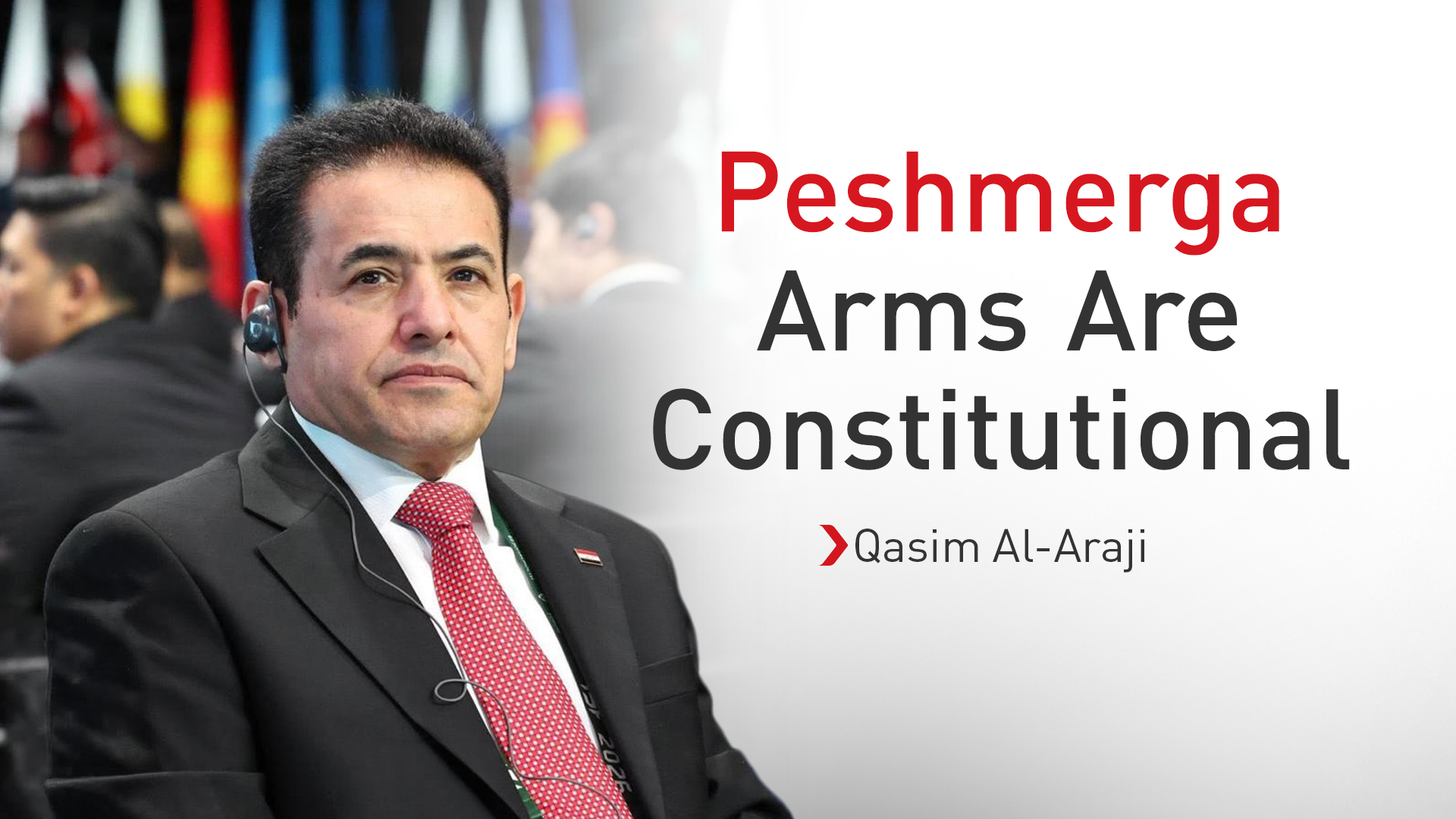
ERBIL (Kurdistan 24) - Iraqi Prime Minister Ali al-Zaidi's National Security Adviser Qasim al-Araji delivered a wide-ranging and significant interview to Al Jazeera on Saturday evening, clarifying that Peshmerga weapons fall within Iraq's constitutional framework and are therefore not subject to the disarmament process, while confirming that dialogue with armed factions to place all weapons under state authority will become serious and intense after the international coalition's withdrawal from Iraq on September 30, 2026.
Al-Araji explicitly drew the constitutional line that Baghdad has until now left ambiguous. "Peshmerga weapons are within the constitution, and the weapons withdrawal decision applies to everything outside the constitution," he told Al Jazeera. The clarification is significant because it formally excludes the Kurdistan Region's Peshmerga forces from the September 30 disarmament deadline that has been applied to Iran-aligned militia factions, resolving a question that had circulated in political discourse about whether the deadline applied to all non-state armed actors or exclusively to the Popular Mobilization Forces factions operating outside the federal security structure.
On the broader disarmament process, al-Araji said the factions are currently committed to not carrying out any action against neighboring countries or inside Iraq, and that the government is determined to close the files that harm Iraq and its neighbors. He described the September 30 coalition withdrawal as creating the right opportunity for serious dialogue. "The opportunity will be favorable after the withdrawal of the international coalition on September 30, and the dialogue will be serious with the factions to place weapons under state authority," he said, adding that the coalition's departure does not mean a break with Washington and that security intelligence sharing will continue.
On Iraq's diplomatic balancing act between Washington and Tehran, al-Araji was unusually candid. "Our relationship with Iran is good, and our relationship with America is good, and we seek to be a bridge for communication to reach an agreement that guarantees the rights of the entire region," he said. He then went further: "Iran is our friend, and America is also our friend, but our interest comes first, and we can convince the parties to serve our interests." The formulation places Iraq's national interest explicitly above both relationships, a posture of strategic autonomy that al-Zaidi's government has pursued throughout the conflict.
Al-Araji also addressed the security architecture question directly, saying that security cooperation and coordination between Gulf states, Iraq, and Iran is necessary, and that the Iranian side emphasizes the necessity of expelling extremist groups from Iraq.
On the Turkish military presence in northern Iraq, al-Araji said the circumstances that led to Turkish forces being on Iraqi soil will end with the resolution of the PKK file, and confirmed that PKK forces on Iraqi territory are illegal and that Iraq is working with the Turkish side to resolve the issue. "The conditions that led to the presence of Turkish forces on Iraqi soil will end with the end of the PKK file," he said, framing the removal of Turkish troops as a consequence of resolving the PKK presence rather than a separate demand.
Iraq and the United States agreed in September 2024 to end the international coalition's military mission against ISIS in Iraq, with the final phase to be completed by the end of September 2026. The September 30 deadline simultaneously marks the conclusion of the coalition's presence and the government's deadline for militia disarmament, with several factions explicitly linking the future of their weapons to the departure of foreign forces. The State Administration Coalition, comprising the most prominent Shia, Sunni, and Kurdish political forces, has warned that any armed activity outside the state framework after September 30 will be treated under anti-terrorism law.