Najaf Governor Seeks to Replicate Erbil’s Development Experience in Southern Iraq
Iraqi official praises Kurdistan Region’s progress in electricity, water management, and public services during visit to Erbil
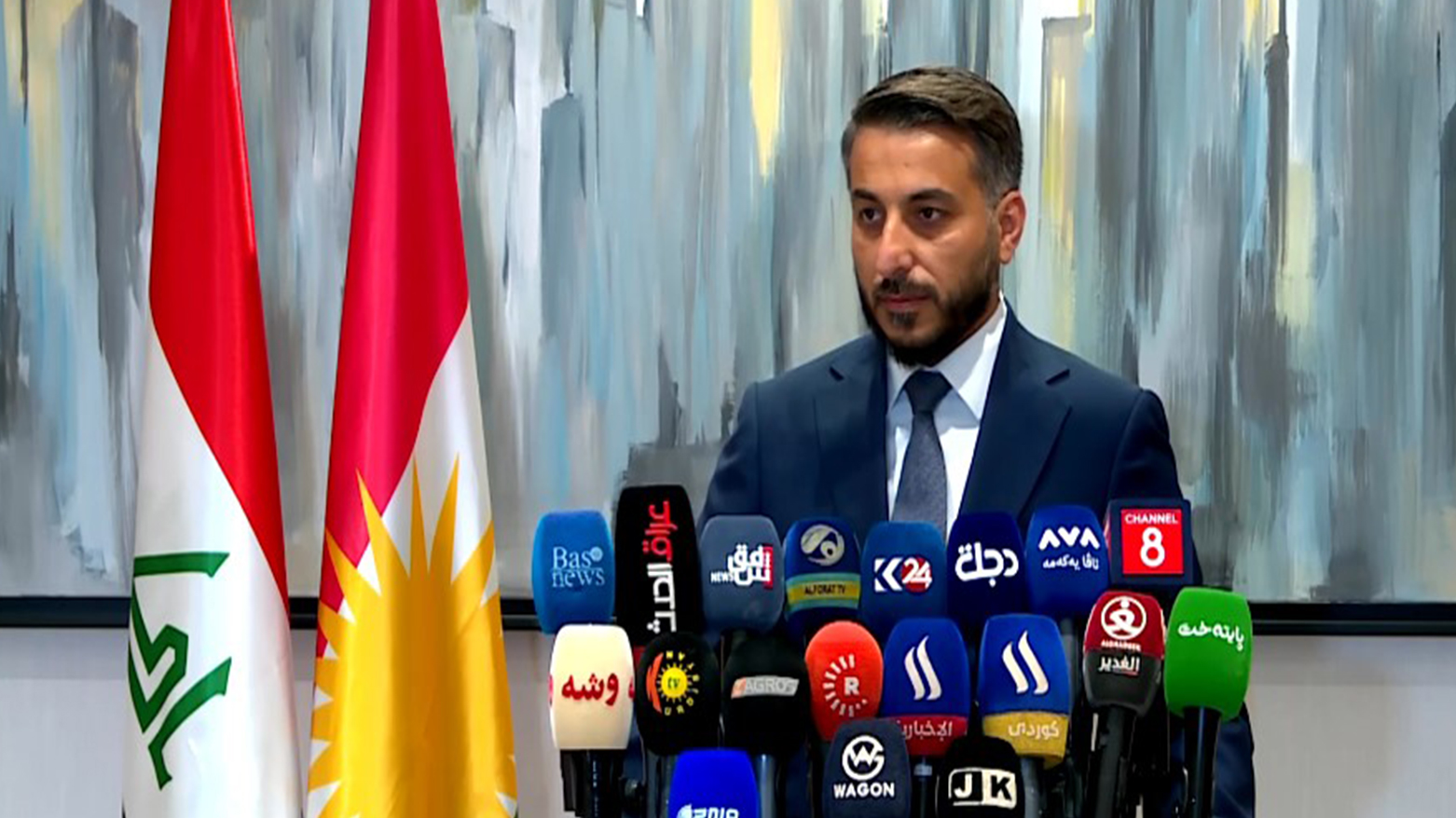
ERBIL (Kurdistan24) — Yousef Gnawi, the governor of Iraq’s Najaf province, said on Tuesday that his visit to the Kurdistan Region carries major importance as his administration seeks to benefit from Erbil’s successful development experience, particularly in electricity, water management, and public services.
Speaking during a press conference in Erbil, Gnawi said the delegation held a series of high-level meetings with senior Kurdistan Region officials, including President Masoud Barzani, Kurdistan Region Prime Minister Masrour Barzani, Erbil Governor, and municipal officials.
“Our visit to the Kurdistan Region, especially Erbil, was highly important for us,” Gnawi said. “We held a series of significant meetings with President Barzani, Prime Minister Masrour Barzani, as well as Erbil’s governor and municipal officials.”
The Najaf governor stressed that his province hopes to draw from Erbil’s development model, particularly in sectors that directly affect citizens’ daily lives.
“We want to benefit from Erbil’s successful experience, especially in electricity, water, and public services,” he said. “Over recent years, Erbil has managed to effectively address water scarcity and drought challenges while also providing stable electricity. We want to transfer these experiences to Najaf province.”
The remarks come as many Iraqi provinces continue to struggle with chronic electricity shortages, deteriorating infrastructure, and worsening water scarcity caused by mismanagement, corruption, climate change, reduced river flows, and rapid urban expansion.
In contrast, the Kurdistan Region — particularly Erbil — has increasingly promoted itself as a model for urban development and service delivery in Iraq. The regional government has invested heavily in infrastructure projects, road networks, housing developments, and energy reforms over the past decade.
Gnawi also highlighted the historical ties between Erbil and Najaf, emphasizing the need for stronger coordination and cooperation between the two provinces.
“Erbil and Najaf share historic and longstanding relations,” he said. “We discussed greater coordination and agreements with Erbil’s governorate. One of the important issues is facilitating travel for religious tourists coming from Erbil and other areas to visit Najaf.”
Najaf, home to the revered Imam Ali Shrine, is one of the most important centers of Shiite Islamic pilgrimage in the world and receives millions of visitors annually from Iraq and abroad.
The governor further underlined the importance of direct air links between the two cities, saying flights between Erbil and Najaf play a major role in strengthening people-to-people connections and boosting tourism.
“We want to further strengthen air transportation lines between Erbil and Najaf airports,” he said.
At the conclusion of his remarks, Gnawi invited companies and investors from the Kurdistan Region to expand their activities into Najaf, particularly in infrastructure and aviation-related projects.
“We invite Kurdistan Region companies and investors to come and invest in Najaf, especially in airport and infrastructure projects,” he said. “Najaf needs the expertise and experience that we see today in Erbil.”