Iraqi Officials Link Federal Cabinet Stability to Coordination With Kurdistan Region
Iraqi parliamentary blocs say incoming cabinet under Prime Minister Ali Zaidi depends on resolving disputes with Kurdistan Region. Leaders stress coordination with Erbil on oil, salaries, budget transfers and Article 140. Prime Minister Masrour Barzani's Baghdad visit seen as pivotal for stability.
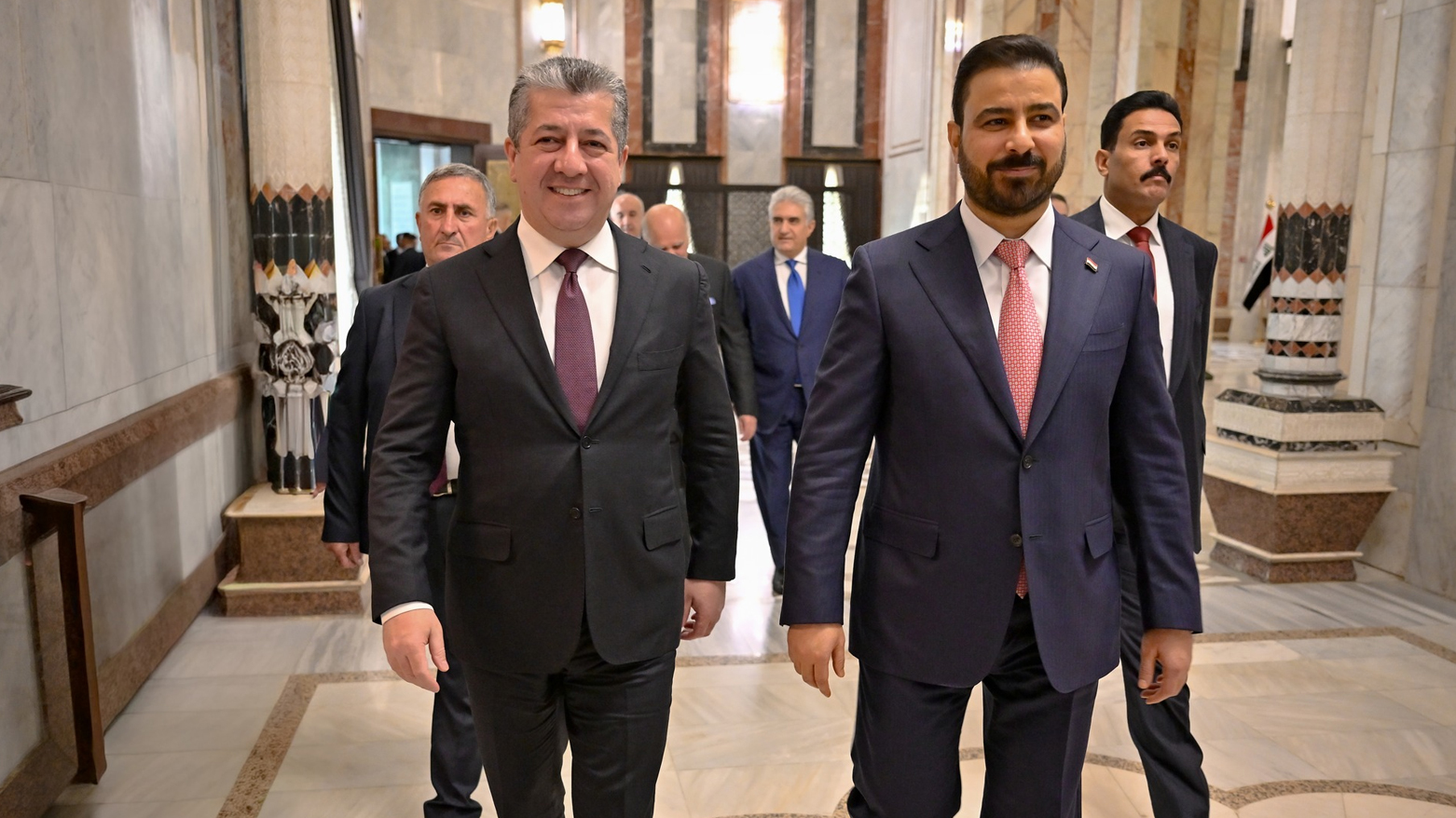
ERBIL (Kurdistan24) - A broad political consensus is emerging in Baghdad as major Iraqi parliamentary blocs emphasize that the success and stability of the incoming federal cabinet under Prime Minister Ali Zaidi are fundamentally tied to coordination with the Kurdistan Region.
As political parties navigate the complexities of government formation, leaders across the sectarian and ideological spectrum have warned that a functional administration cannot exist without first resolving the long-standing disputes between Erbil and Baghdad.
The current visit of Kurdistan Region Prime Minister Masrour Barzani to the federal capital is being viewed as a strategic pivot to address these outstanding files and ensure the longevity of the new government.
Salahuddin al-Dulaimi, a prominent leader in the Hasm Alliance, told Kurdistan24 on Saturday that Prime Minister Barzani's influence on the domestic and international stages makes his participation in the process indispensable.
"The visit is an important step toward making the course of the solution successful," al-Dulaimi said.
He stressed that Iraqi Prime Minister Zaidi's administration is actively seeking to eliminate historical friction, but cautioned that "without resolving the issues between the Kurdistan Regional Government (KRG) and the federal government, the new Iraqi cabinet will not be successful."
This sentiment is shared by the State of Law Coalition, led by Nouri al-Maliki.
Abbas al-Moussawi, an advisor to al-Maliki, told Kurdistan24 that current policy within the Coordination Framework is directed toward fostering a healthy relationship with Erbil.
"The visits are for the sake of re-strengthening relations," al-Moussawi stated, adding that Prime Minister Zaidi views cooperation with the Kurdistan Region as a primary foundation for the success of federal policy.
The spokesperson for the Nasr Alliance, Aqeel al-Rudaini, characterized Prime Minister Barzani's presence in Baghdad as a demonstration of "good faith."
He noted that the visit is expected to facilitate definitive understandings regarding critical technical and constitutional files, including oil exports, the implementation of Article 140, budget transfers, and public sector salaries.
"This will allow the Iraqi government to fully fulfill its obligations," al-Rudaini said, noting that Prime Minister Barzani's engagement encourages all parties to finalize the cabinet formation quickly.
From the Siyada Alliance, leader Salah al-Kubeisi emphasized the historic role of the Kurdistan Democratic Party (KDP) in national stability.
"This party practices politics by overcoming problems and conflicts," al-Kubeisi told Kurdistan24, asserting that resolving disputes with Erbil serves the interests of all Iraqis, not just those in the Kurdistan Region.
Institutional stability remains the primary concern for many independent and alliance-affiliated politicians.
Abu Mithaq al-Masari, an independent politician close to the Badr Organization, described the visit as a positive opportunity to secure government stability through a resolution of the oil, gas, and constitutional disputes.
Similarly, Mudhaffar al-Karkhi, a leader in the Azm Alliance, underscored that the "negotiating table is the basis for ending any crisis." He pointed to the positive exchange of messages between Baghdad and Erbil as a sign of progress.
"Ali Zaidi's government has conveyed positive messages to Erbil, and Erbil has welcomed them with several initiatives," al-Karkhi told Kurdistan24.
As Prime Minister Zaidi prepares to finalize his cabinet, the messaging from Baghdad's political center is clear: the road to a functional federal government passes through a comprehensive and constitutional agreement with the Kurdistan Region.
Without this coordination, the political parties warn, the systemic crises regarding revenue-sharing and governance will continue to undermine Iraq's national stability.