Iraqi Watchdog Says 70% of Draft Laws Risk Increasing Hidden Unemployment
Eco Iraq Observatory warned that nearly 70% of draft laws in Iraq's Parliament would expand public spending and "hidden unemployment" through new councils, funds, and allowances, as Baghdad simultaneously struggles with budget delays, falling oil revenues, and mounting salary obligations.
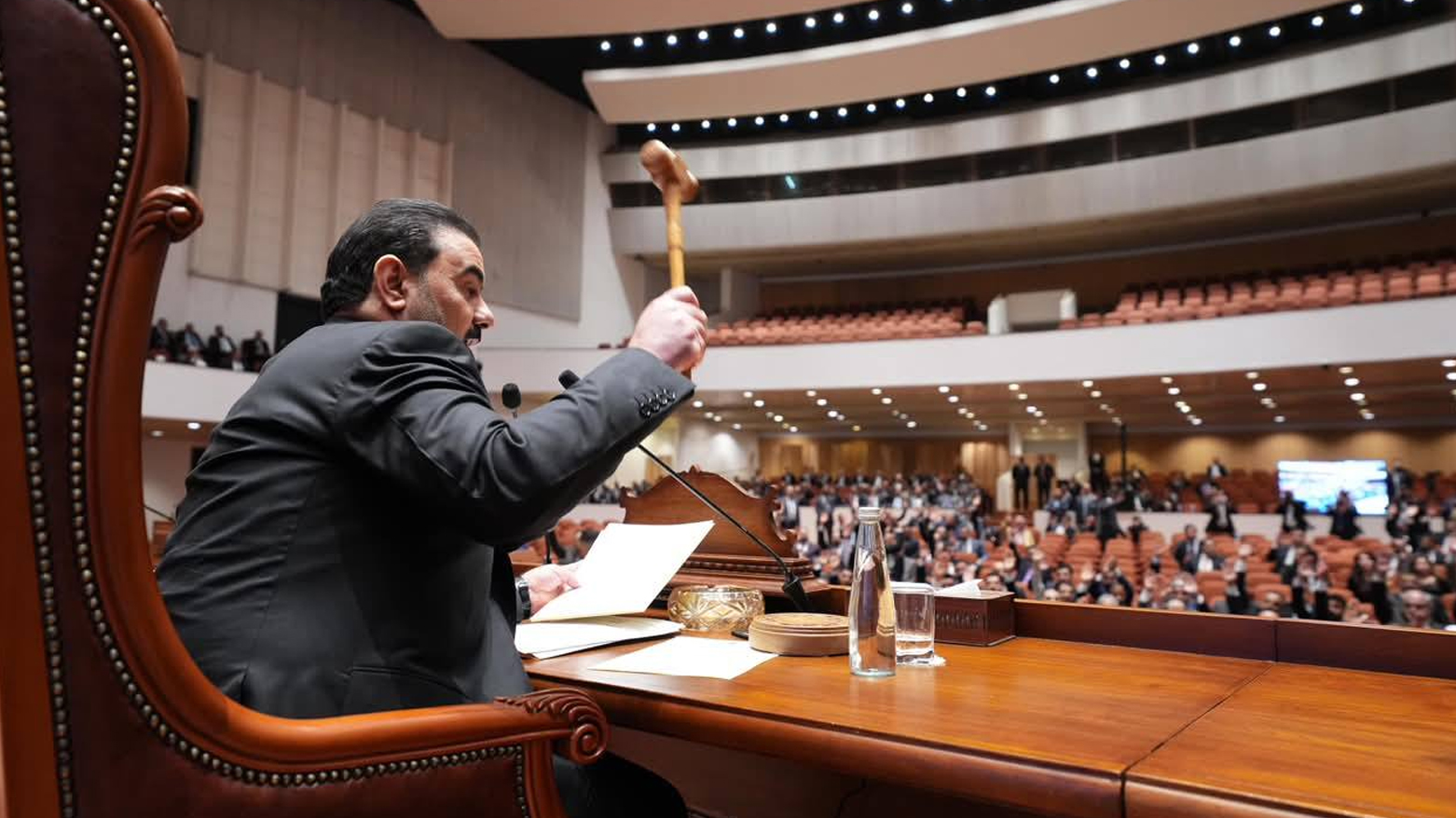
ERBIL (Kurdistan24) - The Eco Iraq Observatory issued a significant economic warning on Saturday, stating that approximately 70% of draft laws currently under review by the Iraqi Parliament are structured to increase public spending and expand "hidden unemployment."
The findings highlight a growing misalignment between legislative activity and the country's urgent need for fiscal consolidation.
According to the Observatory's analysis, the Iraqi Parliament has conducted readings for 23 draft laws during its current legislative term, which is nearing its conclusion ahead of the upcoming holiday recess.
The report reveals that the majority of these bills move toward the expansion of administrative structures through the creation of new boards, councils, and departments, some of which operate independently of traditional ministerial oversight.
Structural Fiscal Pressures
Eco Iraq noted that these legislative initiatives frequently establish operational funds financed by state revenue or grant significant financial allowances to public sector employees, creating long-term obligations for the federal budget.
Specific examples cited by the Observatory include the Mandatory Military Service Law.
The draft mandates that volunteer soldiers receive full salaries while state employees drafted into service continue to draw their original pay from their respective departments.
This dual-salary obligation is compounded by the significant capital requirements for military infrastructure, including the construction of camps and logistical transport.
Furthermore, the Civil Aviation Authority draft law contains provisions for employee allowances reaching up to 200% of base salaries.
The Observatory warned that the bill also grants ministerial-level privileges and powers to the authority's head, necessitating increased spending for security, high-level salaries, and office allowances.
The proposed expansion of this authority to include domestic and international offices would further strain state resources through real estate and delegation costs.
Similar patterns were identified in the Ministry of Communications bill, which seeks to expand administrative departments and "special grades" while establishing a communications development fund.
Additionally, the National Water Council proposal mandates an independent budget for the council's operations, placing yet another recurring burden on the general federal budget.
Immediate Salary Obligations and Diplomacy
While Eco Iraq identifies long-term structural risks, the federal government is moving to address immediate liquidity needs through diplomatic coordination.
May salaries for the employees and public sector workers of the Kurdistan Region are scheduled to be disbursed before the arrival of Eid al-Adha.
The payment follows intensive diplomatic engagement by Kurdistan Region Prime Minister Masrour Barzani during his recent visit to Baghdad.
Throughout his scheduled meetings with federal leaders, the Prime Minister is set to emphasize the protection of the Kurdistan Region's constitutional rights, presenting the timely payment of salaries as a fundamental right that must remain insulated from political conflict.
A source told Kurdistan24 that as a "show of good faith" following the Prime Minister's visit, the Iraqi government has decided to transfer the necessary funds for the May salaries in the coming days.
A source at the Kurdistan Regional Government's (KRG) Ministry of Finance and Economy confirmed that preparations are finalized, stating that the salary distribution schedule will be published immediately upon the arrival of the funds from Baghdad.
Macro-Budget Context and Oil Revenue Collapse
These fiscal developments occur as the Iraqi government manages a precarious economic environment.
Mazhar Mohammed Saleh, the Advisor to the Iraqi Prime Minister for Economic Affairs, told Kurdistan24 on Saturday that the government is already laying the groundwork for the 2027 federal budget bill, even as the 2026 budget remains stalled.
"Currently, there is a special situation and a war," Saleh said, noting that realistic financial estimates remain difficult to determine.
He explained that Iraq is currently operating under the Financial Management Law for the 2026 fiscal year, as the cabinet has yet to finalize and present a formal budget bill to Parliament, a delay largely attributed to the incomplete formation of the federal cabinet.
The fiscal outlook is further darkened by a sharp decline in revenue. Iraq's oil exports have plummeted from over 100 million barrels per month to less than 10 million barrels, a catastrophic drop for a country that relies on oil for more than 90% of its total revenue.
According to the Prime Minister's advisor, predicting the deficit is impossible until oil exports return to normal levels.
In the interim, Iraq has been forced to rely on internal and external borrowing to fund essential public sector salaries and operational expenditures.
While the current administration has proposed a reform plan targeting non-oil revenue and financial institution expenditures, the state remains tethered to a 2023 multi-year budget framework that initially projected a deficit of roughly $60 billion.
The combination of the Eco Iraq findings and the current budgetary deadlock suggests that while short-term "good faith" payments facilitate regional stability, Iraq's long-term fiscal trajectory remains challenged by administrative overreach and the volatility of its primary revenue source.