Erbil Authorities Declare Eid Security, Public Service Operations a 'Success' Amid Tourist Influx
The Erbil Governor's Office declared its Eid al-Adha security and service plan a major success, citing seamless coordination among police, Asayish, health, traffic, and civil defense agencies. The province welcomed 112,657 tourists while efficiently managing emergencies across all sectors.
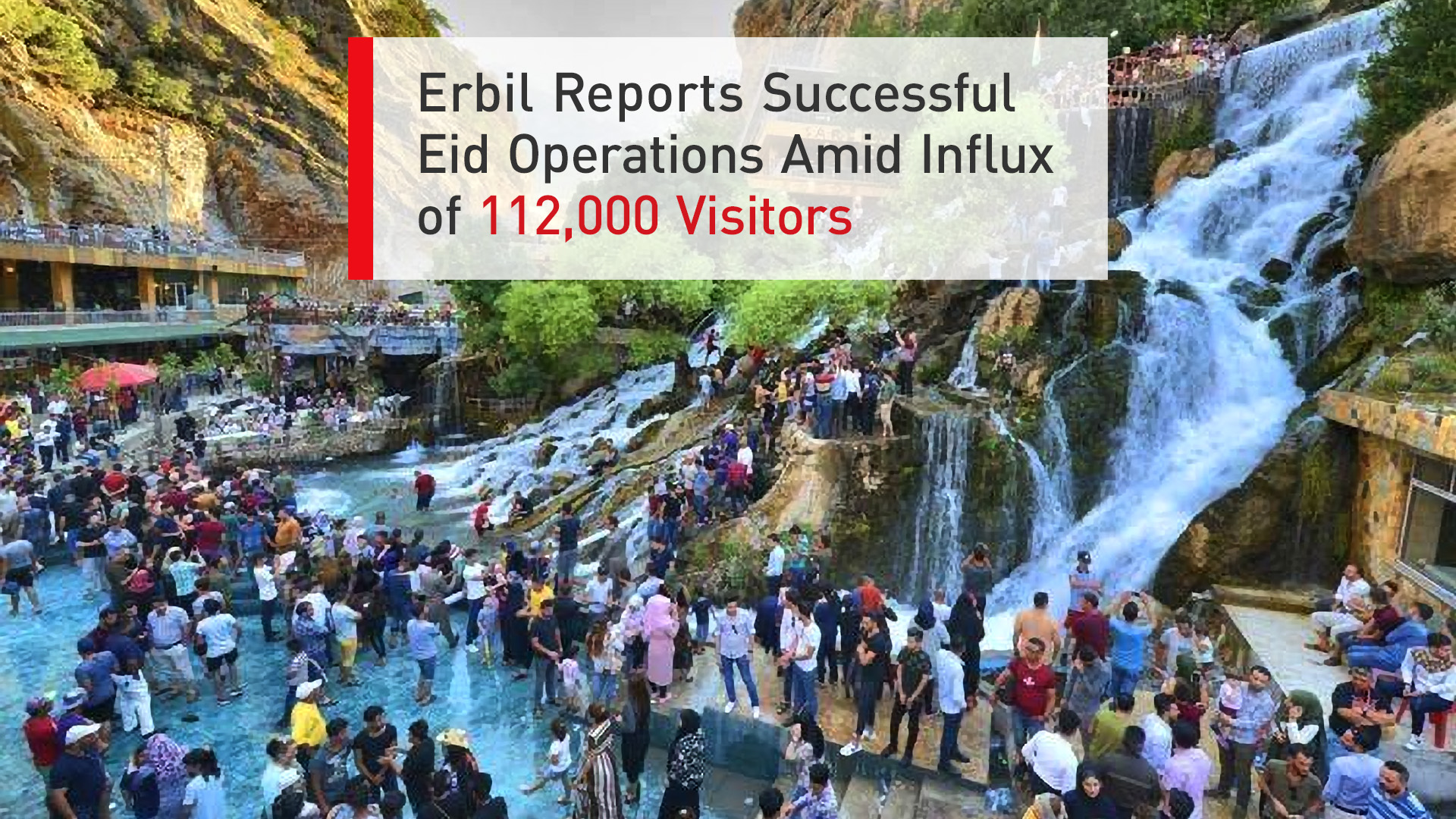
ERBIL (Kurdistan24) - The Erbil Governor's Office announced on Sunday the successful execution of its comprehensive security and public service campaign for the Eid al-Adha holiday. Driven by synchronized inter-agency collaboration, the initiative safely managed a massive seasonal influx of 112,657 tourists while maintaining rigorous emergency readiness across the governorate.
To secure the capital and its surrounding districts, the Erbil Police Directorate deployed a dedicated force of 113 officers and 1,532 personnel.
While the overarching security environment remained stable under the oversight of the Asayish (Security) Directorate, police responded to several localized criminal incidents.
According to official reports, these included three homicides involving male and female victims, multiple physical altercations, and four documented cases of theft.
Concurrently, local tourism committees stationed at major provincial checkpoints successfully processed and guided the holiday visitors, reinforcing Erbil's status as a premier regional travel destination.
The Asayish maintained a heightened alert posture throughout the festivities, preventing major disruptions and preserving overarching stability.
Emergency Response and Road Safety
On the roadways, the Traffic Directorate's holiday management plan proved highly effective. Despite heavy congestion, officials recorded only four traffic accidents, which resulted in a single injury.
Authorities attributed these isolated crashes strictly to speeding and non-compliance with established road regulations.
Simultaneously, the Civil Defense Directorate maintained continuous emergency operations.
Fire and rescue teams responded swiftly to a variety of urban and environmental incidents, successfully extinguishing five residential blazes, two vehicle fires, and three commercial property fires.
Crews also contained 51 separate brush and grass fires, a common hazard during the arid summer months.
Healthcare Infrastructure Meets Demand
The holiday period placed considerable demand on Erbil's public healthcare infrastructure. According to the Erbil General Directorate of Health, medical teams operating between May 26 and May 30 delivered extensive emergency and routine care.
Data aggregated from the West Emergency and Rizgari hospitals revealed that staff managed 3,004 patient consultations.
Emergency rooms treated 216 general incidents, 137 traffic and motorcycle-related injuries, 134 fall injuries, and 11 dog bites.
Medical personnel also addressed acute conditions, treating 70 gastroenteritis cases, 35 food poisoning incidents, and 17 snake or scorpion stings.
The hospital network performed 195 surgeries, consisting of 19 major and 176 minor procedures.
Facilities also supplied 584 blood units, provided 601 life-saving dialysis treatments, and safely recorded 227 births, including 97 natural deliveries and 132 cesarean sections.
A Blueprint for Future Operations
This comprehensive operational data underscores Erbil's critical role as a leading regional hub during major religious holidays.
Managing a sudden demographic surge requires highly synchronized governance across municipal, medical, and security agencies.
By concluding the Eid al-Adha period without systemic failures, the Erbil Governor's Office demonstrated the efficacy of its inter-agency coordination.
Moving forward, local authorities indicate that the data gathered from this holiday will inform continuous improvements in public service delivery and emergency preparedness, ensuring the capital remains safe, resilient, and accommodating for future seasonal influxes.