Outgoing South Korean Consul General Highlights Kurdish Resilience, Economic Potential in Kurdistan24 Interview
“Both of our peoples have been surrounded by powerful countries and have endured difficult periods, but our emphasis on family and education has enabled us to remain resilient,” he said.
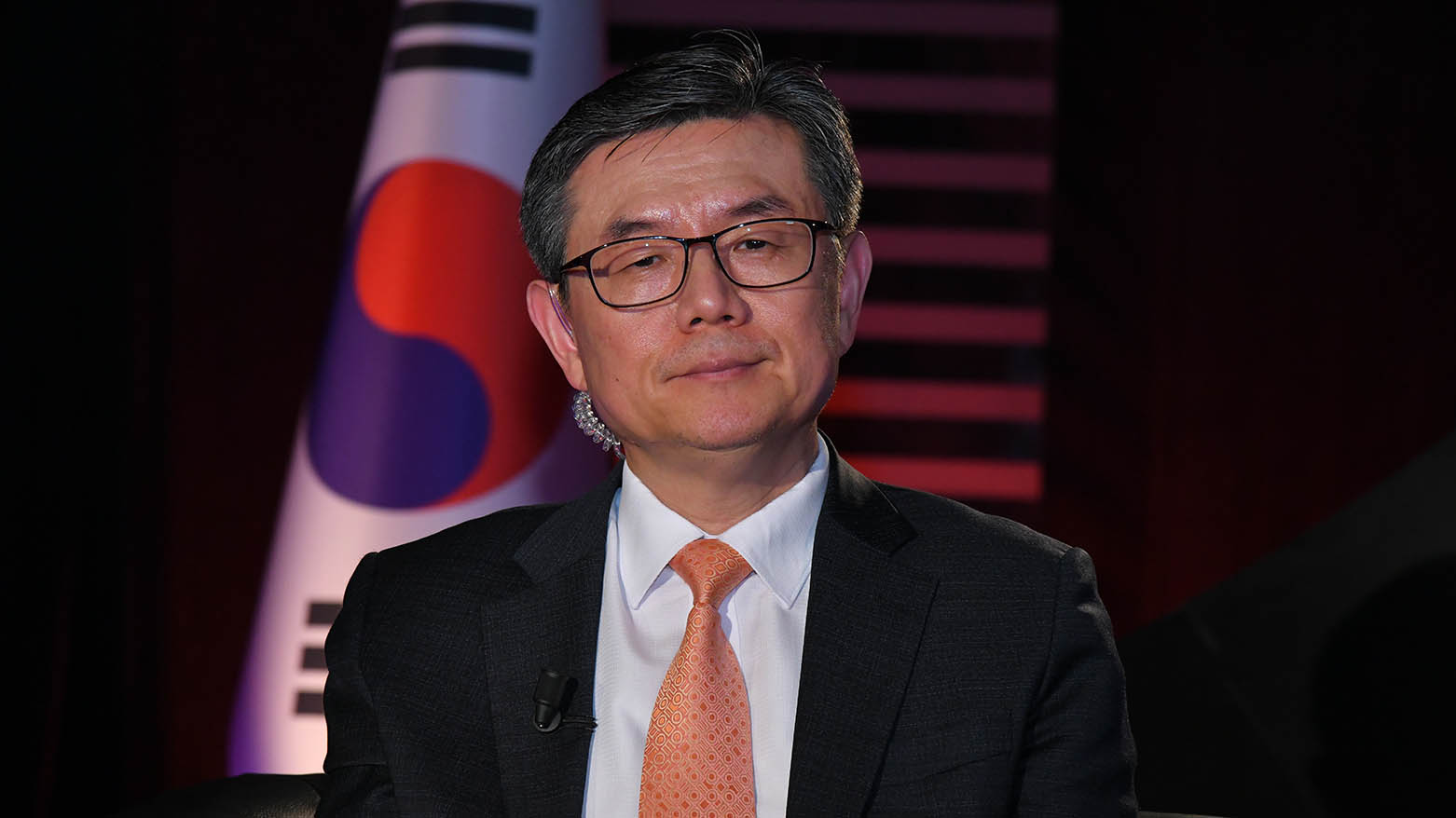
ERBIL (Kurdistan24) – Seungcheol Lim, the outgoing Consul General of the Republic of South Korea in Erbil, has praised the resilience, hospitality, and potential of the Kurdish people, while emphasizing the Kurdistan Region’s promising economic future and the importance of investing in youth and innovation.
In an interview with Kurdistan24, Lim shared his observations of Kurdish society and reflected on what he described as striking historical and cultural similarities between the Kurdish and Korean peoples.
Drawing on his experience in the Kurdistan Region, the outgoing South Korean diplomat said he had come to recognize four defining characteristics of the Kurdish people: resilience, hospitality, balanced diversity, and intelligence.
He noted that Kurdish hospitality extends beyond the offering of food, describing it as a form of personal sacrifice that fosters deep human connections and social solidarity.
Discussing parallels between the two nations, Lim said both the Kurdish and Korean peoples have endured difficult historical circumstances while living alongside powerful neighboring states.
“Both of our peoples have been surrounded by powerful countries and have endured difficult periods, but our emphasis on family and education has enabled us to remain resilient,” he said.
On economic development, Lim revealed that one of his primary objectives during his tenure in Erbil has been to support the Kurdistan Region’s economic transformation by drawing lessons from South Korea’s development experience.
He said he had proposed the establishment of a strategic research institution modeled on South Korea’s Korea Development Institute (KDI), adding that the initiative has since received approval from the Kurdistan Regional Government (KRG).
Lim stressed that the Kurdistan Region’s long-term prosperity should be built not only on attracting foreign investment and manufacturing but also on developing the talents and capabilities of its young population. He highlighted artificial intelligence (AI) as a sector capable of fundamentally reshaping the region’s economy over the next three decades.
The outgoing consul general also praised Kurdish women for their freedom, courage, and leadership abilities, describing their active role in society as one of the strongest indicators of the Kurdistan Region’s future success.
He further commended the KRG’s efforts to modernize public services through digitalization and lauded the implementation of the Runaki Project, which he said has increased electricity supply while minimizing environmental impact.
Reflecting on historical experiences, Lim compared the tragedy of Halabja to South Korea’s May 18, 1980, Gwangju Uprising, noting that both events remain powerful symbols of sacrifice and collective memory.
Expressing optimism about future relations between the Kurdistan Region and South Korea, Lim said he hopes bilateral ties will continue to deepen and pledged to return to the Kurdistan Region within the next decade to witness the achievements of the region’s younger generation.
“I want to come back in ten years and see the progress that Kurdish youths will have accomplished,” he said.