Full Interview - A Diplomat's Goodbye: Seungcheol Lim Reflects on Friendship, Culture, and Kurdistan’s Spirit
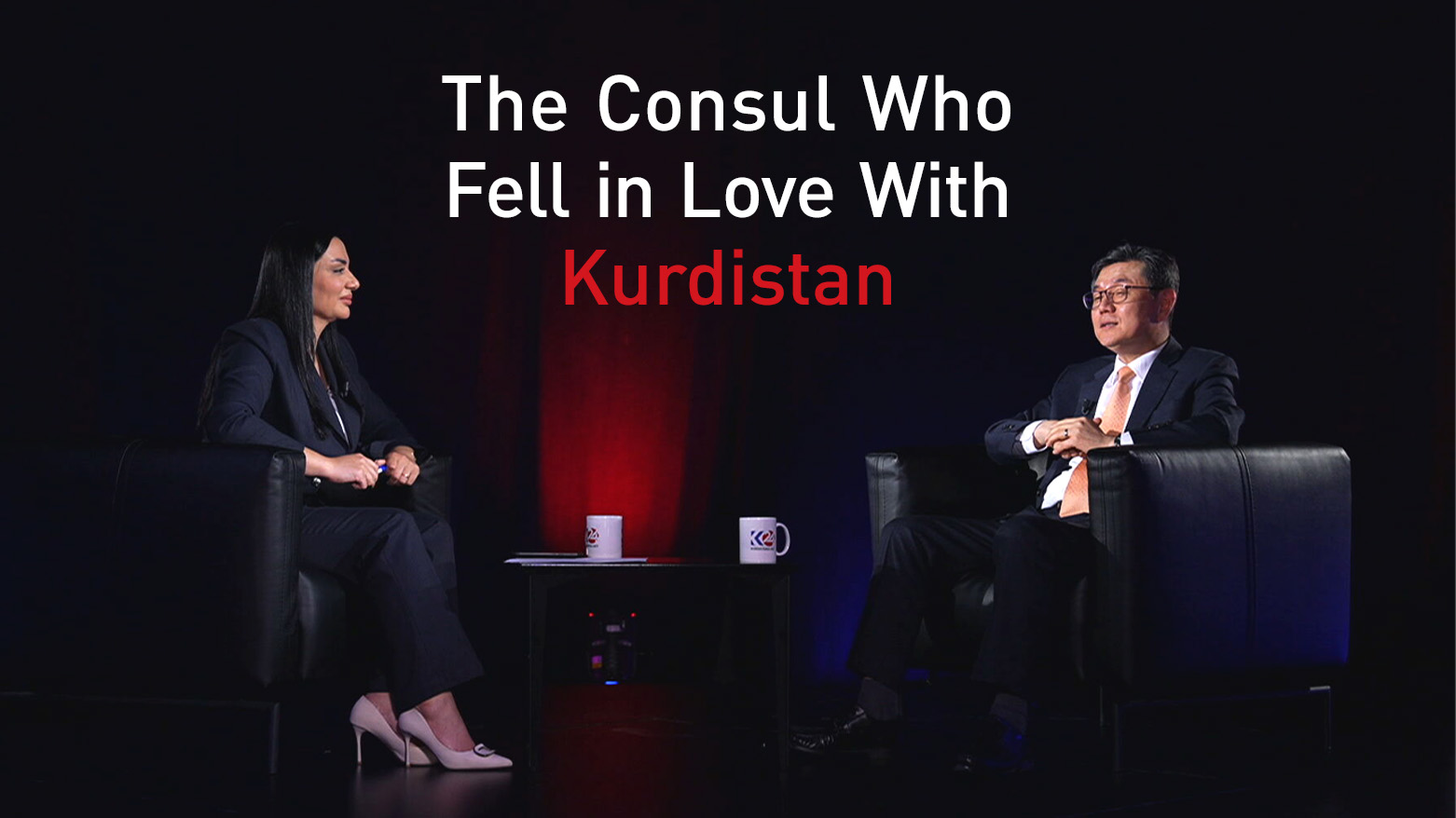
ERBIL (Kurdistan24) – As his diplomatic mission in the Kurdistan Region draws to a close, South Korean Consul General to Erbil, Seungcheol Lim, delivered a heartfelt farewell message in an exclusive interview with Kurdistan24 correspondent Zhino Mohammed, praising the Kurdish people's resilience, hospitality, intelligence, and cultural identity while expressing hope for deeper cooperation between the Kurdistan Region and South Korea.
Speaking during Kurdistan24's Basi Roj (Topic of the Day) program on Sunday, Lim admitted that departing the region is not something he welcomes.
"I do not want to leave. This is my true feeling," he said.
The outgoing diplomat attributed those feelings primarily to the people of Kurdistan.
"The reason is one thing: because of the people of Kurdistan, their way of thinking, their lives, as well as their hospitality, which is the best hospitality in the world," Lim stated.
Beyond Hospitality
Reflecting on his two-and-a-half-year mission, Lim described Kurdish hospitality as something deeper than generosity.
"This hospitality is not just about sharing food, but rather it is a sacrifice," he explained. "The people of Kurdistan have a tradition and a feeling of wanting to sacrifice themselves for others."
He recalled sharing meals with Peshmerga fighters and witnessing what he described as a culture of selflessness and friendship.
"The Peshmerga is also hospitable. They can even capture their enemy with hospitality," he remarked.
Throughout the conversation, Lim repeatedly emphasized qualities he believes define Kurdish society, identifying four key characteristics: resilience, hospitality, harmonious diversity, and intelligence.
"If someone asks me what Kurdistan is, I can proudly say Kurdistan is a flower," he said. "Soft, but strong."
Lessons from Kurdistan
Among the most memorable experiences of his tenure were observing how Kurdish families continued to celebrate life despite periods of regional tension and security concerns.
He recalled being surprised to see families heading outdoors for picnics, music, and traditional celebrations even during periods of uncertainty.
"When the weather was sunny, most people in Kurdistan went outside, went on picnics, and enjoyed nature," he said. "I realized the Kurdish people always do their best and try to enjoy good things with their relatives, friends, and families."
According to Lim, this outlook is something from which South Koreans could learn.
Shared Experiences Between Korea and Kurdistan
Lim drew parallels between the histories of South Korea and the Kurdish people, noting that both societies have navigated difficult geopolitical environments while preserving strong family values.
"The Kurdish people have experience in many difficult situations. They are surrounded by powerful countries. Just like the history of the Kurdish people, we in South Korea are surrounded by powerful countries," he said.
He also highlighted similarities in educational priorities.
"In Kurdish society, mothers and fathers dedicate all their energy to educating their sons and daughters. In Korea, we do the same thing."
Economic Development and Research
A major focus of Lim's diplomatic mission has been promoting economic planning and research institutions inspired by South Korea's development model.
He repeatedly stressed the importance of establishing specialized economic research centers capable of helping shape long-term development policies.
"Whenever I visited universities, senior government officials, political leaders, research centers, and organizations, I always emphasized that we need a research center within the government dedicated to economic development," he said.
According to Lim, the Kurdistan Regional Government has already embraced the concept and is expected to move forward with establishing such an institution.
Drawing from South Korea's experience, he argued that strategic planning and investment in education can dramatically accelerate economic transformation.
"We in Korea changed our economic structure in 30 years," he said. "The Kurdish people can reduce this timeframe. I am certain."
Confidence in Kurdish Talent
Throughout the interview, Lim expressed strong confidence in the abilities of Kurdistan's younger generations.
He cited examples ranging from young chess champions to technology entrepreneurs and talented students he met during his travels across the region.
"A few months ago, I met a twelve-year-old girl who tried to explain a defense system to me," he recalled. "This kind of patriotism and these kinds of smart children can do a lot for your society."
He also encouraged greater focus on technology and artificial intelligence.
"Artificial intelligence does not need a factory; it only needs the intelligence of the people of Kurdistan," he said.
Women, Freedom, and Diversity
The diplomat also praised the role of women in Kurdistan, describing them as courageous, intelligent, and active participants in society.
"I realized that women in the Kurdistan Region enjoy more freedom compared to other countries in the Middle East," Lim said.
He added that Kurdish women are often direct, analytical, and willing to voice their opinions openly.
"That is why I believe the society of Kurdistan is very bright."
Development Initiatives
Lim commended several initiatives undertaken by the Kurdistan Regional Government, including efforts to expand digital government services and implement the Runaki project aimed at delivering reliable electricity.
Initially concerned that expanding power generation might increase pollution, he said he was impressed by the project's early results.
"When I first heard about the project, I was worried," he admitted. "Yet surprisingly, after a couple of months passed, I realized two things. First, you have the necessary electricity, and the air pollution is gone. I am amazed by the results."
A Promise to Return
Having visited numerous locations across the Kurdistan Region, including Sulaimani, Halabja, and Hawraman, Lim spoke warmly about both the region's natural beauty and its history.
His visit to the Halabja Memorial particularly resonated with him, drawing comparisons to tragic events in South Korea's own modern history.
As his tenure comes to an end, Lim says he intends to return.
"I have promised my Kurdish friends that I will visit Kurdistan again in the next ten years," he said.
Concluding the interview, the diplomat shared a brief rendition of the popular Kurdish song "Baran Barana" before delivering a final message.
"I don't want to leave," Lim said. "Kurdistan is in my heart."
Kurdistan24 correspondent Zhino Mohammed conducted this interview for the Basi Roj (Topic of the Day) program.
Full interview transcript:
Zhino Mohammed: South Korea is one of those countries that has played a prominent role in the Kurdistan Region. The relations between the Kurdistan Region and Seoul have seen a positive advancement. What has caused these relations to see further progress is the opening of that consulate in the Kurdistan Region, and specifically those honorable consuls who have worked in the Kurdistan Region one after another. Today, I want to introduce to you the latest... I can say the latest consul, and when I say latest, I mean that his duties and work have now come to an end, and he is bidding farewell to Kurdistan. He is Mr. Seungcheol Lim, the Consul General of the Republic of South Korea, who has chosen Kurdistan 24 for his final media message and his farewell from the Kurdistan Region. I thank him for being present with me in the studio. Mr. Lim, welcome. Thank you for being with us in the Kurdistan 24 studio and on the Basi Roj program.
Mr. Seungcheol Lim: Very well, Ms. Zhino. I am very honored to be here. Thank you for this invitation.
Zhino Mohammed: Thank you very much. I want to know, as you bid farewell to Kurdistan, what are your feelings?
Mr. Seungcheol Lim: I do not want to leave. This is my true feeling.
Zhino Mohammed: Okay. What made you have this feeling that you dislike leaving Kurdistan? What has attracted your attention the most?
Mr. Seungcheol Lim: I thought about it, why do I dislike leaving? I do not want to leave. The reason is one thing: because of the people of Kurdistan, their way of thinking, their lives, as well as their hospitality, which is the best hospitality in the world. This hospitality has made me want to stay longer.
Zhino Mohammed: Do you like our hospitality?
Mr. Seungcheol Lim: Yes. Because of your hospitality, I realized a few philosophies. If you allow me, I will explain them to you. This hospitality is not just about sharing food... but rather it is a sacrifice. The people of Kurdistan have a tradition and a feeling of wanting to sacrifice themselves. Throughout my mission, for the first half of my mission, I enjoyed this Kurdish hospitality. In the other half of my mission, I perceived this Kurdish tradition and feeling of hospitality. This also made me want to stay longer, so that we can share this kind of tradition together with the Kurdish people.
Zhino Mohammed: What other specific trait have you seen in Kurdistan that caught your attention?
Mr. Seungcheol Lim: Okay. When I was enjoying the hospitality, the foods they offered me were like this: For example, dolma. Dolma caught my attention. At first I ate it, I started with the chard (or main vegetable) and it tasted very good. Then the onion inside the dolma, I enjoyed that too. As well as kofta and kubba, and biryani. These foods are always eaten with do (yogurt drink) and mastaw. For a year and a half, I enjoyed these foods. Then in the third year, or the end of the second year, I had several meals with the Peshmerga. The Peshmerga is also hospitable. They can even capture their enemy with hospitality. They give away their own things and sacrifice their own interests. That is why I realized the hospitality of the Kurdish people, compared to other countries, is much greater.
Zhino Mohammed: So, could we know, what new thing have you learned in the Kurdistan Region? Something that was new to you to adopt for yourself as a specific trait?
Mr. Seungcheol Lim: I learned something very fascinating. Even during the war, if you recall recently, the situation was not good. Everyone was somehow afraid of bombardments and drone attacks, but I was truly surprised when the weather was sunny. Most people in Kurdistan went outside, went on picnics, and enjoyed nature. They spent a good time with their families and friends. They brought dolma with them, danced, and sang. When I saw this tradition and culture, I realized the Kurdish people always do their best and try to enjoy good things with their relatives, friends, and families. During difficult times, I saw a positive scene; the Korean people should learn these things too.
Zhino Mohammed: So this is our strong point as Kurds?
Mr. Seungcheol Lim: Yes, this is a very strong point, and I have realized it. Because of this, the Kurdish people have lived on this land for thousands of years, living here happily, even during difficult moments.
Zhino Mohammed: Your words are a source of joy for the Kurdish citizens in the Kurdistan Region, that you speak of them in this way. But it is also important to know, out of all these things you have seen and noticed, what common point is there in the culture and heritage of the Kurdistan Region, or between Kurds and South Korea? Do we have any similarities?
Mr. Seungcheol Lim: Yes. The things that are very common are feelings and emotions. The Kurdish people have experience in many difficult situations. They are surrounded by powerful countries. Just like the history of the Kurdish people, we in South Korea are surrounded by powerful countries. We have done our best to overcome the situations. When I look at the Kurdish people and the Kurdish society, I see cleverness and intelligence. They have intelligently survived in this difficult environment. Therefore, the feelings and emotions of the Kurdish people and the people of South Korea are one and the same. Because the Korean people have a lot of respect and appreciation for their families and relatives. Here in Kurdistan it is the same. Furthermore, education is another point. In Kurdish society, mothers and fathers dedicate all their energy to educating their sons and daughters. In Korea, we do the same thing. I have seen these commonalities in both societies.
Zhino Mohammed: So when you return, how will you describe Kurdistan to your friends? How will you describe the beauties of this place to them, just as you are describing them to me now and to the citizens and viewers of Kurdistan 24?
Mr. Seungcheol Lim: In the society of Kurdistan, I have found several specific traits. I want to define four of those traits: Resilience, secondly hospitality, thirdly harmonious diversity, and fourthly intelligence. These four things are the main factors of your society. When I say resilience, if someone asks me what Kurdistan is? I can proudly say Kurdistan is a flower. This is a symbol of resilience. Soft, but strong. Its beauty gives a sign to its neighbors. The Kurdish people show their peaceful feelings. Even in difficult situations, this is the resilience of the Kurdish people. Hospitality, as I said, is not just sharing and offering food, but rather it is the sacrifice of the Kurdish people, in order to become friends with their neighbors. Harmonious diversity; I observed something very interesting at a wedding party. A few days ago, I attended a wedding party. All the people were close to each other; this is diversity and multi-colorfulness. Along with that, everyone dances and does the traditional dance together. They adapt themselves to one another. This is also a specific trait of the Kurdish people. They give people freedom, protect their identity and are proud of it. But when they dance, everyone synchronizes with each other. This is another one of the traits. Intelligence. Two and a half years ago, I arrived in Kurdistan at the airport. When I saw my colleague, I was surprised because his eyes were shining. This is a kind of anticipation. What I saw was not a sleepy eye. Since then, I searched for evidence of the intelligence of the people of Kurdistan. The first piece of evidence, the first sentence Google gave me was this: The Kurdish people are good at literature, religion, and music. This was the first answer to my question. Later I found many other pieces of evidence. For example, Dr. Azad who treats 42 diseases, the Obana company which leads the artificial intelligence movement. Some little girls are chess champions. I found all these specific traits in your society.
Zhino Mohammed: Over the span of two years and some months, you became very well acquainted with the Kurds, you became familiar with our heritage and culture, and you describe it very beautifully. I mean, how were you able to blend in so quickly?
Mr. Seungcheol Lim: Your question is very important. I remember very well, on October 28... I arrived in Kurdistan on October 11. After two weeks, when I was praying, I wanted to do something for the society of Kurdistan. What should I do? At that time, truly some feelings stirred within me. I felt something, I felt God's love for the Kurdish people. Like an account, I couldn't move. I fell into the depths of God's love. At that moment, I started searching. Who are the Kurdish people? What is the society of Kurdistan? In one month, I observed many things that are characteristic of the society of Kurdistan. Perhaps some spiritual things helped me find those characteristics. This is my belief.
Zhino Mohammed: You mentioned a spiritual connection. Will this spiritual connection make you visit the Kurdistan Region again once you go back to Korea?
Mr. Seungcheol Lim: Yes, I have promised my Kurdish friends that I will visit Kurdistan again in the next ten years. I want to see the development of the Kurdish individual. I will certainly visit here again in ten years and meet my friends.
Zhino Mohammed: Very good. So now let's get to this: you talked about the beautiful side of Kurdistan, from your perspective, what you have seen. Let's move on to finding out, what does the Kurdistan Region need? Based on what you have noticed.
Mr. Seungcheol Lim: Yes, a very good question. Right from the beginning, because I realized the intelligence of the Kurdish people, I was very proud of that intelligence and I have a lot of trust in it. That is why I wanted to share Korea's experience in the field of economic development. Regarding the economic development of Korea, the research center for economic development, which we call KDI, played a major role in formulating economic development in a strategic manner. And whenever I visit universities, senior government officials, political leaders, research centers, and organizations anywhere, I always emphasize that we need a research center within the government dedicated to economic development. From the very beginning until now, I have consistently insisted on this. Now the Kurdistan Regional Government has approved this idea. The government has realized this idea. In the near future, your government will establish this kind of institution. The focus of my work has been on this.
Zhino Mohammed: Let's get to how you view and evaluate the government's work in the Kurdistan Region, but what is important to me is that you have focused on two things: the economic sector and research. Why these two... you have specified these two sectors, you have given a lot of importance to the academic field and the economic field?
Mr. Seungcheol Lim: Okay. Normally, when a consulate decides to support a certain government, there are two ways. One is the political or diplomatic way. The second is economic development. Both are important. However, my time is limited. It is only two and a half years. Therefore, my focus needs to be on one aspect. I chose the economic path. At the same time, it's not just the money aspect that is important. South Korea is strong in the field of education and personal capacity building. The society of Kurdistan, as I said, they are very smart. You look at it with importance. Parents do everything to educate their children. This is a common point between this region and that country. I believe and have confidence that if we focus on these academic capacities and research centers, we might get good results. This is how I thought about it. Now, after two and a half years, we see the result. A lot of people are interested in working in research and economic development centers. I think I hit my target. Can the Kurdish people change their economic structure in a few decades? Similar to Korea? We in Korea changed our economic structure in 30 years, meaning in three decades. The Kurdish people can reduce this timeframe. I am certain, and you are smart enough for this.
Zhino Mohammed: How will you help us? In that sector, in that field, how will you help us?
Mr. Seungcheol Lim: This is a very good point. The goal of our project is this: let's strategize the economy of the Kurdistan Region, for the sake of the people of Kurdistan. By the economists of the people of Kurdistan and by the people of Kurdistan. This is the goal of the project. The main role must be implemented by the Kurdish mind. Last year... the Kurdistan Regional Government sent 12 economists to Korea. Korean institutions and the research center welcomed these economists and trained them for several weeks. These economists themselves had knowledge of the economy. They had a PhD or Master's degree. Even some of Korea's experience was shared. I believe these types of programs will play their role in Kurdish society. Up to eighty Korean entities visit here to discuss and help them in their activities. The main activities are implemented by Kurdish economists, and the Korean side sometimes comes as a friend and offers help in some parts. Nevertheless, the main role is in the hands of Kurdistan, not us. I believe this mechanism works well.
Zhino Mohammed: Since you talk so much about the academic, educational, and learning aspect, Mr. Lim, you must tell me how a Kurdish student can go study at your universities, so that we can practically see what goes on there and how they learn, so that in the future we ourselves can transfer this culture, this education, and this academicism to the Kurdistan Region, together with you.
Mr. Seungcheol Lim: We need to understand this well. This is not training to be implemented by Korea. This movement focuses on activities inside Kurdistan. We at the consulate coordinate... with a Kurdish company, or Kurdish media, to design our own method. For example, last year, we announced an economic award. This award is supported by a Kurdish company; it was funded by a Kurdish company. And we gave a scholarship to those Kurdish students... who are interested in studying in the field of economic development. The mechanism is like this: through the Kurdish people, we can have movement with the Kurdish people. At the same time, with the support of us foreigners, the people of Kurdistan can implement their major projects. We don't take a Kurdish student to Korea just to teach them something; that is not the mechanism I want. I want the Kurdish people to do the work themselves, and put all their effort into leading their society toward a more advanced economic society. Meaning, the Kurdish people should do the work for themselves. This is the mechanism for these types of activities.
Zhino Mohammed: Something came to my mind, I'd like us to discuss it. Since you mentioned Kurdish citizens coming and going to Korea and vice versa, let's not forget the question: right now we see many Korean products in the markets of the Kurdistan Region, especially Korean cars. How do you feel when you see your own products in the markets of the Kurdistan Region?
Mr. Seungcheol Lim: Always, when I see a Korean car, I think about how we can open a car factory here in Kurdistan. I always think like a Kurdish citizen, so I asked the branch manager of some Korean companies: If you were to manufacture electrical appliances in Kurdistan, how many companies would you need? They said more than 40 companies are needed to manufacture electrical appliances. After hearing that, I started researching what kind of company in Kurdistan would want to work in this. I found a plastic company, its name was SITA. I was very happy, because you have your own company here. These types of companies can help the big companies so that they can manufacture cars or electronic goods here. I hope we can manufacture Korean cars here in Kurdistan.
Zhino Mohammed: So it's in your plans to bring this innovation to the Kurdistan Region, should we expect something like this soon? Or is it a long-term strategic plan?
Mr. Seungcheol Lim: No, no, no. You must remember and understand this well. I am saying all these things from the perspective of the people of Kurdistan. I don't want to bring something here, but rather we should build it here. With the strength and capability of the Kurdish people. I am talking about the capabilities of the people of Kurdistan. Not bringing some industry from Korea or other countries. This is not the way of the people of Kurdistan. The people of Kurdistan are smart themselves; our focus should not be on bringing things. Our focus should be on making it ourselves. That is why I have insisted that artificial intelligence is very important for the people of Kurdistan. Artificial intelligence does not need a factory; it only needs the intelligence of the people of Kurdistan. A few days ago, we announced the artificial intelligence champion. Based on my own assessments, these kinds of technological works can advance Kurdistan's economy very quickly. My point is, do not focus on the industries of foreign countries. Please focus on your own capabilities. You are very smart. If you focus on technological knowledge and artificial intelligence, your future will be very different from now. We need innovative thinking.
Zhino Mohammed: I am happy that I am getting so enthusiastic; you repeat so often that we are a smart citizen and nation in the Kurdistan Region. This is a good point for us. So you have that confidence in our intelligence?
Mr. Seungcheol Lim: Yes, yes. I have a lot of confidence in your intelligence and patriotism. When I visited Sulaimani a few months ago, I met a twelve-year-old girl. That girl came to me and tried to explain a defense system. Even though she was only 12 years old, she had patriotism inside her. She had noticed the weaknesses of the country and society, so she dedicated her dream to building a defense system. This kind of patriotism and these kinds of smart children can do a lot for your society. The role of the adults is to properly teach this smart generation and give them opportunities. They must provide the conditions for them, to allow their abilities to do their work well. Because of all this, we need a research center. Because this research center is one of the environments for smart people. I have a lot of confidence in your intelligence. Do not forget your intelligence and try to build this new center in your society. This is my recommendation.
Zhino Mohammed: That provision of opportunities to women, the work of women in the Kurdistan Region, in different fields, in government, in institutions, in the media, any place and anywhere you have seen, where you have worked with organizations, what impression has it left on you? What was your reading of women's work and the advancement of women in the Kurdistan Region? Did you notice it? I mean, did you get the impression that women are free in the Kurdistan Region, in terms of exercising their abilities?
Mr. Seungcheol Lim: Yes. As I mentioned, when I attended the wedding party, most of the women were wearing their own traditional clothes. I realized that women in the Kurdistan Region enjoy more freedom compared to other countries in the Middle East. Women's freedom and identity are respected. This is one aspect. The other aspect is that women in the society of Kurdistan are very brave, and whenever they need to say something, they don't hesitate to say it. This is very frank. That's why I understood, and was amazed, that the society of Kurdistan is led by these smart women.
Zhino Mohammed: As Your Excellency...
Mr. Seungcheol Lim: I truly realized that the Kurdistan Region is bright. The women are very gentle. They are sensitive to certain things. They can analyze well and easily identify problems, and they are very frank. That is why I believe the society of Kurdistan is very bright. It is well-built and well-prepared for the future industry and environment.
Zhino Mohammed: Thank you very much. What I mentioned and asked you about, this has a history; women in Kurdistan have a past of being decision-makers and have had a struggle and a history. That's why I wanted us to discuss it, because you focused heavily on women. But I'd like to know, with those colorful clothes you mentioned in your speech, did you buy any colorful clothes to take back with you as a gift?
Mr. Seungcheol Lim: Yes. I have Kurdish clothes. Two years ago I visited the market and bought a suit. It's not this suit. I was wearing it yesterday. I like it very much. Once a week I wear that suit.
Zhino Mohammed: I would like to know if there is a number, data, or statistic available, to know how many Kurdish citizens are in South Korea? And conversely, how many Korean citizens are in the Kurdistan Region? Living there, I mean.
Mr. Seungcheol Lim: Their number is not large. There are not many Koreans here. Likewise, not many Kurds live in Korea. Even though the number is very small, they still do many strong activities. The Kurdish people are welcomed very kindly by the Korean society. The Korean people have a good perception of the Kurdish people. Therefore, even though the number is small, they are always very strong. In Kurdistan too, we have a small number of Koreans, yet they play a major role in industry, electronics, and in researching with the United Nations; they work in some aid programs. So, even though the number is small, we coordinate very well.
Zhino Mohammed: Okay. What is important, or let me say most important for the citizens of the Kurdistan Region, is obtaining a visa to visit South Korea. How do you grant visas to the citizens of the Kurdistan Region and how do you assist and facilitate for them?
Mr. Seungcheol Lim: Getting a visa is easy. If you want to visit Korea for tourism, the process is not very difficult. Whenever you want to get a tourist visa for Korea, just contact the Korean consulate and get some guidelines. Right now, many people use tourist visas for Korea. What is relevant to visas and is important, is the issue of illegal overstaying. Although most Kurdish people do not stay illegally in Korea; most of them are legal. Therefore, we do not hesitate to grant tourist visas to the people of Kurdistan. Because of that, please submit many visa applications. I will welcome you.
Zhino Mohammed: So the process itself is easy.
Mr. Seungcheol Lim: Yes, yes, yes. The process is not difficult. We need some documents. Please ask my colleagues what kind of documents you need to prepare for the visa.
Zhino Mohammed: You can't tell us right now? What documents are necessary and correct to have with us?
Mr. Seungcheol Lim: I don't know it well. Because I am not in charge of visas. I have a colleague who is responsible for visas. However, he always tells me that it is not very difficult.
Zhino Mohammed: We have talked about many things during these few minutes that we have been speaking together. Let me move on to finding out, Mr. Lim, how has the relationship been with the Kurdistan Regional Government?
Mr. Seungcheol Lim: Normally, your government is very friendly with foreign delegations. Not just with Korea, but your government does a very good job with all foreign diplomats. They always show respect and pride to foreign diplomats. Whenever they have a good event, they try to invite foreign diplomats to these good activities and ceremonies. In the past two and a half years, the activities of the Kurdistan Regional Government have truly affected me. Whenever I had any sort of problem, the Department of Foreign Relations always did their best to help me. Because of that, we had no problems at all, and I was always happy. I am very thankful for these activities.
Zhino Mohammed: So let's talk about one or two things the government has done in the Kurdistan Region. For example, if we talk about the digitalization of the government and government institutions. How important has this been? The digitalization of institutions in the Kurdistan Region? Have they done a good job?
Mr. Seungcheol Lim: This is the path we must take. Which is digitalization. The act of digitalization leaves no room for question. The only issue is, how fast do we digitalize? Based on my observation of the society of Kurdistan, there are some gaps. Some people do not have information about this digitalization. There is always a question: who should lead these changes? Definitely the government. Government employees must read a lot about this digitalization. And through the government, introduce these technologies to society. This is the most important thing. In light of this, the Korean consulate has implemented some projects for digitalizing the public bidding system. I encourage the Kurdistan Regional Government to do more work to digitalize their society. So far, your government is working very well.
Zhino Mohammed: Let's talk about the Runaki (Light) project. In the Kurdistan Region, one of the problems we had was light, it was electricity; how should I say, a large portion of the citizens of the Kurdistan Region were plagued by this electricity sector. But now the Kurdistan Regional Government has announced the Runaki project, which is 24-hour electricity. How do you evaluate this? You yourselves, your experience, is this a good job that has been done?
Mr. Seungcheol Lim: It is an excellent question. I can speak about my own experience. When I arrived here, on October 11, 2023, I saw the Citadel from inside the airplane. At that time, I felt that Kurdistan was welcoming me with a very beautiful light. At that time of night, the lights were turned on. When I got here, I was amazed. Wow! The situation in Kurdistan regarding electricity is very good. Later I realized that some areas are good in terms of electricity, but at the same time, some other areas of the Kurdistan Region went through a hard time regarding the use of electricity. After I discovered this challenge, I looked at the history. Previously, some Korean companies were here to build a power plant. However, this was not enough. Your government has done a lot of work to build more power plants to provide electricity. At the same time, I saw a lot of smoke, which had polluted the environment. After a year and a half, or two years, your government announced that it is implementing the Runaki project. To provide 24-hour electricity. When I first heard about the project, I was worried about the outcome. If you do this in a rush, you might pollute the air more. This was my point of concern. Yet surprisingly, after a couple of months passed, I realized two things. First, you have the necessary electricity, and the air pollution is gone. I am amazed by the results of this project.
Zhino Mohammed: You mentioned a very important point. The Kurdistan Regional Government wants, through the Runaki project, to utilize renewable energy... to bring renewable energy... to have a cleaner environment. To provide a healthier environment in the Kurdistan Region for its citizens. Can South Korea be of assistance? If yes, how?
Mr. Seungcheol Lim: We always go back to the research center. Last year, some Korean experts visited here. They made a report on climate change. During this report, environmentalists from Kurdistan and environmentalists from Korea had many discussions. They found some solutions. I believe that, always as a starting point, we need a lot of analysis. We have done the analysis. We can properly implement this policy in society. In order to get good results. This way, we can help each other through establishing policies.
Zhino Mohammed: Very good. My program's time is coming to an end. I'd like to discuss a few other things specific to you in the Kurdistan Region. Besides Erbil, where else have you visited in the Kurdistan Region? Have you gone to Halabja, Sulaimani, Duhok, Zakho...? We have very beautiful and special tourist spots, especially Halabja, which is the symbol of that sacrifice you mentioned so much.
Mr. Seungcheol Lim: When I visited Halabja, I also visited the Halabja Monument. When I saw the pictures and heard the story, it reminded me of my experience in Korea. On May 18, 1980, in Korea we faced a similar tragic event. A large number of soldiers, in some of the provinces, killed a lot of people. Even now, we think about this experience. At the same time, we know the history of Halabja. So regarding these types of tragedies, we feel the same thing. As I said a few days ago, we must not repeat this kind of history. I, as a diplomat, will do my best to prevent these kinds of events. At the same time, I want to create a connection between these two institutions. So that they help each other.
Zhino Mohammed: Did you visit Sulaimani?
Mr. Seungcheol Lim: Yes, yes, I have visited Sulaimani several times.
Zhino Mohammed: How did you find its nature?
Mr. Seungcheol Lim: You mean, did I enjoy the nature?
Zhino Mohammed: Yes.
Mr. Seungcheol Lim: Yes, yes, yes, yes. When I visited Hawraman in the Halabja area, I felt like it was another world. I can forget everything in the Hawraman area. Because of that friendly weather and the sound of the water, it makes me relax. After I toured that area, I visited some restaurants. I enjoyed Hawraman kebab. It was the most delicious kebab. In all of the Kurdistan Region, that I have eaten. The other kebabs were good too, but Hawraman kebab was number one.
Zhino Mohammed: Bon appétit. If I may make a request, at the end of the program... because people have testified that you know how to sing, you know Kurdish songs, if I ask you to sing for us at the end of the program as a gift and a memory to leave us with?
Mr. Seungcheol Lim: You mean I should sing?
Zhino Mohammed: Yes.
Mr. Seungcheol Lim: Yes. "Baran Barana" is very famous here. I heard about this song from a colleague. This song is somehow a love story. The singer cannot forget his beloved girl. I also have the same feeling with this music of "Baran Barana". That's why I really enjoy singing this song. Can I sing it? Can I sing the song now?
Zhino Mohammed: Definitely.
Mr. Seungcheol Lim: (Singing) Baran barane, baran barane nm nm terrmî krd.... lence û larekew le dîn dermî krd, le dîn dermî krd... ya!
Zhino Mohammed: Thank you very much, I was happy we had this interview. Thank you for being present. We wait for you to visit the Kurdistan Region again. Have a safe trip and you are welcome.
Mr. Seungcheol Lim: Thank you so much for you too. I don't want to leave. Kurdistan is in my heart.
Zhino Mohammed: Thank you so much.
Mr. Seungcheol Lim: Thank you very much.
Zhino Mohammed: Yes, dear viewers, my special interview with His Excellency the Consul has come to an end. I hope his messages and words reached you, and his lovely song reached you too. Basi Roj has ended, stay happy.