A Harvest at a Discount: Kurdish Growers Challenge Iraqi Wheat Pricing Policy
A pricing rule tied to Kurdistani territories means two farmers growing the same wheat can receive dramatically different pay. The deeper story reveals why many say the harvest is becoming a losing battle.
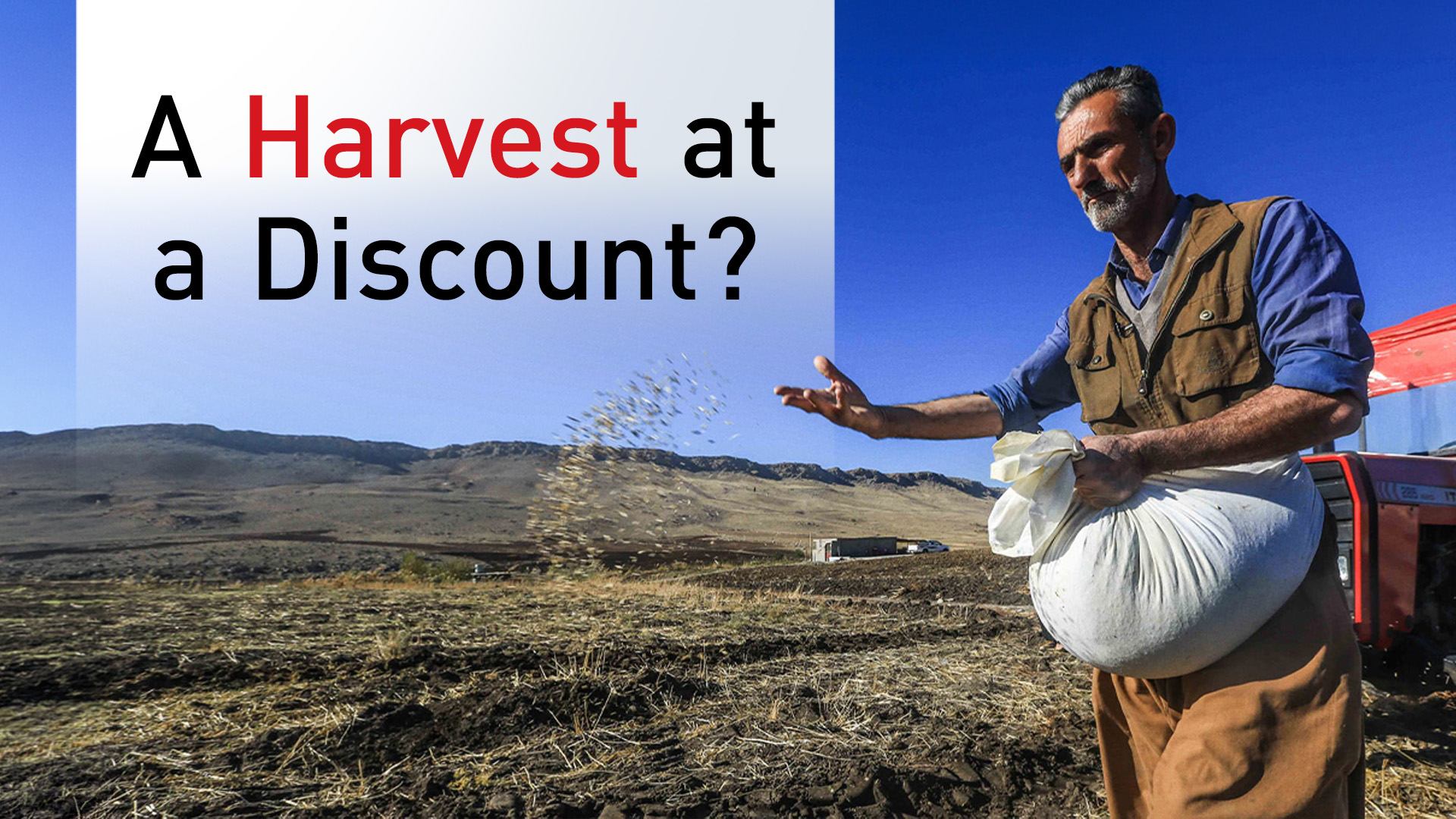
ERBIL (Kurdistan24) - The harvest season in Kirkuk is ordinarily a period of intense activity, marked by the roar of combine harvesters and the steady progression of heavily laden trucks moving toward government silos. But this year, the long queues of grain trucks signify not just agricultural abundance, but mounting frustration among Kurdish farmers who claim that federal policies are systematically diminishing the value of their labor.
As wheat deliveries commence across the Kurdistani territories outside the KRG's administrative control, a bitter controversy over crop pricing is threatening the economic viability of thousands of producers.
While the Iraqi government considers agriculture a critical pillar of its national food security strategy, many Kurdish growers argue that administrative decisions are leaving them at a profound financial disadvantage compared to farmers in other parts of the country.
The Price of Geography
At the center of the dispute is a bureaucratic classification system that dictates how much the state pays for wheat.
Mohammed Ismail, a representative for Kurdish farmers in Kirkuk, recently told Kurdistan24's correpondent in Kirkuk Hemn Delo, that the crisis revolves around lands falling under Article 140 of the Iraqi Constitution.
The federal government classifies much of this land as being "outside the agricultural plan."
The financial consequence of this classification is severe.
While the standard government purchase price for wheat is 750,000 Iraqi dinars (IQD) per ton, farmers cultivating "outside-plan" lands are offered rates that are 200,000 to 250,000 IQD lower.
"We call upon Kurdish representatives and ministers meeting today in the Iraqi Council of Ministers to resolve this price disparity," Ismail stated, summarizing the urgent demands of local growers.
For farmers operating on the margins, the pricing gap is devastating. "We are being treated as second-class citizens," one farmer remarked. "Silo prices are low, market conditions are poor, and transport costs have soared."
Harvesting Under Pressure
The reduced purchase rates are compounding a broader set of logistical and economic pressures.
The basic costs of moving wheat from the field to the silo have increased dramatically.
According to local farmers, the cost of transporting a single ton of wheat has jumped from 15,000 IQD in previous years to 50,000 IQD today.
Furthermore, systemic delays in the federal reception process are steadily eroding profit margins. "Every day a truck remains in line costs us 100,000 IQD," a farmer noted. "This is an unbearable burden."
Producers point to a deeply flawed electronic queuing system, which they claim can delay deliveries by up to 20 days.
These delays are exacerbated by stringent security checkpoints that frequently demand specific driver and vehicle documentation, often resulting in additional, unanticipated expenses.
One protester highlighted the disconnect between local agricultural departments and federal security apparatuses.
"I harvested my wheat with agricultural officials present in the vehicle with official paperwork," the farmer recalled. "Yet we were stopped at the Saqizli checkpoint and told that our documents meant nothing."
The financial squeeze is so acute that some farmers warn they may abandon their harvests altogether.
A producer noted that the 500,000 IQD rate set for "outside-plan" wheat translates to an even lower figure on the open market, sometimes dropping below 300,000 IQD per ton.
"If this continues, we will be forced to dump our wheat on the streets because it doesn't cover production costs," he said.
Waiting Years to Get Paid
The pricing controversy in Kirkuk is unfolding against a backdrop of historic distrust regarding agricultural compensation.
For many farmers in the Kurdistan Region, federal and regional payment mechanisms have long been a source of anxiety.
Recently, the Erbil Silo Directorate announced the distribution of outstanding financial dues owed to farmers, from the 2015 harvest.
The directorate issued notices outlining the requirements for collecting bank checks, including provisions for legal heirs to claim funds owed to deceased farmers.
While the release of these funds is a positive development, the fact that some producers have waited more than a decade to receive compensation for their crops underscores a fundamental vulnerability in the agricultural sector.
Predictable, timely compensation is crucial for farmers who must continually invest in seed, fuel, and equipment for the following season.
Chronic payment delays, coupled with current pricing disputes, threaten the long-term sustainability of the region's agricultural economy.
Protecting Crops, Protecting Livelihoods
While farmers struggle with economic hurdles, local authorities are investing unprecedented resources in physically protecting the harvest.
Across Erbil Province, the Civil Defense Directorate has launched an intensive operational plan to safeguard wheat and barley fields from the persistent threat of crop fires.
Lt. Col. Shakhawan Saeed, a spokesperson for the directorate, informed Kurdistan24 that 12 specialized firefighting teams and units from the Zeravani forces have been deployed to patrol the outskirts of Erbil around the clock.
The directorate has also conducted extensive awareness seminars for harvester operators, distributing safety guidelines and emergency contact numbers.
Saeed noted that the preventative strategy has been highly successful, with no major fire incidents recorded so far this season.
The operation, coordinated closely with local police and Asayish (security forces), serves as a robust defense against agricultural sabotage or accidental blazes.
Agriculture, Food Security, and Political Fault Lines
The contrast between these two realities, meticulous physical protection of the crop and profound economic insecurity for its producers, highlights the complex nature of agriculture in Kurdistani territories outside the KRG's administrative control.
Wheat production is not merely an economic activity; it is a matter of national food security and a flashpoint for political leverage.
As Baghdad attempts to centralize its agricultural planning and secure domestic food supplies, the structural disparities affecting Kurdish farmers continually expose the unresolved political fault lines surrounding Article 140 territories.
For the farmer watching a heavily protected field of wheat yield a steeply discounted paycheck, the broader policy objectives often offer little comfort.
As the harvest continues, local growers are left hoping that the immense effort required to safely gather the crop will ultimately be matched by an equitable system that rewards their labor.
Kurdistan24's correpondent in Kirkuk Hemn Delo contributed to this report.