A Season of Too Much Rain: Halabja's Pomegranate Orchards Face a Delayed Spring
Exceptional precipitation has replenished aquifers but left the region's signature fruit trees struggling to bloom, sparking anxiety among local growers.
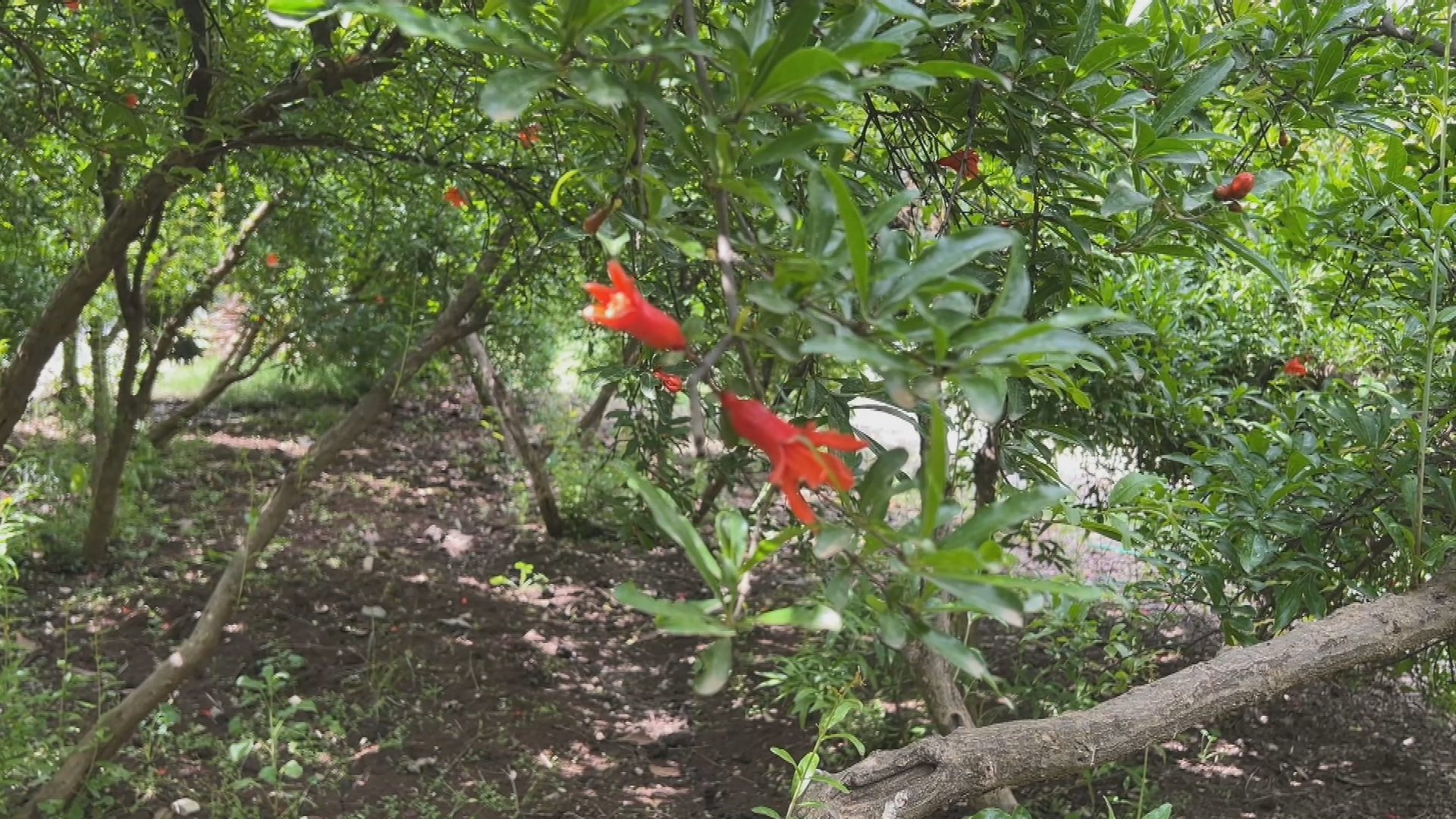
ERBIL (Kurdistan24) - For generations, farmers across the Kurdistan Region have prayed for rain, scanning the winter skies for the heavy downpours that traditionally guarantee a bountiful autumn. Yet this year, the verdant orchards of Halabja are offering a quiet, poignant lesson in the unintended consequences of natural abundance.
Heavy spring rainfall is usually a blessing for agriculture, but in Halabja, an excess of rain and lack of sunlight have significantly delayed the blooming of the region's famous pomegranate trees.
Local farmers now face mounting uncertainty over this year's harvest, awaiting warmer weather.
Despite experiencing one of the wettest seasons in recent memory, a season that dramatically greened the landscapes and successfully replenished underground aquifers, the province's iconic pomegranate trees currently stand unusually bare.
Their vital spring blossoms have been delayed by the exact weather patterns that were initially celebrated by the agricultural community.
According to a recent regional report detailing shifting climate patterns, persistent heavy rains and unusually cold temperatures have severely disrupted the area's natural horticultural cycle.
Mohammed Fattah, a local gardener whose family relies heavily on their orchard's yield for their livelihood, observes the regional disparity with a mix of concern and patience.
He noted in the report that while pomegranates in areas with less rainfall and warmer climates have already bloomed, Halabja's trees might face an extended delay of another month.
While Fattah acknowledged that this late start might paradoxically protect the pomegranates from damaging late-spring frosts, the relentless moisture has not spared the rest of his land.
The excess water has already caused significant damage to his other crops, heavily impacting local harvests of apricots, peaches, plums, and apples.
The Science of a Stalled Spring
The frustrating absence of the region's signature red blossoms is rooted in complex environmental science.
Agricultural experts cited in the report explain that cold night temperatures and limited daytime sunlight, frequently dropping below six hours a day, have created deeply saturated, chilled soil across the province.
These harsh subterranean conditions have effectively paralyzed the metabolic activity within the root systems and branches of the trees, stalling the fundamental biological processes required for early flowering.
Despite these natural setbacks, local authorities maintain a stance of cautious optimism.
Najmuddin Omar, representing the Halabja General Directorate of Agriculture, characterized the delayed blooming as a natural phenomenon driven by broader climate change.
However, Omar indicated that the trees are likely storing their vital energy; once the soil adequately dries and ambient temperatures rise, they are expected to finally bloom, potentially utilizing those reserves to compensate for their sluggish start.
An Economic Pillar at Risk
The economic stakes for this delayed harvest are remarkably high.
Halabja is widely recognized as one of the most critical horticultural hubs in the Kurdistan Region, famous for its premium pomegranate production.
The province boasts approximately 2,400 acre (10,000 dunams) of dedicated orchards, which consistently yield an average of 35,000 tons of fruit annually. This agricultural output remains an essential financial pillar for countless local families.
Now, as the damp chill lingers across the valleys, agricultural experts predict that the stunted flowering phase may still adversely impact this year's total harvest volume.
The unprecedented situation in Halabja underscores the delicate, often unpredictable balance between favorable weather and agricultural productivity.
For now, local farmers can do little more than watch their saturated fields and wait, hoping the very rain they wished for does not ultimately diminish their autumn livelihoods.
Kurdistan24 correspondent Asan Mohammed contributed to this report.